5 Reasons Children Need Spaces to Learn Their Own Culture


A culture does not disappear overnight.
It slowly becomes distant when fewer people understand it, practice it, and share it with the next generation.
For children, learning culture is not only about remembering old traditions. It is about understanding who they are, where they come from, and how their community has developed over generations.
In a rapidly changing world, children are surrounded by global influences every day. Technology, social media, and international trends can create new opportunities, but they can also make local traditions feel less connected to everyday life.
This is why accessible cultural learning spaces matter.
At Jero Tumbuk in Selat, Karangasem, cultural education is part of a wider community effort. Through learning opportunities connected to traditional arts, language, music, and community programs, children can develop skills while staying connected to Balinese heritage.
For travelers and communities interested in cultural education Bali, understanding the value of these spaces begins with recognizing what children gain from them.
Here are five reasons children need opportunities to learn their own culture.
1. Cultural Learning Builds Identity and Connection

Children need to understand their own story.
Identity is shaped by many things: family, language, environment, experiences, and culture.
When children learn traditional arts, local stories, language, and customs, they gain a stronger connection to their community. They begin to understand that the traditions around them are not simply activities from the past.
They are part of who they are.
At Jero Tumbuk, cultural learning can include activities such as Balinese dance, traditional music, Mekidung, Rindik, Gender, Tabuh, and Balinese script.
Each activity introduces a different part of cultural identity.
A child learning dance is not only learning movements.
They are learning expression, discipline, storytelling, and the meaning behind a tradition.
A child joining a gamelan class Bali is not only learning how to play an instrument.
They are learning cooperation, listening, timing, and the importance of contributing to a group.
A child learning Balinese script is not only practicing written characters.
They are connecting with language, literature, and a form of knowledge carried through generations.
These experiences help children see culture as something living.
It is not only found during ceremonies or special occasions. It exists through regular practice, learning, and participation.
A strong cultural identity can also help children understand themselves better when they encounter different cultures and perspectives.
Knowing where you come from creates a foundation for understanding the wider world.
2. Learning From Mentors Develops Skills and Confidence
Culture is passed through people.
Behind every traditional skill is someone who has spent years learning, practicing, and teaching.
This is why relationships with mentors are an important part of cultural education.
A mentor does more than demonstrate a technique.
They guide.
They correct.
They encourage.
They explain the meaning behind what is being learned.
For children, this relationship can create confidence.
A child may begin a dance class feeling uncertain. Over time, regular practice and guidance can help them become more comfortable expressing themselves.
A student learning traditional music may initially struggle with rhythm. With patience from a teacher, they can gradually understand their role within the group.
A child learning Balinese script may need repetition before the characters become familiar. A mentor helps them continue rather than give up.
This process teaches lessons beyond the cultural skill itself.
Children learn patience.
They learn commitment.
They learn how improvement happens through practice.
They learn that knowledge comes from listening to people with experience.
At Jero Tumbuk, local mentors play an important role in creating this connection between generations.
The knowledge is not transferred only through books or digital content. It is shared through direct human relationships.
This is what makes children learning culture meaningful.
The child does not only receive information.
They build a relationship with someone who carries that knowledge.
3. Cultural Practice Creates Continuity for Future Generations
Traditions survive because people continue practicing them.
A dance does not remain alive because it existed in the past.
A musical tradition does not continue simply because recordings exist.
A language or writing system does not remain connected to daily life without people using and teaching it.
Continuity requires participation.
This is the foundation of heritage preservation.
At Jero Tumbuk, cultural programs create opportunities for younger generations to practice traditions regularly.
Regular practice matters because skills develop over time.
A dance movement becomes more natural.
A musical rhythm becomes easier to understand.
A traditional song becomes more familiar.
A written character becomes easier to recognize.
Small learning moments repeated consistently can create long-term cultural connection.
This is why cultural education should not only happen during major celebrations or special events.
A tradition becomes stronger when children have access to it as part of everyday community life.
The goal is not to keep culture frozen.
Culture naturally changes as every generation interacts with it.
The important part is ensuring that children understand the foundation before they create their own relationship with it.
By giving children space to learn, communities help ensure that traditions remain meaningful rather than becoming something distant.
4. Accessible Learning Opportunities Strengthen the Community
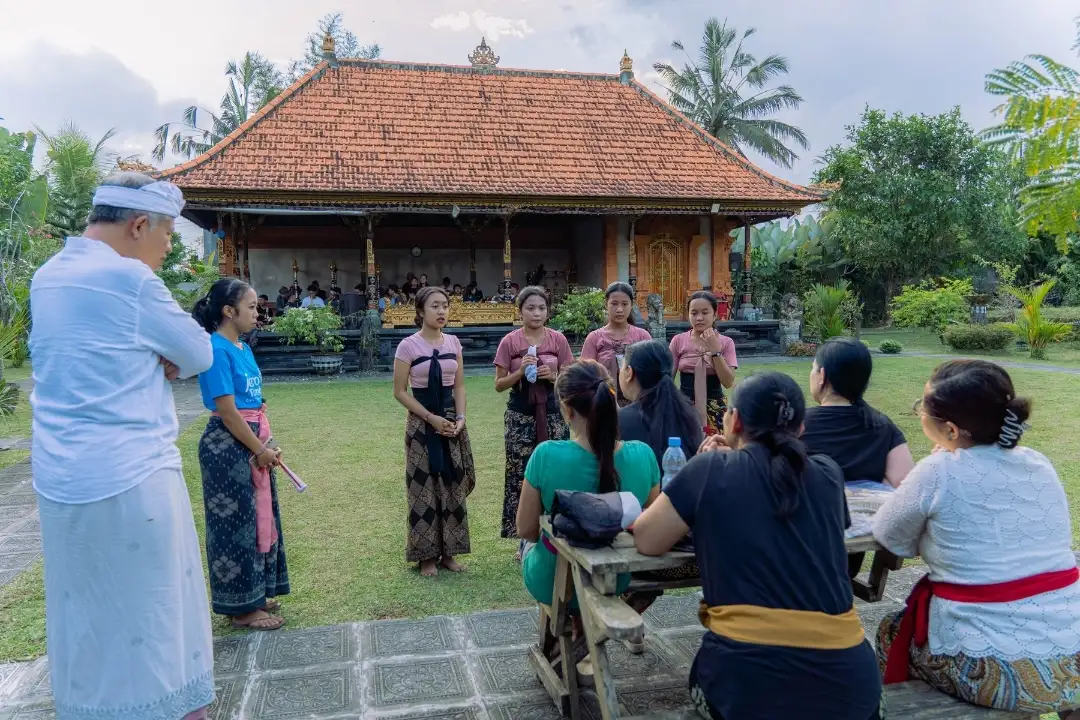
Not every child has the same access to cultural education.
Some families may not have the opportunity to pay for private lessons, purchase instruments, or travel to specialized learning centers.
Accessible programs create more opportunities for children to participate.
At Jero Tumbuk, community learning programs provide space where children and local participants can develop skills and engage with cultural knowledge.
This reflects the importance of local education Karangasem.
Education is not only about academic subjects.
It also includes understanding local identity, community values, creativity, communication, and responsibility.
Cultural programs can support children by giving them a place to learn outside formal schooling.
For example:
- Dance classes can develop discipline and confidence.
- Music lessons can build teamwork and concentration.
- Balinese script education can strengthen connection with language and heritage.
- Cultural activities can encourage curiosity and creativity.
These opportunities also help create community pride.
When children see that their traditions are valued, they may develop greater appreciation for their own environment and culture.
They begin to recognize that their community has knowledge worth learning and sharing.
This does not mean children should be separated from the wider world.
Cultural confidence and global awareness can exist together.
A child who understands their own heritage can engage with other cultures with greater openness and respect.
5. Cultural Learning Creates Pride and Responsibility
One of the most important outcomes of cultural education is helping children feel that their culture belongs to them.
A tradition should not feel like a responsibility forced onto the next generation.
It should feel like something valuable that they are proud to understand.
When children learn from mentors, practice with friends, and participate in community activities, they begin to develop ownership.
They understand that culture continues because people choose to care for it.
This creates responsibility.
A young dancer may later become a teacher.
A young musician may introduce others to traditional music.
A student learning Balinese script may help preserve language knowledge.
A child who understands local traditions may become someone who protects and respects their community.
This is how cultural knowledge moves forward.
At Jero Tumbuk, programs connected to children, mentors, and community learning reflect the idea that culture lives through people.
The purpose is not to create performers for visitors.
Children are not part of a tourism display.
They are learners building their own relationship with their heritage.
Guests who encounter these programs should approach them respectfully.
Children attending classes should be given space to learn. Photography should only happen with permission. Cultural activities should not interrupt the learning process.
The focus remains on the children’s development.
Cultural Education Connects With Tri Hita Karana
The importance of children learning culture can also be understood through Tri Hita Karana.
This Balinese philosophy describes three relationships that create harmony.
Parahyangan
The relationship between people and the divine.
Cultural learning can connect children with spiritual traditions, ceremonies, offerings, and values that are part of Balinese life.
Palemahan
The relationship between people and nature.
Children can learn how traditions are connected to agriculture, natural materials, food, and the environment around them.
Pawongan
The relationship between people.
This is reflected through mentors, teachers, students, families, and communities learning together.
Cultural education is not only about preserving individual skills.
It strengthens relationships.
A dance class creates a connection between teacher and student.
A music session creates cooperation between participants.
A community program creates relationships between generations.
This is why cultural learning has value beyond the activity itself.
Why Spaces Like Jero Tumbuk Matter
A culture survives when people have places to practice it.
Children need access.
Mentors need opportunities to teach.
Communities need support to continue sharing knowledge.
Jero Tumbuk creates a space where these elements can meet.
Through cultural programs, education initiatives, and community activities, children can learn traditions while developing confidence, skills, and connection with their community.
The impact is not created through one class or one event.
It grows through consistency.
A child attending a dance lesson today may become a mentor in the future.
A student learning music today may help another generation continue the tradition.
A young person understanding their heritage today may become someone who protects it tomorrow.
This is the long-term value of cultural education.
Support a Future Where Culture Continues
Travelers who visit Jero Tumbuk are not only experiencing Bali through landscapes, accommodation, or activities.
They are entering an environment where culture, education, spirituality, and community relationships are connected.
Guests can support this ecosystem by approaching cultural programs with respect, learning from local mentors, and understanding the importance of giving communities space to preserve their own traditions.
Cultural preservation is not about keeping the past untouched.
It is about helping knowledge continue.
Children need opportunities to learn their own culture because culture gives them connection, confidence, skills, and a sense of belonging.
When children learn, traditions continue.
And when traditions continue, communities remain connected to their identity.