
7 Ways to Spend a Full Day at Jero Tumbuk Without Feeling Rushed
Home - Our Journal
Home - Our Journal
A full day does not have to mean a full schedule.
When traveling in Bali, it can be tempting to fill every hour with another destination, another restaurant, or another activity. By the end of the day, however, you may remember the traffic and the rushing more than the places you visited.
Jero Tumbuk offers a different way to spend a day.
Located in Selat, Karangasem, Jero Tumbuk is a living cultural retreat where accommodation is only one part of a wider experience. Culture, nature, spirituality, education, and community life come together in one environment.
That means you can create a full day without constantly moving from one place to another.
The key is simple: choose a few complementary experiences and leave enough space between them.
Here is a relaxed Jero Tumbuk itinerary for travelers who want to experience more while still having time to breathe.
A slow morning sets the tone for the rest of the day.
Instead of checking your phone immediately or thinking about the next destination, begin with a simple activity that helps you become aware of your surroundings.
Yoga can be a good option.
A morning yoga Bali experience at Jero Tumbuk can create time for gentle movement, breathing, and awareness while surrounded by the natural character of the retreat.
You do not need to approach the session as a fitness challenge.
The purpose is simply to start the day at a slower pace.
Depending on availability, guests may also choose meditation or another reflective activity.
The natural environment can become part of the experience.
You may hear birds, water, wind, or other sounds from the surrounding area.
You can notice the morning atmosphere before the day becomes more active.
Yoga and meditation should not be presented as medical treatments or guaranteed solutions for stress. They are opportunities to pause, reflect, and create a more intentional rhythm.
The exact session schedule should be confirmed with Jero Tumbuk before your visit.
After your morning activity, do not immediately move on to the next item.
Give yourself time for breakfast.
This may sound like a small part of the itinerary, but it is important when the goal is to avoid feeling rushed.
A retreat day should have moments where you simply enjoy being where you are.
Breakfast can be a chance to sit, talk, observe the surroundings, and prepare for the activities ahead.
If local ingredients or traditional food are part of your meal, take the opportunity to notice what you are eating and where it may come from.
Food connects naturally with the wider Jero Tumbuk experience.
The ingredients behind a meal can connect with farmers, local suppliers, traditional preparation, and community knowledge.
This is one reason food can become part of a broader cultural experience rather than simply another meal during your trip.
There is no need to turn breakfast into another scheduled task.
Let it be a pause.
Once you are ready to continue, spend some time outdoors.
A rice field tour is one of the simplest ways to understand the landscape around Jero Tumbuk.
The purpose is not simply to find a beautiful place for photographs.
The rice fields are working landscapes connected to agriculture, food production, farmers, water, seasons, and local livelihoods.
During the walk, you can learn how rice cultivation works and how farming activities change depending on the season.
You may notice different stages of cultivation or simply see how the agricultural landscape fits into village life.
The experience becomes more interesting when you stop looking at the fields only as scenery.
Ask questions.
Observe the surroundings.
Notice the relationship between the village and the land.
Follow the guide's instructions and stay on appropriate paths.
Do not enter cultivated areas without permission, disturb farmers while they work, or photograph people without asking.
This is an example of Palemahan within Tri Hita Karana—the relationship between people and nature.
A relaxed walk can teach you something about the environment without requiring a packed schedule.
After spending time outdoors, choose one hands-on activity.
You do not need to do everything.
This is where a good full day retreat Bali experience differs from an overloaded itinerary.
If you are interested in food, choose a traditional cooking class.
If you are more interested in heritage, choose a cultural workshop.
A Balinese cooking class can introduce you to local ingredients, spices, preparation methods, and the cultural meaning behind food.
You can participate in preparing a meal and eventually share what you have made.
For travelers interested in culture, Jero Tumbuk may offer learning opportunities connected to Balinese dance, Tabuh, Gender, Rindik, Mekidung, or Balinese script.
The exact activity depends on availability and local mentor schedules.
The important part is participation.
You do not need to master the skill.
A single class can show you the patience and practice behind a tradition.
You may discover that traditional dance requires much more discipline than it appears from the audience.
You may learn that traditional music depends on listening and cooperation.
You may discover that preparing Balinese food involves more knowledge than simply following a recipe.
Choose one experience and give it your attention.
That is enough.
This is the part many itineraries forget.
Rest.
After your cultural or cooking activity, resist the urge to immediately continue with another experience.
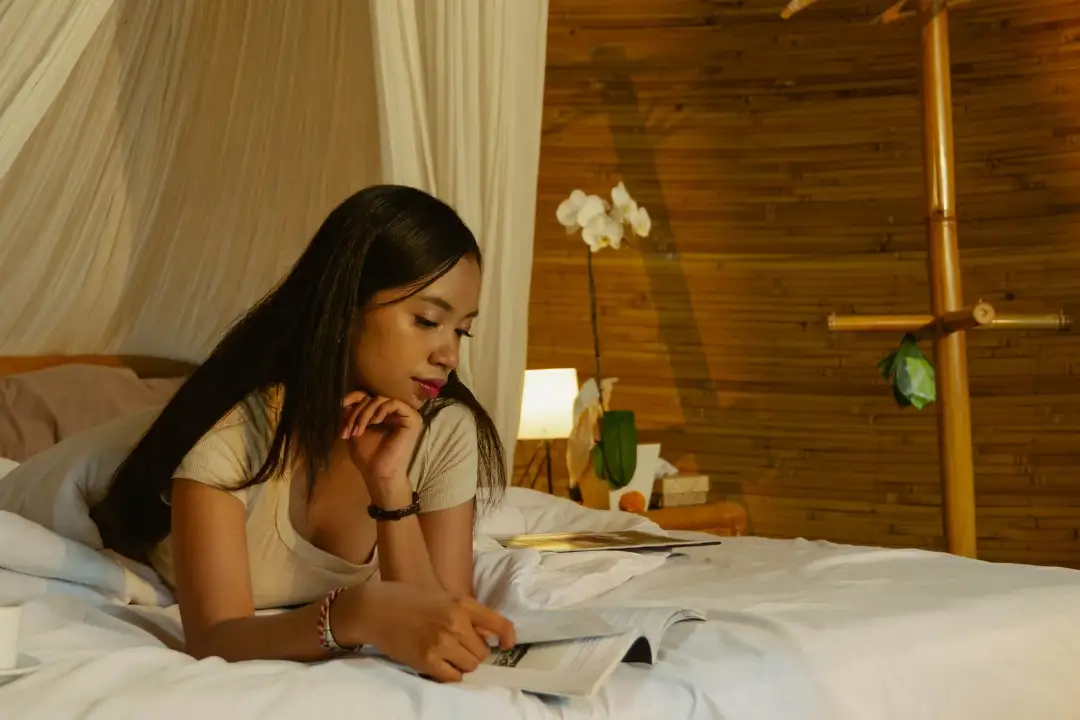
Spend some time doing nothing specific.
Return to your accommodation.
Sit in the garden.
Read.
Write in your journal.
Talk with your travel companion.
Listen to the surroundings.
This is not wasted time.
It is part of the retreat.
Jero Tumbuk's environment is designed to give guests opportunities to slow down rather than remain constantly entertained.
The no-TV experience can also encourage guests to find other ways to spend quiet moments.
You can put your phone aside for a while without needing to completely disconnect from technology.
The point is not to follow a strict digital detox program.
It is simply to reduce unnecessary distractions.
A break also gives you time to process what you have learned.
The cultural class becomes more than an activity you completed.
The rice field walk becomes something you can think about.
The conversations you had can stay with you.
This space between experiences is what prevents a full-day itinerary from feeling overloaded.
Once you have explored, learned, eaten, and rested, create another quiet moment.
Meditation can be a natural choice.
A meditation retreat does not have to involve a complicated program.
A simple guided session can provide time to sit quietly, focus on breathing, and become more aware of the present moment.
You may also choose another reflective activity, depending on availability.
The important thing is not to create a dramatic emotional experience.
It is to slow down again.
This can also be an opportunity to reflect on the connections you encountered throughout the day.
What did you learn about Balinese culture?
What did you notice about the natural surroundings?
What did a local mentor explain?
What surprised you?
How is village life different from what you expected?
Reflection gives these experiences more room to stay with you.
It also connects naturally with Parahyangan, the spiritual dimension of Tri Hita Karana.
At Jero Tumbuk, spirituality is not separated from culture and daily life.
It can be encountered through prayer, sacred spaces, meditation, yoga, and respectful participation in spiritual practices.
If you are interested in Melukat, remember that it is a sacred Balinese purification ritual and should be approached with proper preparation and local guidance.
It should never be treated as entertainment or guaranteed healing.
A meaningful day does not have to end with another attraction.
It can end with people.
Depending on the program and availability, guests may have opportunities to connect with local mentors, cultural practitioners, teachers, or community activities.
This could mean learning more about a cultural practice, having a conversation with someone who teaches traditional arts, or understanding how community education works.
Jero Tumbuk's wider ecosystem includes programs connected to children, cultural learning, education, and local participation.
Community English classes and cultural education, for example, create learning opportunities for younger generations.
Guests should remember that these are community learning spaces.
Children are students, not performers.
Teachers and mentors should be given space to teach.
Photography should only happen with permission.
This is Pawongan within Tri Hita Karana—the relationship between people.
A conversation with a local mentor can sometimes become one of the most memorable parts of the day because it gives context to everything else you have experienced.
The biggest mistake when planning a Jero Tumbuk itinerary is trying to experience every available activity.
You do not need to.
A better combination might look like this:
Morning:
Gentle yoga or another reflective activity, followed by a relaxed breakfast.
Later morning:
A rice field walk and introduction to the surrounding agricultural landscape.
Middle of the day:
One cultural workshop or traditional cooking class.
Afternoon:
Unstructured time to rest, read, journal, or enjoy the natural surroundings.
Later in the day:
Meditation or another reflective activity.
Before finishing:
A cultural or community-focused conversation or session, if available.
Notice what is missing.
There is no rush from one attraction to another.
There is no need to spend hours in traffic.
There is no pressure to complete a checklist.
The spaces between activities are intentional.
The schedule above is a suggested flow, not a fixed operational timetable.
Activities at Jero Tumbuk can depend on local mentors, facilitators, community programs, weather, spiritual arrangements, and availability.
Some activities may require advance booking.
Before your visit, confirm the experiences you are interested in, their available dates, duration, requirements, and any additional arrangements.
This is particularly important for cultural classes, spiritual activities, cooking experiences, and other programs involving local practitioners.
Being flexible is part of the experience.
If one activity is unavailable, you do not necessarily need to replace it with something else immediately.
You can simply spend more time in nature.
Have a longer meal.
Read.
Rest.
Talk.
That is still a meaningful day.
A full day at Jero Tumbuk can include culture, nature, food, spirituality, and community without becoming another exhausting Bali itinerary.
You can move from yoga to breakfast.
From breakfast to rice fields.
From nature to a cultural class.
From learning to rest.
From rest to meditation.
From reflection to community connection.
Each experience has enough space around it to be appreciated.
That is the real purpose of a full day retreat Bali experience.
Not to see how much you can fit into one day.
But to give yourself enough time to notice where you are.
Jero Tumbuk offers a setting where accommodation becomes the starting point for something larger—a chance to learn about Balinese culture, spend time in nature, understand community life, and experience spirituality with respect.
If you are planning to spend a full day at Jero Tumbuk, contact the team before your visit to discuss the activities that interest you and confirm what is available.
Choose less.
Stay present.
And let the day unfold at a pace that feels like a retreat, not another itinerary.


