5 Things You Will Learn in a Traditional Balinese Cooking Class


Food is one of the easiest ways to understand a culture.
Before learning a language or understanding every tradition, you can often begin with a simple question:
What do people eat, how do they prepare it, and why does it matter?
In Bali, food is connected to much more than taste.
Traditional cooking reflects agriculture, family knowledge, local ingredients, ceremonies, community relationships, and the connection between people and nature.
This is why a Balinese cooking class can become more than a food activity. It can become a cultural learning experience.
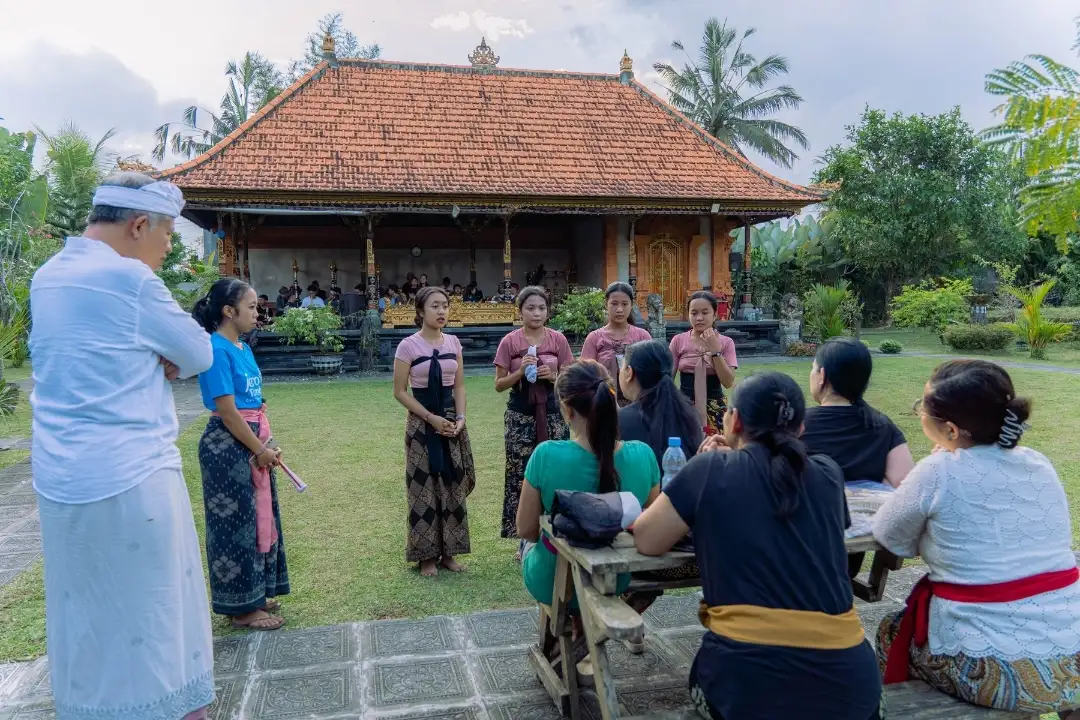
At Jero Tumbuk in Selat, Karangasem, cooking is part of a wider cultural retreat experience. Guests are invited to understand the stories behind local food, learn from traditional knowledge, and discover how ingredients connect with the surrounding community.
For travelers looking for a meaningful cooking class Karangasem, here are five things you can learn beyond the kitchen.
1. You Will Learn About Local Ingredients and Where Food Comes From

A traditional Balinese meal begins long before it reaches the plate.
It starts with the land, farmers, seasons, and ingredients available in the local environment.
During a cooking activity, guests can learn about ingredients commonly used in Balinese cuisine, including vegetables, herbs, spices, coconut products, rice, and other locally available materials.
Understanding ingredients helps visitors see that food is connected to everyday life.
A spice is not only something added for flavor.
A vegetable is not only something purchased from a market.
Each ingredient has a journey.
It may come from a farmer’s field, a local supplier, a family garden, or a traditional source that has been used for generations.
This connection is especially important in a place like Karangasem, where agriculture remains an important part of community life.
A cooking class can introduce guests to the relationship between food and the surrounding environment.
This reflects Palemahan within Tri Hita Karana, the relationship between people and nature.
The rice fields, gardens, farms, and natural resources around Bali are not separate from the food culture.
They are part of it.
By understanding local ingredients, guests begin to appreciate that a traditional meal represents many relationships working together.
2. You Will Understand the Role of Balinese Spices
One of the most recognizable parts of Balinese cuisine is its use of spices.
But learning about spices is not only about memorizing ingredients.
It is about understanding balance.
A traditional Balinese spice mixture often combines different flavors, aromas, and textures. Ingredients are prepared carefully to create a harmony that defines the final dish.
Through a cooking class, guests may learn how spices are selected, prepared, and combined.
They can discover how techniques such as grinding, mixing, and seasoning influence the taste and character of a dish.
For many visitors, this becomes one of the most interesting parts of the experience.
The same ingredients may feel completely different when prepared using traditional methods.
A Balinese spices lesson also introduces the knowledge behind the cooking.
Many recipes are not simply written instructions. They are skills passed through families and communities.
A cook learns by watching, practicing, and receiving guidance from someone with experience.
This is why learning directly from a local instructor creates a different experience from following a recipe online.
The teacher can explain small details:
How fine should the spices be?
When should ingredients be added?
How can the flavors be balanced?
Why is this technique used?
These details create a deeper understanding of traditional cooking.
3. You Will Discover Traditional Cooking Methods
Modern kitchens make cooking faster and more convenient.
But traditional cooking methods often reveal a closer relationship between people, ingredients, and time.
A traditional cooking Bali experience can introduce guests to techniques that have been practiced for generations.
Participants may learn how ingredients are prepared, how flavors are developed, and how different steps create the final dish.
The process itself becomes part of the experience.
Preparing spices.
Cutting ingredients.
Mixing flavors.
Cooking together.
Sharing the result.
These simple actions create a connection between the guest and the food.
The goal is not only to finish the meal.
It is to understand the knowledge behind it.
Traditional cooking also teaches patience.
Some flavors cannot be rushed. Some preparation methods require attention and care.
This is similar to many other Balinese traditions where skills develop through repetition and guidance.
A cooking class therefore becomes a lesson about more than food.
It becomes a lesson about process.
Guests can see that traditional knowledge is built through time, practice, and relationships between generations.
4. You Will Understand the Cultural Meaning Behind Balinese Food
Food is closely connected to Balinese culture.
Meals are part of family gatherings, ceremonies, hospitality, and daily routines.
This means a traditional dish often carries a story.
A cooking class can help guests understand that food is not only about satisfying hunger.
It can represent gratitude, community, and connection.
This relates to Pawongan within Tri Hita Karana, the relationship between people.
Cooking often brings people together.
Families prepare meals together.
Communities share food during important moments.
Guests welcome each other through meals.
The act of preparing and sharing food creates relationships.
At Jero Tumbuk, the cooking experience is not designed only as a demonstration where guests watch someone else prepare food.
It encourages participation.
Guests can learn, ask questions, and understand the cultural context behind what they are preparing.
This is what transforms a simple Bali food experience into a meaningful cultural activity.
You begin to see food as a connection between:
- Farmers who grow ingredients
- Cooks who preserve knowledge
- Families who pass recipes forward
- Communities that share meals
- Traditions that continue through daily practice
The final dish becomes a reflection of the people behind it.
5. You Will Experience the Meaning of Sharing a Meal
The best part of a cooking class often happens after the cooking is finished.
Sitting together and sharing the meal creates another layer of connection.
The food becomes a reason for conversation.
Guests can talk with instructors, learn more about local life, and reflect on the experience.
This simple moment represents an important part of Balinese hospitality.
Food is often a way of welcoming others.
Sharing a meal is not only about eating. It is about creating a moment together.
For travelers, this can become one of the most memorable parts of the experience.
You may forget some details of a recipe.
But you may remember the conversation, the people you met, and the feeling of preparing something together.
This is why a cooking class can be a valuable culture workshop Bali experience.
It creates direct interaction rather than only observation.
Local Sourcing Makes the Experience More Connected
A traditional cooking experience becomes more meaningful when guests understand the relationship between ingredients and the local community.
Local sourcing can connect food preparation with farmers, suppliers, and small businesses.
Ingredients used in cooking may represent the work of people who maintain agricultural knowledge and contribute to the local economy.
However, responsible communication is important.
Not every ingredient should automatically be described as locally sourced unless it has been confirmed.
The value of the experience comes from understanding the connection between food and community, not from making exaggerated claims.
Guests can ask questions about ingredients, farming practices, and preparation methods.
Curiosity helps create a deeper appreciation.
Before Joining a Cooking Class at Jero Tumbuk

A cooking activity is designed to be enjoyable for different types of travelers.
You do not need professional cooking experience.
Beginners can participate and learn through guidance.
However, guests should confirm important details before booking.
This includes:
- Available dates
- Duration of the class
- Menu options
- Number of participants
- Included ingredients
- Dietary requirements
- Allergies or food restrictions
Guests with vegetarian, vegan, allergy-related, or other dietary requests should communicate these needs in advance.
This allows the team to prepare appropriately and create a smoother experience.
Advance confirmation is especially important because cooking activities depend on ingredients, preparation, instructors, and available schedules.
A Simple Way to Understand Bali Through Food
A cooking class may seem like a simple activity.
But behind every dish, there is a larger story.
The ingredients connect to the land.
The techniques connect to generations of knowledge.
The meal connects people.
The preparation connects guests with local culture.
At Jero Tumbuk, a Balinese cooking class is not only about learning how to make food.
It is about understanding how food reflects the relationship between people, nature, and community.
For travelers searching for a meaningful cooking activity Karangasem, this experience offers a slower and more personal way to discover Bali.
You do not only taste the result.
You learn the story behind it.