
6 Activities for Guests Who Want Culture Without a Packed Schedule
Home - Our Journal

Home - Our Journal
Experiencing Balinese culture does not mean you have to fill every hour of your holiday with activities. For some travelers, the idea of joining cultural experiences sounds exciting, but a tightly packed itinerary can quickly make the trip feel like another schedule to complete. Moving from one activity to another leaves little time to understand what you have seen, talk with the people behind the tradition, or simply enjoy the surroundings.
A different approach is to choose fewer experiences and give each one enough space. Instead of trying to see everything in a short visit, you can select activities that genuinely interest you and participate at a comfortable pace. This is the idea behind a relaxed cultural holiday Bali experience, where cultural learning becomes part of the rhythm of your stay rather than another checklist of attractions.
At Jero Tumbuk in Selat, Karangasem, culture can be experienced through direct participation, local guidance, nature, food, and community. The available programs may vary depending on local mentors, activity arrangements, and schedules, so guests should confirm the availability and expected duration of each experience before planning their day.
If you want to experience Balinese culture without turning your retreat into a packed itinerary, these six activities offer different ways to learn while still leaving room for rest.

Balinese dance is often one of the first forms of culture that visitors encounter in Bali. However, watching a performance and learning some of the movements yourself can create two very different experiences. When you participate in a Balinese dance class, you begin to notice the discipline, gestures, expressions, posture, and coordination behind what may initially appear effortless.
At Jero Tumbuk, the purpose of cultural learning is not to turn guests into professional performers. A beginner can join simply to understand the practice and experience what it is like to learn directly from someone with local knowledge. You may need to repeat a movement several times or adjust your posture based on the mentor's guidance, and that process is part of the experience.
This makes the activity suitable for travelers who are curious about Balinese culture but do not necessarily want to dedicate an entire day to it. A dance session can become one part of a slower day, followed by breakfast, a walk, time in the garden, or simply an afternoon of rest.
The exact duration and availability should be confirmed before your stay because cultural programs can depend on the availability of local mentors and the arrangements at the time of your visit. Rather than building your entire itinerary around an assumed schedule, it is better to ask what is available and allow the activity to fit naturally into your day.
Food offers one of the most accessible ways to learn about everyday culture. You do not need previous knowledge of Balinese cuisine to appreciate a traditional cooking experience because the learning begins with simple things such as ingredients, spices, preparation, and the way food is shared.
A cooking class Bali experience at Jero Tumbuk can give guests an opportunity to participate in the preparation of traditional food rather than simply ordering a finished dish. Through the process, you can learn about local ingredients, how spices are prepared, and how cooking knowledge is passed from one generation to another.
The experience can also become a natural opportunity to talk with the person guiding the class. Questions about an ingredient can lead to conversations about local food. A discussion about a cooking method can reveal something about everyday life. What begins as a practical activity can therefore become a cultural exchange without needing to feel like a formal lesson.
The meal at the end can be just as important as the preparation itself. Sitting down and sharing food creates time to slow down and talk about what you have learned. It is a simple example of how food can connect guests with local knowledge and community life.
If you have allergies, dietary restrictions, or specific food requirements, these should be communicated before the activity. The menu and arrangements should be confirmed in advance so that the team can let you know what can be accommodated.
Travelers who want to explore a less familiar side of Balinese culture can consider learning about Mekidung. Rather than approaching it as something to watch briefly and then move on from, guests can learn about the practice through local explanation and guidance.
For someone encountering Mekidung for the first time, there is no expectation to arrive with prior knowledge. The learning can begin with listening and understanding the context before any participation takes place. This is important because cultural practices can lose much of their meaning when they are removed from the community and treated only as something interesting for visitors to imitate.
Learning from a local mentor gives the experience a different depth. You can ask questions, understand how the practice is approached, and learn why it continues to have a place in Balinese cultural life. The purpose is not to become proficient in one session, but to gain a more informed understanding of something that may otherwise be unfamiliar.
Mekidung can also work well within a relaxed itinerary because it does not need to be combined with several other activities on the same day. Guests can dedicate part of their time to learning and leave the rest of the day open for rest or other personal activities.
As with the other cultural programs at Jero Tumbuk, availability and duration should be confirmed before your visit.
Learning about Balinese script offers another way to experience culture through education rather than sightseeing. For international visitors, the script may initially appear unfamiliar, but that unfamiliarity is exactly what can make the learning process interesting.
An introduction to Balinese script can help guests understand its basic forms and its place within Balinese cultural heritage. You do not need to become proficient during your stay. Even a short learning experience can give you a different perspective when you later encounter the script in traditional or cultural settings.
More importantly, learning from a local mentor helps connect the script with the people who continue to preserve and teach cultural knowledge. Heritage is not maintained simply because an old writing system still exists. It remains relevant when people continue to learn it, practice it, and pass it to younger generations.
This is closely connected with the educational side of Jero Tumbuk. Cultural preservation and education can work together when younger members of the community have opportunities to learn traditional knowledge while visitors are given the opportunity to understand it respectfully.
For travelers who prefer quieter and more reflective activities, learning about Balinese script can fit naturally into a day that also includes time to read, walk, or simply enjoy the surroundings.

Not every cultural experience needs to happen in a classroom. Sometimes, the landscape itself provides the best place to learn.
A rice field tour in Selat can introduce guests to the relationship between agriculture, food, nature, and village life. What may initially look like a peaceful landscape becomes more meaningful when you understand what is happening within it and how much work is involved in producing the food that eventually reaches the table.
During a rice field walk, guests can learn about rice cultivation, seasonal farming, the daily work of farmers, and the importance of agriculture within local life. The experience can also help explain why the surrounding landscape matters beyond its visual appeal.
This type of activity naturally supports a slower pace. You are walking rather than rushing between attractions, and there is time to observe the surroundings and ask questions. The experience does not need to be dramatic to be memorable because the value comes from understanding something that is already part of everyday life.
Comfortable footwear is recommended, particularly because natural paths can vary depending on weather and ground conditions. Guests should also remain respectful of agricultural areas and follow local guidance while walking through them.
For travelers searching for a culture retreat Karangasem experience that combines nature and learning without requiring a full-day schedule, a rice field tour can be a simple and accessible choice.
Traditional music provides another opportunity to experience Balinese culture through direct participation. Jero Tumbuk's cultural programs include traditional musical practices such as Tabuh, Gender, and Rindik, giving guests an opportunity to learn more about the instruments, techniques, and knowledge behind these traditions.
You do not need to consider yourself musical before joining. The experience is intended as cultural learning, so beginners can approach it with curiosity rather than worrying about performing perfectly. A local mentor can demonstrate the technique, explain the instrument, and guide guests through the basics.
Trying an instrument yourself can also change the way you experience traditional music afterward. Something that may have seemed simple when watched from a distance can reveal a surprising amount of coordination and practice once you attempt it yourself.
This is one of the benefits of participation. You are not simply consuming a cultural performance; you are gaining a small understanding of the effort and knowledge required to maintain the tradition.
The activity can remain a small part of your day rather than becoming another long commitment. Ask about the available program and duration, then leave enough time afterward to rest or enjoy the surrounding environment.
Having access to cultural activities does not mean you need to experience all of them. In fact, trying to fit every available program into one short stay can work against the kind of experience Jero Tumbuk is designed to provide.
You might be more interested in food than dance, or more curious about agriculture than traditional music. Another guest may prefer learning Balinese script or spending time with a local mentor. There is no need for every visitor to follow the same combination of activities.
Choosing one or two experiences can give you more time to pay attention. You can listen to the person guiding you, ask questions, and actually remember what you learned instead of immediately thinking about the next activity.
Free time is also part of a retreat. After a cultural session, you may want to return to your accommodation and rest. You may prefer to walk around the surrounding area, read, have a conversation, or simply spend time without a specific plan.
That balance is important for a relaxed cultural holiday Bali experience. Culture should give you something to discover, not another reason to rush.
Learning directly from local people is an important part of cultural participation at Jero Tumbuk. A mentor does more than demonstrate a technique. They can provide the context that helps guests understand why a particular practice matters and how it fits into Balinese life.
For first-time visitors, it is natural not to know the appropriate way to approach every cultural activity. You may not know when it is acceptable to take photographs, which areas are restricted, or how you should participate.
The most respectful approach is to listen and ask when you are uncertain. During cultural activities, guests should follow the instructions of local mentors, ask before photographing people or practices, respect spaces with cultural or spiritual significance, and avoid treating traditional knowledge purely as entertainment.
These simple behaviours allow visitors to participate without assuming that their own expectations should determine how the activity takes place.
The experience is ultimately about learning from the people who carry that knowledge.
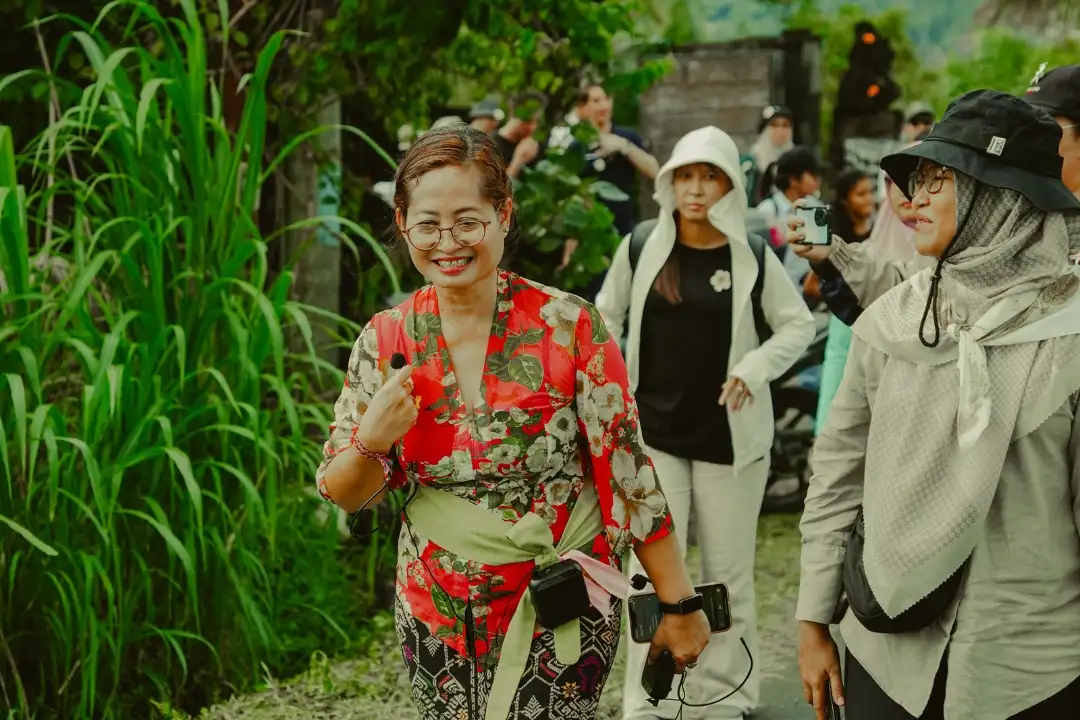
A relaxed itinerary requires more than simply choosing fewer activities. It also means leaving enough space between them.
If you spend the morning learning traditional cooking, there is no reason to immediately schedule another cultural class just because you have free time in the afternoon. You might discover that the most enjoyable part of the day is having a slow meal afterward or sitting outside and thinking about what you learned.
The same applies to a rice field tour. After spending time walking and learning about agriculture, you may prefer to return to the retreat and rest rather than immediately continue to another destination.
This is where the idea of slow travel becomes relevant. The objective is not to maximize the number of experiences you can collect during your trip. It is to give yourself enough time to actually experience the things you choose.
Activity schedules should therefore be treated with some flexibility. Confirm the duration and availability before your stay, but leave room for changes based on local arrangements, mentor availability, weather, and other practical considerations.
One of the advantages of approaching cultural activities as learning experiences is that beginners can participate without feeling that they need to prove anything.
You do not need to know how to dance before joining a Balinese dance class. You do not need to understand Balinese cuisine before entering a cooking class. You do not need to know Mekidung before being introduced to it, and you do not need to understand Balinese script before learning its basic forms.
The same applies to traditional music and agriculture.
You can arrive with questions rather than knowledge.
A good cultural experience should give you space to learn gradually. You may make mistakes during a dance class, need several attempts to understand an instrument, or discover that a traditional cooking technique is more involved than you expected.
Those moments are not failures. They are part of learning.
What matters most is being willing to listen, accept guidance, and respect the tradition you are being introduced to.
A cultural retreat does not have to resemble a traditional sightseeing itinerary where every hour is assigned to a destination or activity. You can experience Balinese dance in the morning, enjoy a meal, take a walk through the rice fields later, and still have an open afternoon.
You can choose a cooking class because food interests you, then spend the rest of the day resting. You can learn a little about Balinese script without feeling that you need to follow it with another cultural workshop. You can listen to traditional music, talk with a mentor, and then simply enjoy the quiet surroundings.
This is the value of Jero Tumbuk activities within the wider cultural retreat experience. The activities are not there simply to keep guests occupied. They create opportunities to learn, participate, and connect with Balinese culture while still allowing space for nature, rest, and personal time.
For travelers seeking a relaxed cultural holiday Bali experience, there is no need to choose between doing nothing and following a packed itinerary. A more balanced approach is possible: choose what genuinely interests you, follow the guidance of local mentors, confirm the available schedule and duration, and leave enough time between experiences to simply be present.
At Jero Tumbuk, culture does not have to be something you rush through. When you give yourself enough time to learn, listen, and participate, even one simple activity can become a meaningful part of your stay in Karangasem.


