5 Ways Jero Tumbuk Helps Keep Balinese Traditions Alive

Balinese culture does not remain alive simply because people remember it.
It survives because someone continues to teach it, practice it, and create space for the next generation to learn.
At Jero Tumbuk, cultural preservation is not treated as a performance prepared only for visitors. It is part of an ongoing community effort involving local mentors, children, families, traditional arts, and regular learning activities.
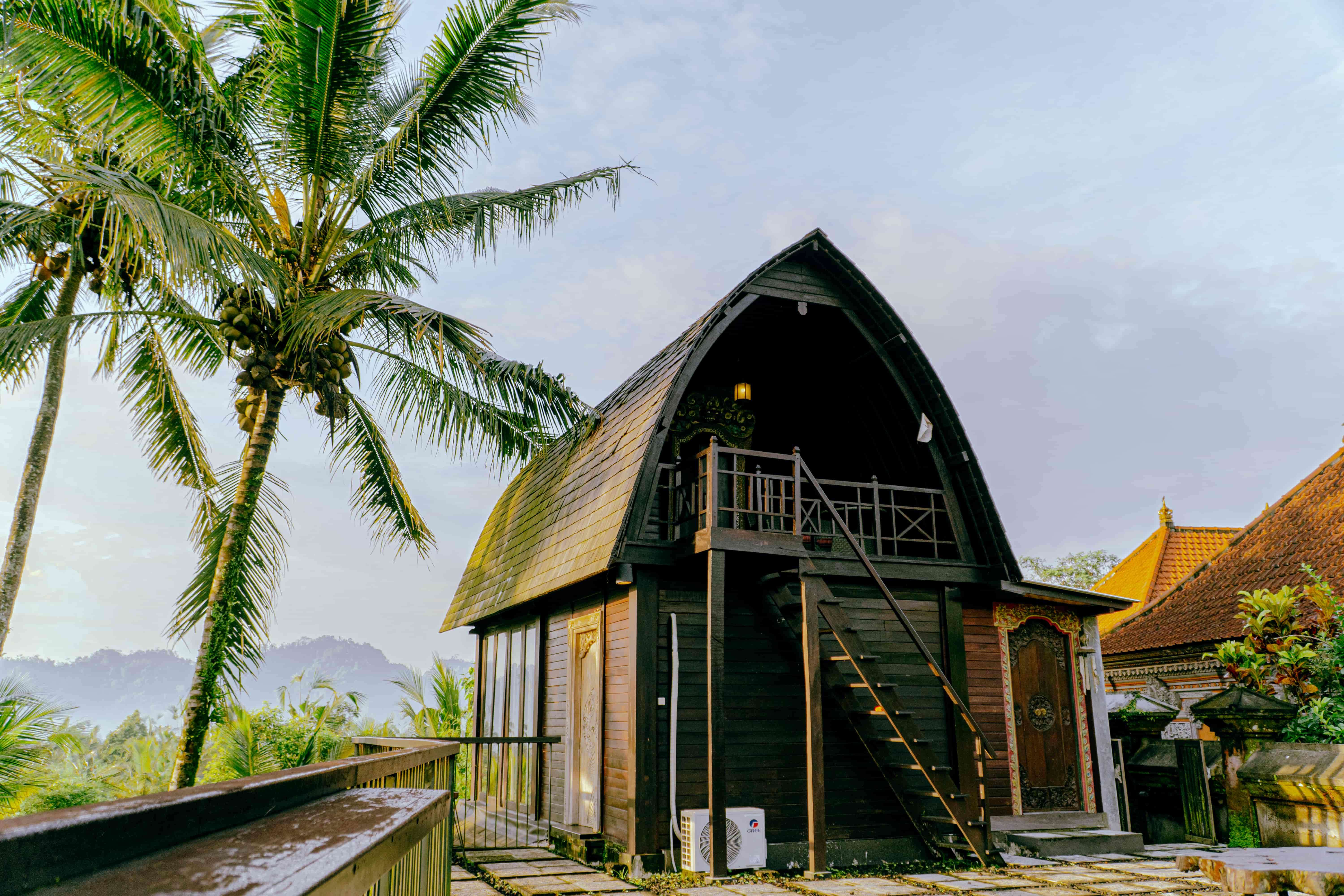
Located in Selat, Karangasem, Jero Tumbuk is a living cultural retreat where accommodation, education, spirituality, nature, and community programs exist within one connected environment.
One of its most important roles is helping younger generations stay connected to Balinese traditions through free and accessible cultural learning.
Here are five ways Jero Tumbuk culture supports long-term Balinese tradition preservation.
1. It Provides Free Cultural Learning for the Community
Cultural knowledge can only continue when people have access to it.
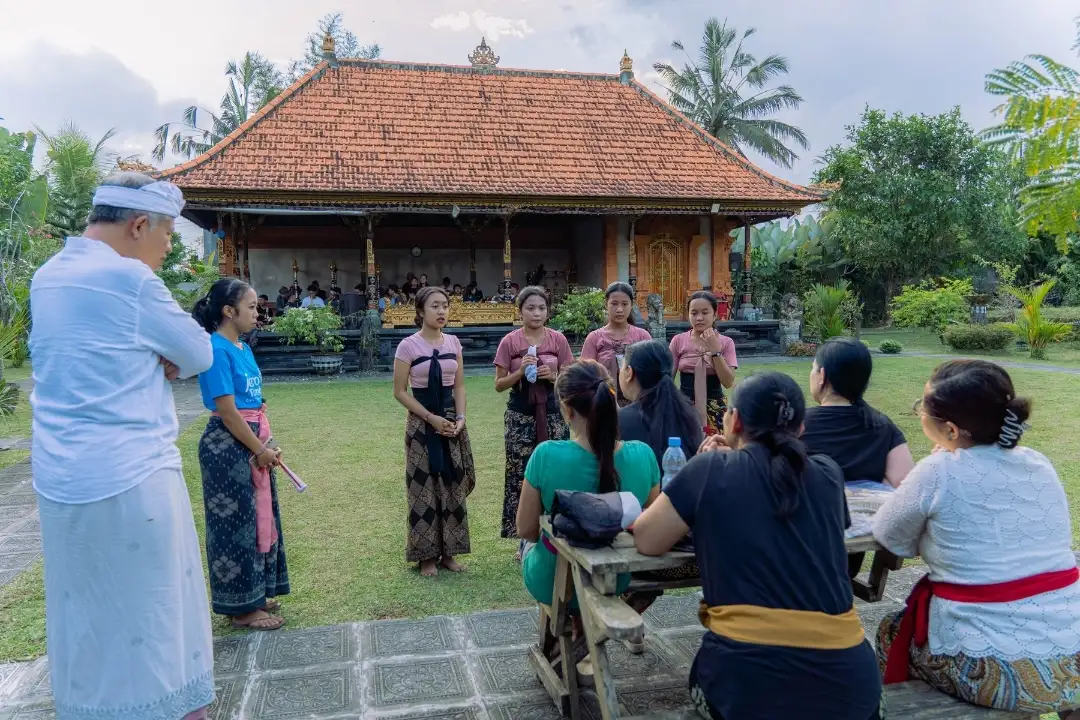
At Jero Tumbuk, traditional learning activities are made available openly and free of charge to the surrounding community. Programs are held regularly, including on Fridays, Saturdays, and Sundays, giving children and other participants a place to learn without cultural education becoming an additional financial burden for their families.
This community access is important.
Not every child has the same opportunity to join private classes, purchase instruments, or travel to a learning center. By providing a shared space for cultural programs, Jero Tumbuk helps make traditional knowledge more accessible.
The learning may include:
- Balinese dance
- Tabuh or gamelan
- Gender
- Rindik
- Mekidung
- Balinese script
Each activity connects participants with a different part of Balinese heritage.
Dance introduces movement, expression, posture, storytelling, and discipline. Traditional music develops rhythm, cooperation, and listening. Mekidung connects participants with traditional songs, language, literature, and spirituality. Balinese script helps younger generations remain connected to an important written heritage.
This is the foundation of community culture Bali.
Culture is not preserved behind glass or discussed only during ceremonies. It remains accessible through regular learning, direct practice, and shared community participation.
2. Local Mentors Pass Knowledge Directly to Younger Generations
Traditions do not teach themselves.
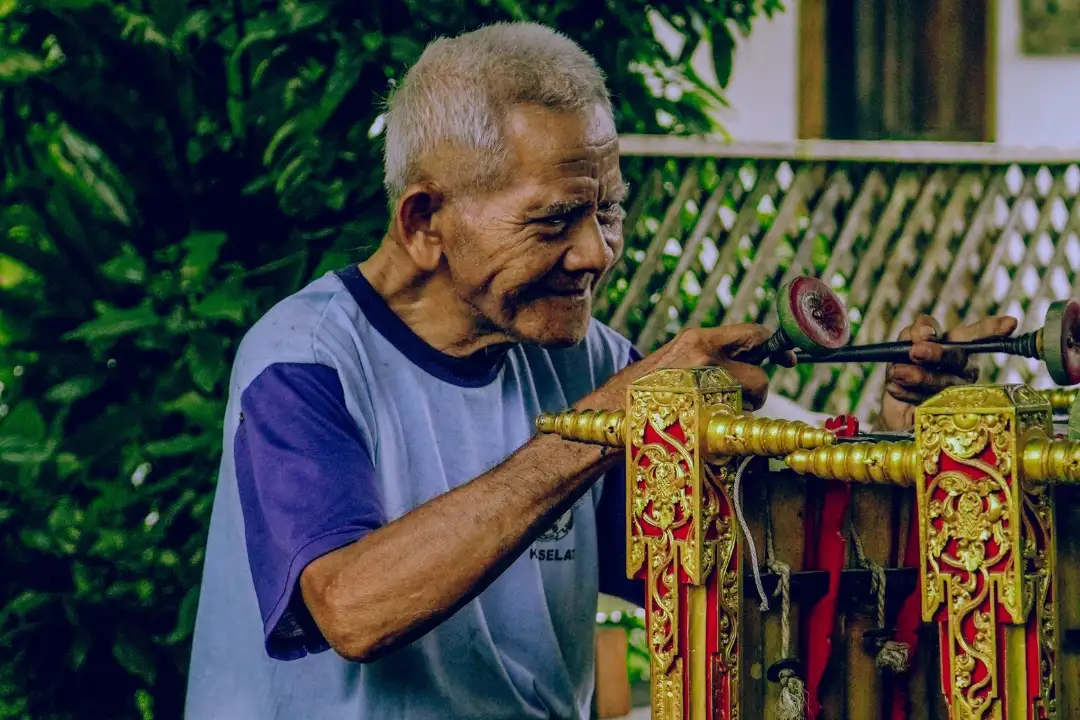
Behind every child learning a dance movement, musical rhythm, traditional song, or letter in Balinese script, there is usually a teacher who has spent years developing that knowledge.
Local mentors play an essential role in Jero Tumbuk’s cultural programs.
They do more than demonstrate a technique. They help participants understand how to practice, correct mistakes, build confidence, and respect the meaning behind each tradition.
A cultural mentor Bali may teach children how to hold a position correctly in Balinese dance, follow a rhythm in a musical group, pronounce a traditional verse, or form characters in Balinese script.
This direct relationship between mentor and student is one of the strongest ways culture continues.
Books, videos, and digital materials can support learning, but they cannot fully replace the guidance of someone who understands the tradition through years of practice.
Mentors also carry stories, values, and local ways of understanding that may not appear in formal instructions.
Through patient teaching, cultural knowledge moves from one generation to another.
This reflects Pawongan, one of the three relationships within Tri Hita Karana. Pawongan is harmony between people.
At Jero Tumbuk, that harmony can be seen through the relationship between mentors, children, families, and the wider community. Cultural preservation becomes a shared responsibility rather than an individual task.
3. Children Participate as Learners, Not as Performers for Tourism
Children are central to the future of every cultural tradition.
At Jero Tumbuk, their participation is not positioned primarily as entertainment for visitors. The purpose of the programs is learning, development, and cultural continuity.
A child practicing Balinese dance may repeat the same movement many times before it feels natural. A young gamelan student may need to listen carefully before understanding how their rhythm fits with the group. Someone learning Balinese script may begin with basic characters before progressing to more complex writing.
This process takes time.
The value is not only in the final performance or completed work. It is in the discipline, confidence, patience, and sense of identity developed through regular learning.
Through traditional dance Bali programs, children can learn more than choreography. They can become familiar with expressions, body positions, characters, stories, and the discipline required by traditional dance.
Through music, they learn to listen to others and understand that their individual part must work within the group.
Through mekidung and Balinese script, they remain connected to language, literature, spiritual traditions, and forms of knowledge that could become more difficult to pass on without continued practice.
Jero Tumbuk creates room for children to learn at their own stage.
Guests who observe these programs should understand that the children are students, not attractions. Their learning process deserves patience, privacy, encouragement, and respect.
The purpose is not to create a perfect show for tourism. The purpose is to help Balinese culture remain meaningful to the people who will carry it forward.
4. Regular Practice Turns Heritage Into a Living Habit
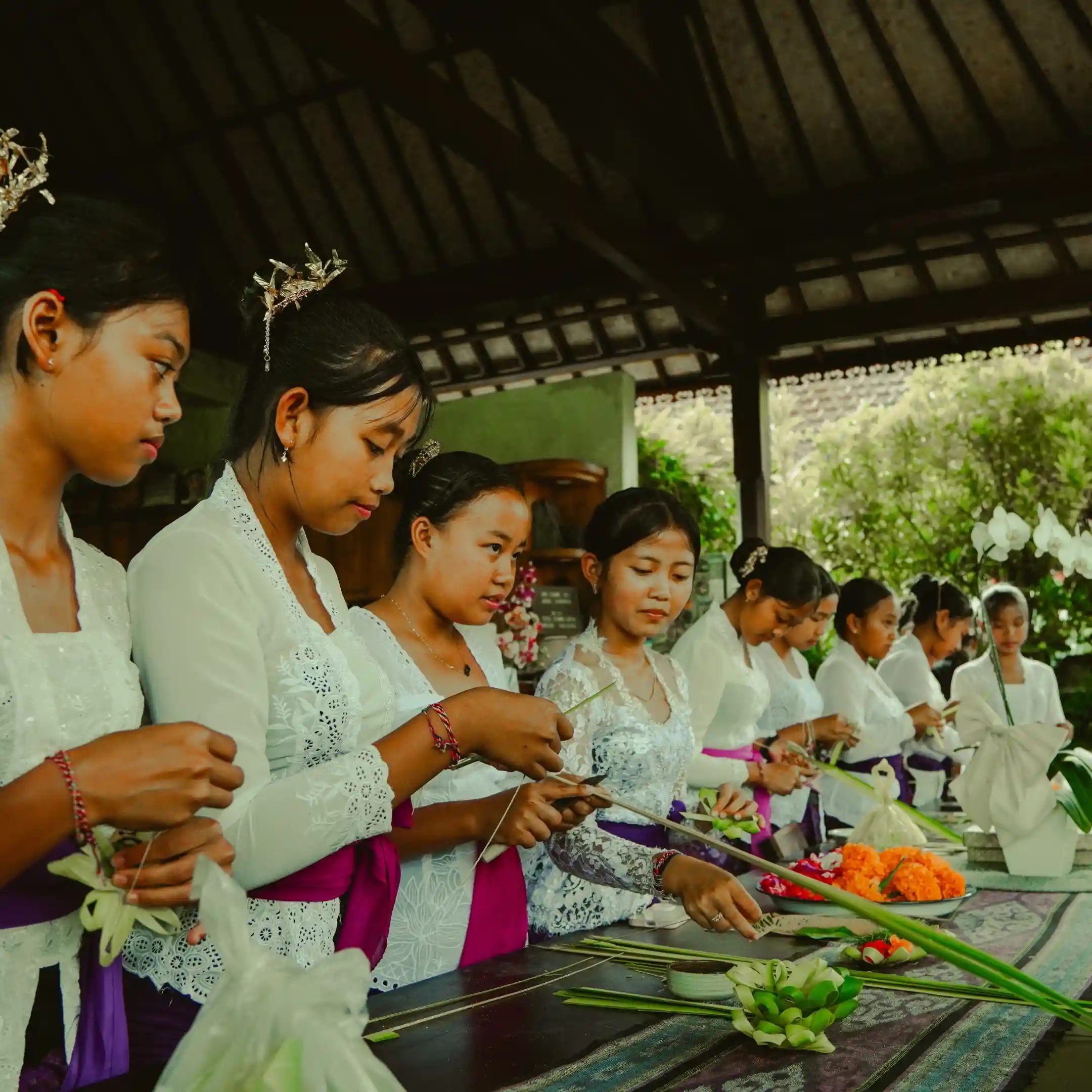
Cultural preservation requires more than occasional events.
A tradition becomes stronger when it is practiced regularly.
At Jero Tumbuk, cultural activities are organized as recurring learning programs rather than one-time demonstrations. This regularity gives participants opportunities to improve gradually, remember what they have learned, and build stronger relationships with mentors and other students.
A weekly practice may look simple from the outside, but its long-term value can be significant.
Repeated dance training helps movements become more confident and controlled. Regular music practice helps participants understand rhythm, timing, and coordination. Continued writing practice makes Balinese script more familiar and usable.
This is why Jero Tumbuk’s approach matters.
Culture is not presented only during special celebrations. It is brought into everyday community life.
The idea behind Balinese tradition preservation is not to keep every tradition unchanged and distant from younger generations. It is to create enough space, guidance, and regular participation for that knowledge to remain understood and practiced.
At Jero Tumbuk, culture lives because people return to it.
Children come back to learn. Mentors return to teach. Groups practice together. Knowledge becomes part of a routine rather than something remembered only during major events.
This is the difference between culture being displayed and culture being lived.
5. Traditional Music, Dance, and Script Are Taught as Connected Forms of Heritage
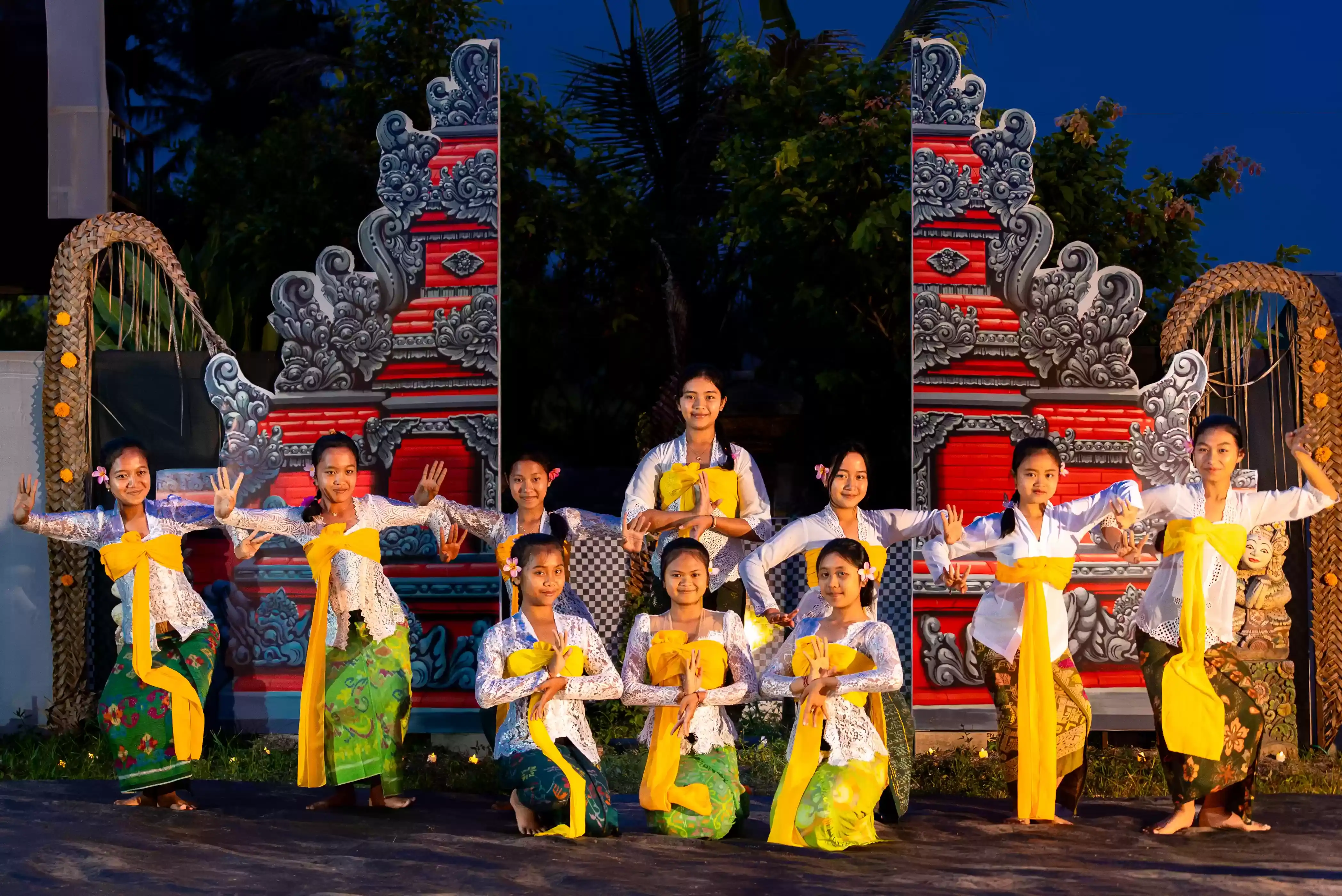
Balinese culture is not made up of isolated activities.
Music, dance, language, literature, spirituality, ceremonies, and community life often influence one another.
Jero Tumbuk’s cultural programs reflect this wider connection by supporting several forms of traditional learning.
Traditional Music
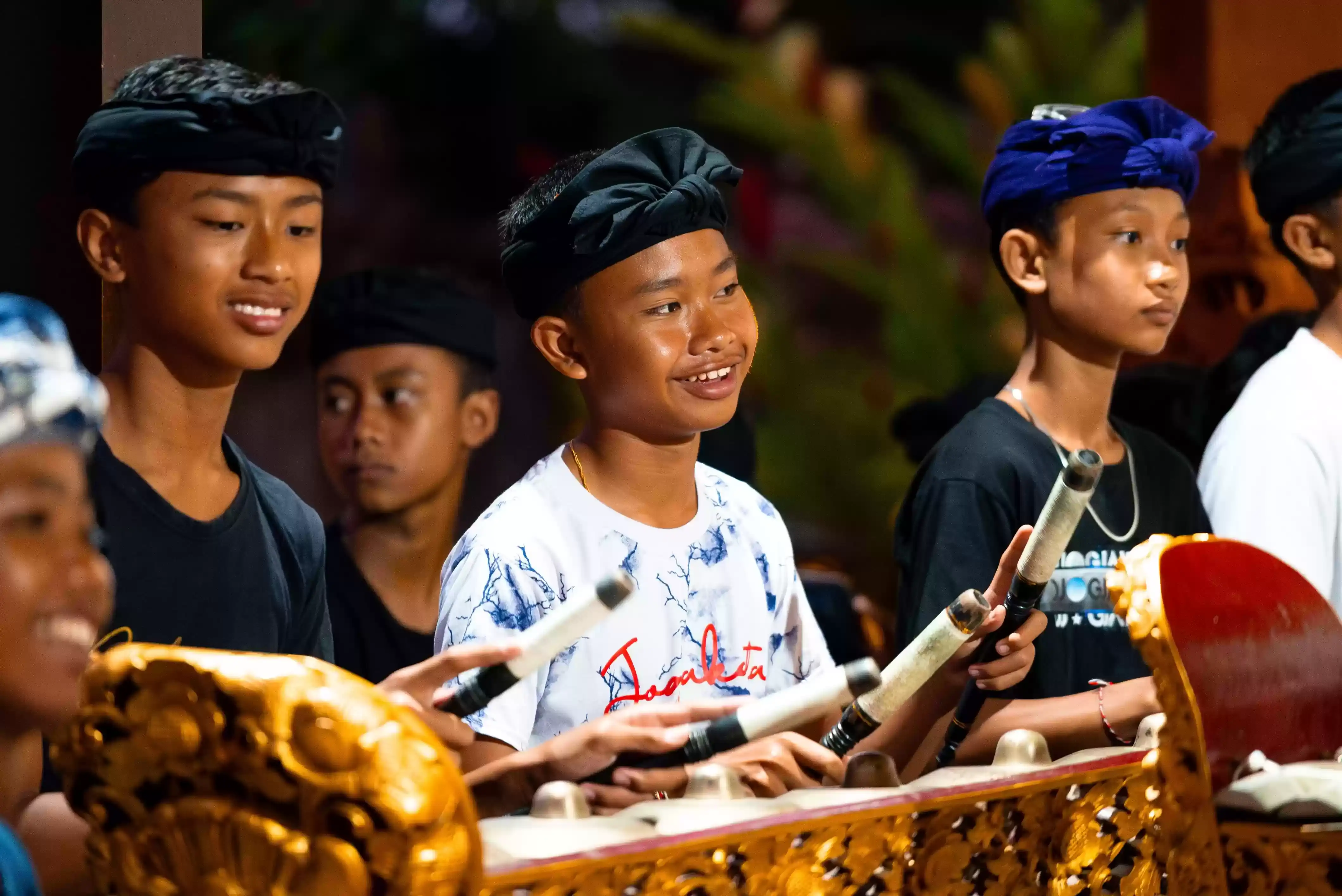
Tabuh, gamelan, gender, and rindik each introduce participants to rhythm, technique, focus, and group coordination.
In gamelan education, every player needs to understand that music is created together. The sound depends on cooperation, timing, and awareness of the other musicians.
Gender requires concentration and coordination. Rindik introduces participants to a traditional bamboo instrument with a softer musical character. Tabuh helps young learners understand structure, rhythm, and the collective nature of Balinese music.
These activities support more than musical ability. They also develop patience, listening, discipline, and teamwork.
Balinese Dance
Balinese dance connects movement with expression, storytelling, character, music, and cultural values.
Students learn how small details matter. Hand positions, eye movements, posture, and facial expressions can all carry meaning.
The process requires repetition and guidance from experienced teachers.
By offering space for dance learning, Jero Tumbuk helps younger generations develop both technical skills and a stronger relationship with Balinese cultural identity.
Mekidung
Mekidung introduces participants to traditional vocal expression connected to language, literature, tradition, and spirituality.
Learning these traditional songs helps maintain an oral heritage that depends on people continuing to remember, understand, and perform it.
Balinese Script
The Balinese script program supports the continuity of Bali’s written heritage.
Learning to read and write the script can help children understand more about Balinese language, literature, historical texts, and cultural identity.
Without opportunities to practice, traditional scripts can become increasingly distant from everyday life. Teaching them to younger generations gives the script a better chance of remaining understood and used.
Together, these programs create a broader heritage program Karangasem where children can encounter several parts of Balinese culture within one learning environment.
Cultural Preservation Is a Community Responsibility
Jero Tumbuk cannot preserve Balinese culture alone.
Cultural continuity depends on mentors who are willing to teach, children who are willing to learn, families who support participation, and communities that continue to value traditional knowledge.
Jero Tumbuk provides a place where these relationships can develop.
It offers access to learning, supports regular practice, creates space for local mentors, and helps connect younger generations with dance, music, language, and traditional arts.
Guests can also play a respectful role by understanding the purpose of these programs.
Visitors should not expect every class to become a performance. They should avoid treating children as photo subjects and should ask permission before documenting learning sessions.
The most responsible way to engage is to listen, learn, respect the schedule, and recognize the work taking place behind each activity.
Culture Lives When It Is Shared
Jero Tumbuk is a culture and retreat center with accommodation, not simply a place to stay that offers entertainment on the side.
Its cultural programs show what “Culture Lives Here” means in practice.
Culture lives when a mentor corrects a student’s movement.
It lives when children practice a musical rhythm together.
It lives when someone learns to write their first characters in Balinese script.
It lives when traditional songs continue to be remembered and shared.
Most importantly, it lives when the next generation is given enough time, access, encouragement, and guidance to make that knowledge part of their own lives.
Through free cultural learning, local mentorship, children’s participation, regular practice, and community access, Jero Tumbuk helps create the conditions where Balinese traditions can continue to grow.