5 Ways One Stay Can Create a Bigger Impact in the Local Community

A hotel booking is often seen as a simple transaction.
You choose a room, stay for a few nights, use the facilities, and continue your journey. But in a community-based retreat, a stay can be connected to a much wider network of people.
It may involve local staff, farmers, food suppliers, craftspeople, teachers, cultural mentors, children, and community programs. The value of the booking is not limited to the room a guest receives.
This does not mean one reservation can transform an entire village. Responsible communication should never make exaggerated promises or suggest that every stay is a direct donation to a specific cause.
However, travel choices can still matter.
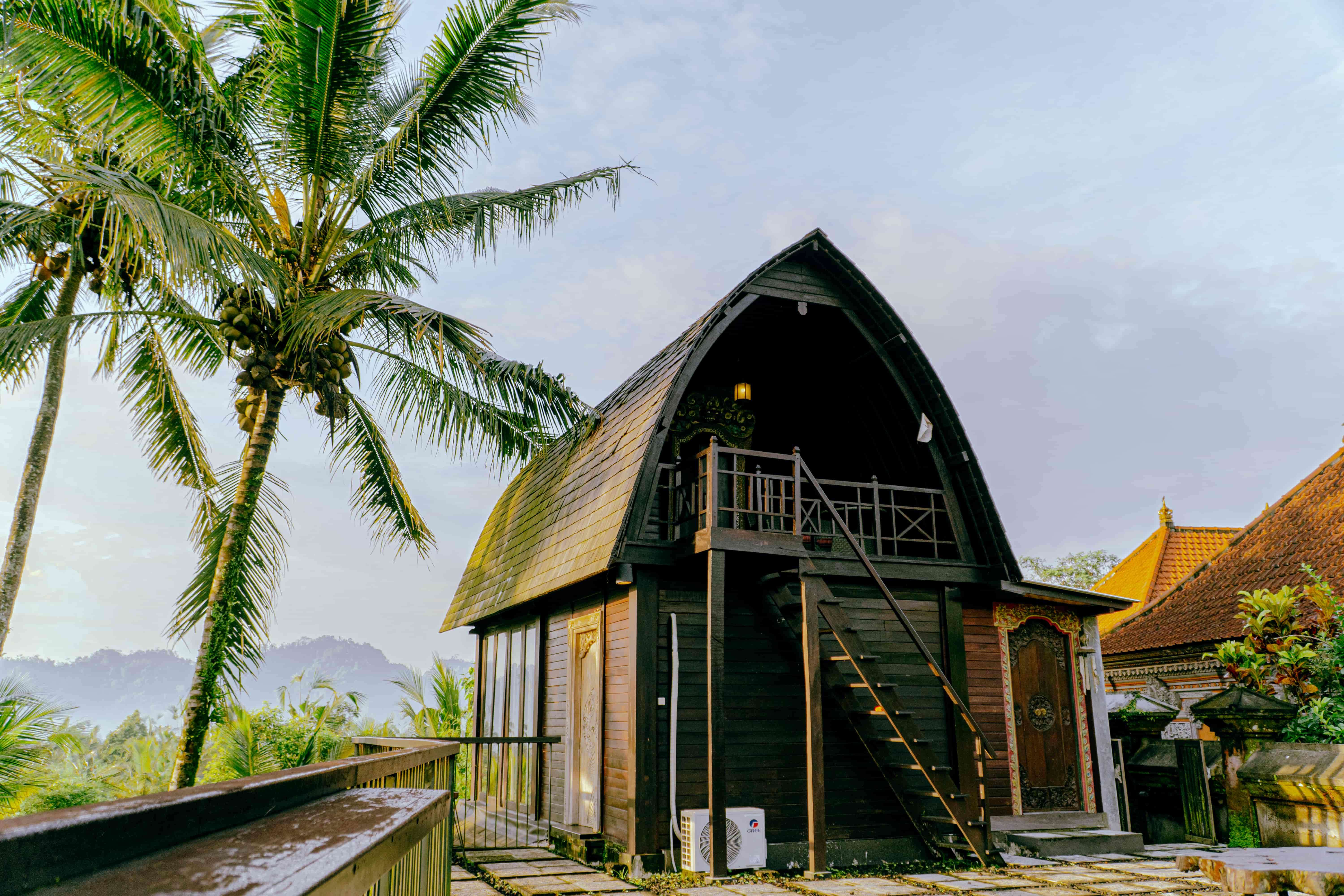
At Jero Tumbuk in Selat, Karangasem, accommodation is part of a larger cultural and community ecosystem. The retreat connects hospitality with local employment, education, cultural learning, spiritual practice, nature, and community initiatives.
For travelers interested in social impact tourism Bali, here are five ways one stay can contribute to something larger than the guest experience.
1. It Helps Keep Work Opportunities Connected to the Local Area
Every retreat depends on people.
Rooms need to be prepared. Gardens and buildings need to be maintained. Food needs to be sourced and cooked. Guests need guidance, information, transportation coordination, and support throughout their stay.
At Jero Tumbuk, the wider operating model is connected to people from the surrounding community. Local staff are part of how the retreat functions and how guests experience the place.
This matters because tourism income does not only come from large attractions or international businesses. It can also move through local employment, daily operations, service roles, teaching, maintenance, food preparation, and community-based hospitality.
Supporting local employment Bali does not mean presenting staff as part of the attraction.
They are professionals and community members whose work deserves fair recognition and respect. Guests should not reduce their role to creating a “local atmosphere.” Their knowledge, care, and daily responsibilities make the experience possible.
A responsible guest can recognize this contribution in simple ways:
- Treat staff respectfully
- Learn people’s names when appropriate
- Communicate clearly
- Avoid unreasonable demands
- Give thoughtful feedback
- Recognize the work behind the stay
One booking cannot guarantee permanent employment or solve every economic challenge. But choosing a retreat that remains connected to its local community can help support an operating environment where work opportunities stay closer to the people who live there.
This is one part of the local economy Karangasem that travelers may not always notice.
2. It Creates Demand for Local Food, Materials, and Supplies

The impact of accommodation extends beyond the people working directly at the property.
Every meal, building material, room item, decoration, and daily supply comes from somewhere.
Jero Tumbuk’s ecosystem is connected to local farmers, food suppliers, craftspeople, small businesses, and locally made products. When local sources are used, the value of tourism can move through several parts of the surrounding economy.
For example, ingredients served in a meal may be connected to farmers or suppliers from the area. Wooden, bamboo, or crafted elements may involve local skills and materials. Operational needs may create opportunities for nearby businesses rather than relying entirely on distant suppliers.
This is why the phrase support local farmers should mean more than taking photographs in a rice field.
Farmers are part of a working food system. Their land, knowledge, seasonal labor, and harvests support families and communities. Recognizing their role means understanding the relationship between agriculture, food, hospitality, and the landscape.
Guests can explore this connection through experiences such as a rice-field tour or a Traditional Balinese Cooking Class.
A rice-field tour can introduce visitors to agricultural life, seasonal work, and the people behind the landscape.
A cooking class can explain how local ingredients, spices, food preparation, family traditions, and community life are connected.
These activities turn consumption into understanding.
The guest does not only eat a meal or admire a field. They begin to recognize the network of people and natural resources behind the experience.
Again, responsible claims are important. Not every ingredient or item should be described as locally sourced unless it has been confirmed. But where local sourcing is genuinely part of the operation, it can help keep more tourism value within the surrounding area.
3. It Supports an Environment Where Community Education Can Continue
Education is one of the four main pillars of Jero Tumbuk.
Programs connected to the retreat include English classes, academic support, workshops, teacher development, and opportunities for collaboration with educational institutions.
These initiatives create additional learning access for children and other members of the surrounding community.
The importance of community education Bali goes beyond helping children complete schoolwork.
English classes may help participants build vocabulary, confidence, and communication skills. Academic support can provide a safe place to ask questions and study outside school hours. Workshops can introduce new ideas, creative skills, environmental knowledge, or teaching methods.
Education also connects with the future of the village.
Children growing up around tourism may need both cultural confidence and practical skills. They should not be asked to choose between understanding their own heritage and preparing for wider educational or professional opportunities.
Jero Tumbuk’s education pillar creates space for both.
A guest booking should not automatically be described as directly funding one child’s education unless there is a clear and verified program showing that connection.
However, a functioning retreat can help support the broader environment where educational activities are hosted, organized, promoted, and continued.
Travelers can also engage responsibly by understanding the purpose of these programs.
Children in a class are not content subjects. They should not be interrupted, photographed without permission, or treated as proof that a traveler has made a social impact.
The deeper value lies in allowing the program to remain focused on learning.
A thoughtful guest can ask about the work, listen to the stories of teachers or mentors, and understand why long-term educational access matters to the community.
4. It Helps Create Space for Cultural Mentors to Keep Teaching
Cultural preservation requires people who are willing and able to teach.
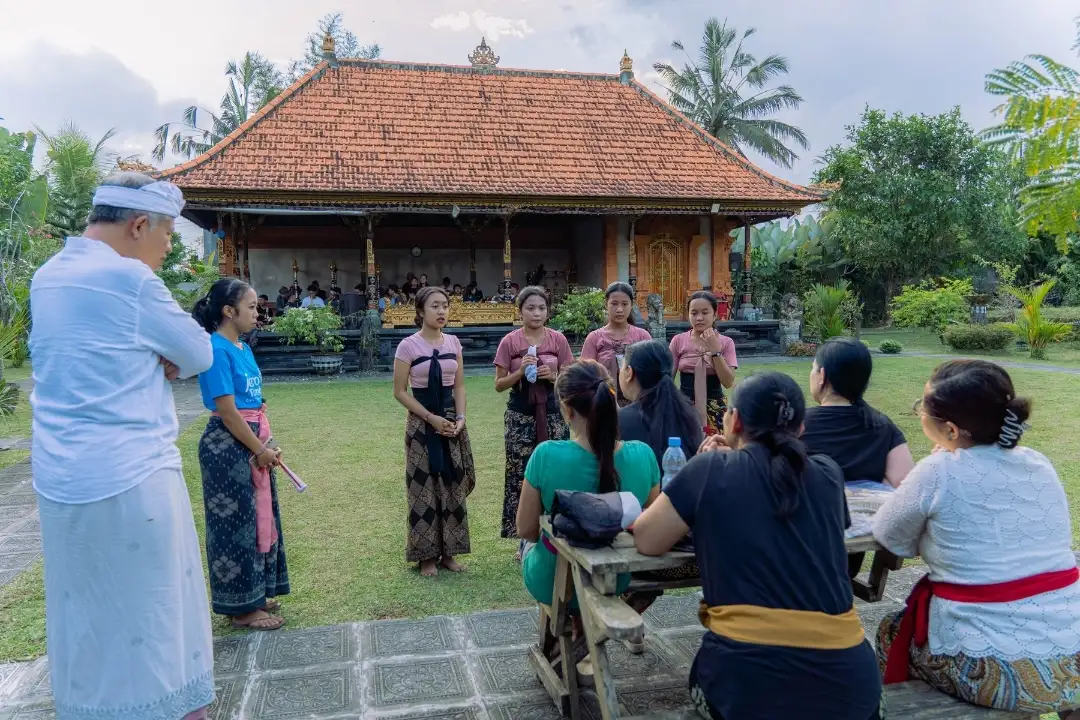
At Jero Tumbuk, local mentors support learning in Balinese dance, tabuh or gamelan, gender, rindik, mekidung, and Balinese script.
These programs are not simply performances for guests. They help younger generations access traditional knowledge through regular practice and direct guidance.
A cultural mentor carries more than a technical skill.
They may understand the stories behind a dance, the coordination required in traditional music, the relationship between mekidung and spirituality, or the role of Balinese script in language and literature.
Their work helps turn heritage into something that can still be learned and practiced.
This is central to long-term cultural preservation.
Traditions do not survive because they are photographed or promoted online. They survive because children practice them, mentors return to teach, families support participation, and communities continue to create space for learning.
Guests may have opportunities to observe or join cultural activities depending on schedules and availability.
When they do, the experience should be approached carefully.
Visitors should:
- Follow the mentor’s guidance
- Respect the class schedule
- Avoid interrupting children’s learning
- Ask permission before taking photographs
- Recognize the time and knowledge behind the activity
- Avoid treating the session as a staged performance
Participation can also help travelers understand the value of cultural practitioners.
A basic dance movement may reveal how much discipline is involved. A traditional music session may show why cooperation and careful listening are essential. Learning a few Balinese characters may create respect for the complexity of the script.
This is one way a stay can support a culture-centered ecosystem without turning culture into a tourism product stripped of its meaning.
5. It Contributes to a Place Where Community Initiatives Can Grow Over Time
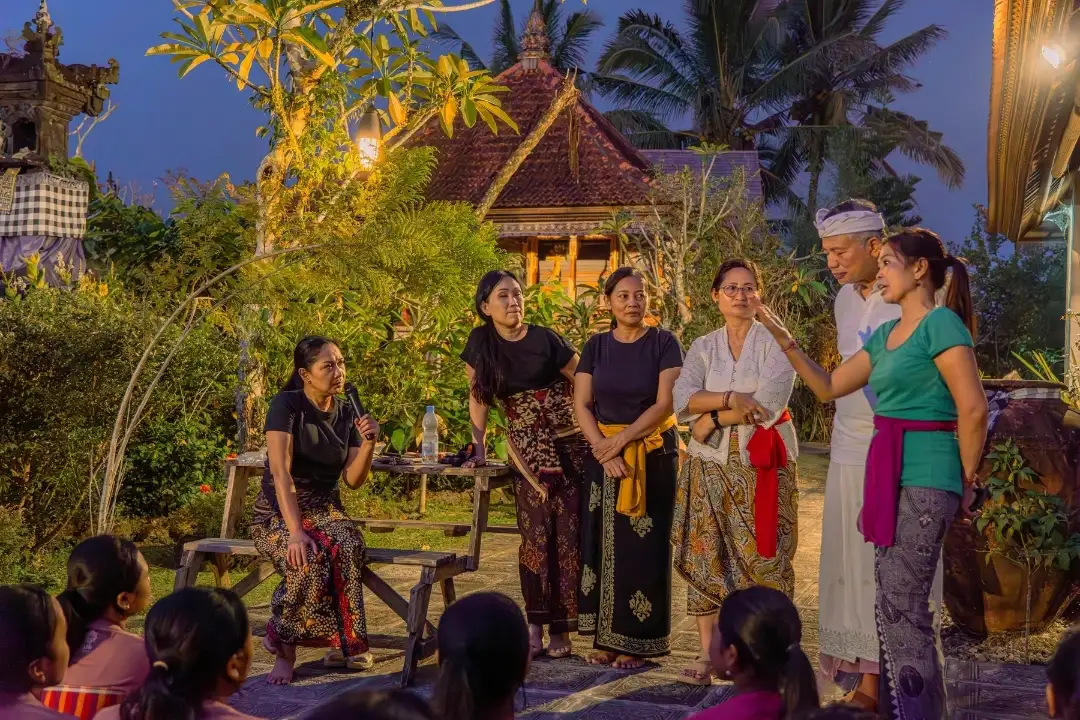
Jero Tumbuk is connected to community initiatives beyond accommodation and cultural learning.
Programs mentioned within its wider ecosystem include blood donation, food assistance, health-related activities, education, and support for the surrounding community.
These activities show that the retreat’s relationship with local people is not limited to employment or guest services.
It aims to create a space where community needs, education, culture, and social participation can remain connected.
This is part of what defines a responsible retreat Bali model.
However, social impact should always be communicated carefully.
A guest should not be told that one booking automatically pays for a blood donation event, provides food to a family, or guarantees the continuation of a community program unless that connection can be verified.
Exaggerated claims may sound inspiring, but they can reduce trust and turn real community work into a marketing device.
A more honest message is this:
By choosing to stay within a community-based ecosystem, guests participate in an operating model that values local employment, education, cultural learning, local suppliers, and community initiatives.
The impact comes from consistency over time.
One stay becomes part of many stays. One cultural class becomes part of regular practice. One workshop becomes part of a longer educational effort. One local purchasing decision becomes part of an ongoing relationship with farmers or suppliers.
Long-term change is rarely created by one dramatic action.
It is built through repeated support, reliable programs, trusted relationships, and community participation.
The Philosophy Behind the Impact
The wider community role of Jero Tumbuk is connected to Tri Hita Karana.
This Balinese philosophy describes three forms of harmony.
Parahyangan is the relationship between people and the divine. It can be experienced through sacred spaces, prayer, melukat, canang sari, and spiritual practice.
Palemahan is the relationship between people and nature. It appears through rice fields, rivers, agriculture, local food, bamboo, wood, and the natural surroundings of Selat.
Pawongan is the relationship between people. It is reflected in education, local employment, mentorship, community programs, and the way guests interact with the people around them.
Social impact is strongest when these relationships are not treated separately.
Local employment should remain connected to dignity. Agriculture should remain connected to environmental respect. Cultural programs should remain connected to teachers and younger generations. Community initiatives should remain guided by the people they are intended to support.
What Responsible Travelers Can Do
Travelers do not need to become volunteers or arrive with the belief that they will change the community.
Responsible participation can be quieter and more respectful.
Choose locally connected experiences. Learn from mentors. Ask about ingredients and local products. Respect children’s privacy. Avoid aggressive bargaining with cultural practitioners or small businesses. Follow guidance in sacred spaces.
Most importantly, listen before assuming what the community needs.
A responsible traveler understands that local people are not waiting to be rescued by tourism. They are already building, teaching, working, preserving, and organizing within their own community.
The guest’s role is to participate respectfully and make choices that do not remove value from the people behind the experience.
One Stay Is Part of a Bigger Story

A stay at Jero Tumbuk does not create an instant transformation for the entire community.
That is not the promise.
Its value comes from being part of a wider ecosystem where accommodation is connected to local work, local supplies, education, cultural mentorship, social initiatives, and long-term preservation.
Guests receive a place to rest and opportunities to learn. At the same time, their stay becomes connected to the people, traditions, and natural environment that make Jero Tumbuk possible.
That is the deeper idea behind the Jero Tumbuk community.
One booking may be a small part of the story.
But when tourism continues to value local knowledge, local participation, and long-term relationships, those small parts can help something meaningful continue.