6 Ways Education Can Create Better Opportunities for Local Children
Home - Our Journal

Home - Our Journal
Education is not only about passing exams.
It is about building confidence, developing skills, and creating opportunities for the future.
For children growing up in local communities, access to additional learning opportunities can make a meaningful difference. Support outside formal schooling can help them strengthen communication skills, explore new interests, and prepare for future possibilities.
In Bali, where tourism is an important part of the economy, skills such as communication and English language ability can become valuable tools for younger generations.
However, education is not only about preparing children for work.
It is also about helping them understand their identity, build confidence, and become active members of their own community.
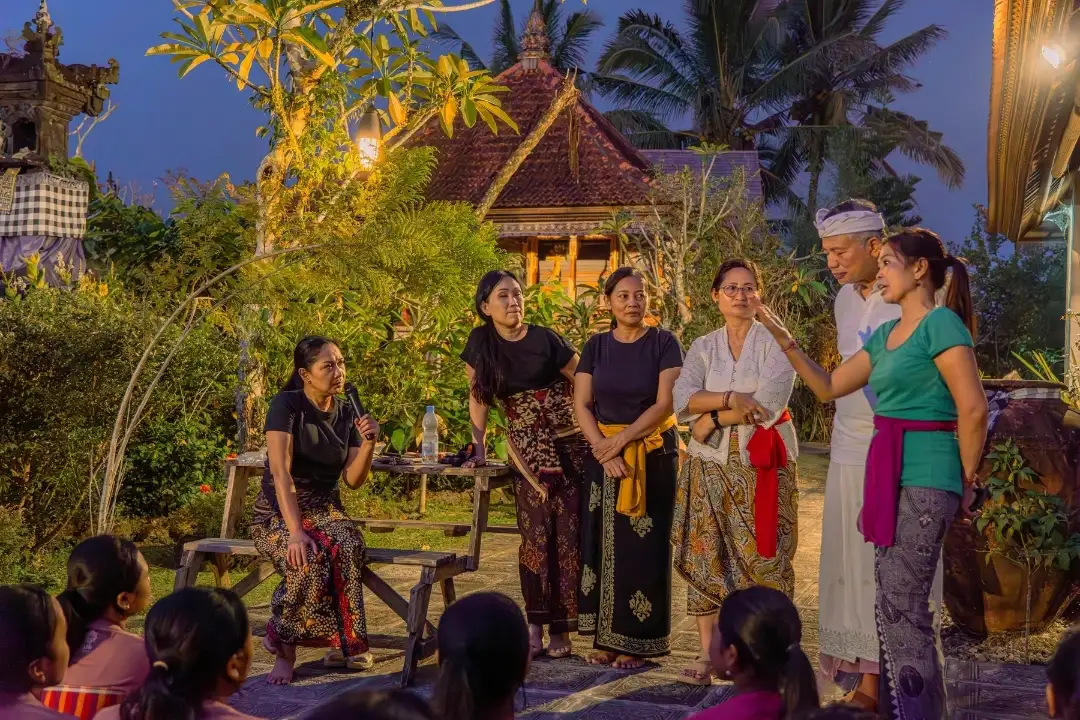
At Jero Tumbuk in Selat, Karangasem, education is one of the important pillars within its community-focused approach. Through learning programs, cultural education, and community initiatives, Jero Tumbuk creates space where children can continue developing skills while staying connected to their local environment.
For travelers interested in community education Bali, understanding the wider value of these programs begins with seeing education as a long-term investment.
Here are six ways education can create better opportunities for local children.
Language is a bridge.
It allows people to exchange ideas, build relationships, and access information from different parts of the world.
For children in tourism areas, English can become a useful communication skill. It can help them interact with visitors, understand different perspectives, and feel more confident when communicating with people from other backgrounds.
A free English class Bali program provides children with opportunities to practice language skills in a supportive environment.
The value of learning English is not only about memorizing vocabulary or grammar.
It is about becoming comfortable expressing ideas.
A child who feels confident speaking in front of others may become more willing to participate at school, ask questions, share opinions, and explore new opportunities.
Communication skills can also support children in everyday situations.
They can help students access educational resources, understand international information, and connect with wider communities.
At Jero Tumbuk, English learning is part of a broader education approach that recognizes the importance of giving children opportunities to develop useful skills while remaining connected to their cultural identity.
Learning another language does not mean replacing local culture.
Instead, it can help children communicate their own culture with greater confidence.
Formal education provides the foundation for children’s development.
However, some students benefit from additional support outside regular classroom hours.
A tutoring program Bali can provide a space where children receive extra guidance, review lessons, ask questions, and develop better study habits.
For some students, having someone available to explain a difficult topic can make learning feel less stressful.
Additional support can help children:
The purpose of tutoring is not to replace schools.
Schools remain the main place where children receive formal education.
Community learning programs simply provide additional opportunities for children who may benefit from more support.
At Jero Tumbuk, education initiatives focus on creating accessible learning spaces where children can continue developing their skills through guidance and encouragement.
A consistent learning environment can help children see education as something valuable and achievable.
Bali welcomes visitors from many countries every year.
For communities connected to tourism, communication skills can create additional opportunities for future generations.
English ability, confidence, and cultural understanding can support children who later choose careers related to hospitality, guiding, creative industries, entrepreneurship, or other fields connected to international interaction.
An English class Karangasem program can introduce children to skills that may become useful as they grow older.
However, education should not be viewed only as preparation for tourism jobs.
The goal is not to place expectations on children to follow one career path.
Instead, education provides choices.
A child who learns English may use it for tourism.
Another child may use it for further study.
Another may use it to build a business, communicate internationally, or support their community in another way.
The important part is giving children access to skills that expand their possibilities.
Education creates options.
It allows young people to decide their own future with greater confidence.
One lesson can introduce an idea.
Regular learning helps turn that idea into a skill.
This is why consistency matters in education.
A child attending one English class may learn new words.
A child attending regularly can gradually improve pronunciation, vocabulary, confidence, and communication ability.
The same applies to academic support and cultural learning.
Progress happens through repetition.
This is why community programs require commitment from teachers, mentors, volunteers, families, and students.
A local learning centre or community education space becomes valuable when it provides continuity.
Children know where they can learn.
Teachers know how to support progress.
Families understand the importance of participation.
Over time, these small learning moments can create stronger foundations.
At Jero Tumbuk, education is connected with the idea that meaningful impact is built through ongoing relationships.
It is not about creating a quick result after one activity.
It is about creating an environment where learning can continue.
Long-term development requires patience.
Skills grow gradually.
Confidence develops through experience.
Opportunities appear through consistent preparation.
Education is not only about materials and classrooms.
People make learning meaningful.
Teachers, mentors, and volunteers play an important role because they provide guidance, encouragement, and personal support.
For children, having someone who believes in their ability can influence how they view themselves.
A teacher can help a student overcome hesitation.
A mentor can introduce new possibilities.
A volunteer can provide different perspectives and encourage curiosity.
However, community education should always respect the role of local educators.
Volunteers should support existing efforts, not replace local knowledge or leadership.
The strongest programs are built through collaboration.
Local teachers understand the community, students, and cultural context.
Volunteers may bring additional skills, experiences, or support.
Together, they can create a more supportive learning environment.
At Jero Tumbuk, education is connected to relationships between people.
This reflects Pawongan within Tri Hita Karana, the relationship between humans and one another.
Learning grows through connection.

Education creates opportunities, but it also strengthens identity.
Children who understand their culture, language, environment, and community often develop a stronger sense of belonging.
This is especially important in places where tourism creates rapid change.
Young people need opportunities to learn global skills while remaining connected to their own heritage.
At Jero Tumbuk, education exists alongside cultural learning.
Children may have opportunities to learn English while also participating in Balinese cultural programs such as traditional arts, music, and language learning.
This combination creates balance.
Children can prepare for the future without losing connection to where they come from.
A community becomes stronger when younger generations feel proud of their identity and confident about their abilities.
Education helps create this foundation.
It supports children not only as future workers, but as future community members, leaders, teachers, artists, entrepreneurs, and contributors.
When people talk about social impact Bali, it is important to understand that meaningful change takes time.
A community education program is not about creating instant transformation.
It is about creating access.
Access to learning.
Access to guidance.
Access to opportunities.
Access to people who can support growth.
At Jero Tumbuk, education is one part of a wider ecosystem connected to culture, nature, spirituality, and community life.
The purpose is not to present children as a tourism attraction.
Children are learners.
Teachers are educators.
Community programs are spaces for development.
Guests who encounter these initiatives should approach them with respect.
They should understand that education belongs to the community and should continue based on local needs and priorities.
Visitors who value education can support community learning in thoughtful ways.
This does not always mean direct volunteering.
Responsible support can include:
If guests visit educational programs, they should remember that children are not there to perform for visitors.
They are there to learn.
The most respectful approach is to observe carefully, follow guidance, and appreciate the effort behind the program.
Education begins with small steps.
A new word learned in an English class.
A difficult lesson understood through extra support.
A child becoming more confident speaking in front of others.
A student discovering a new interest.
A mentor encouraging someone to continue learning.
Over time, these moments create possibilities.
Jero Tumbuk’s education initiatives show that cultural retreats can be connected not only to guest experiences, but also to community development.
Through Jero Tumbuk education, children can access learning opportunities that support communication skills, confidence, cultural connection, and future choices.
Because the strongest communities are not only built through what they preserve from the past.
They are also built through what they prepare for the future.