7 Experiences That Make Jero Tumbuk More Than Just a Place to Stay
Home - Our Journal
Home - Our Journal
A stay at Jero Tumbuk begins with accommodation, but it does not end there.
Located in Selat, Karangasem, Jero Tumbuk is a community-based culture and retreat center where guests can rest, learn, reflect, and spend time closer to Balinese culture and nature.
The rooms and villas provide a place to slow down, but the wider Jero Tumbuk experience is shaped by cultural learning, spiritual activities, agriculture, local food, education, and community programs.
This is what makes Jero Tumbuk an authentic Bali retreat. Guests are not only invited to observe Bali from a distance. They can begin to understand how culture, nature, spirituality, education, and local life remain connected.
Here are seven experiences that make Jero Tumbuk more than just a place to stay.
Accommodation is one part of Jero Tumbuk, but it is not the complete purpose of the place.
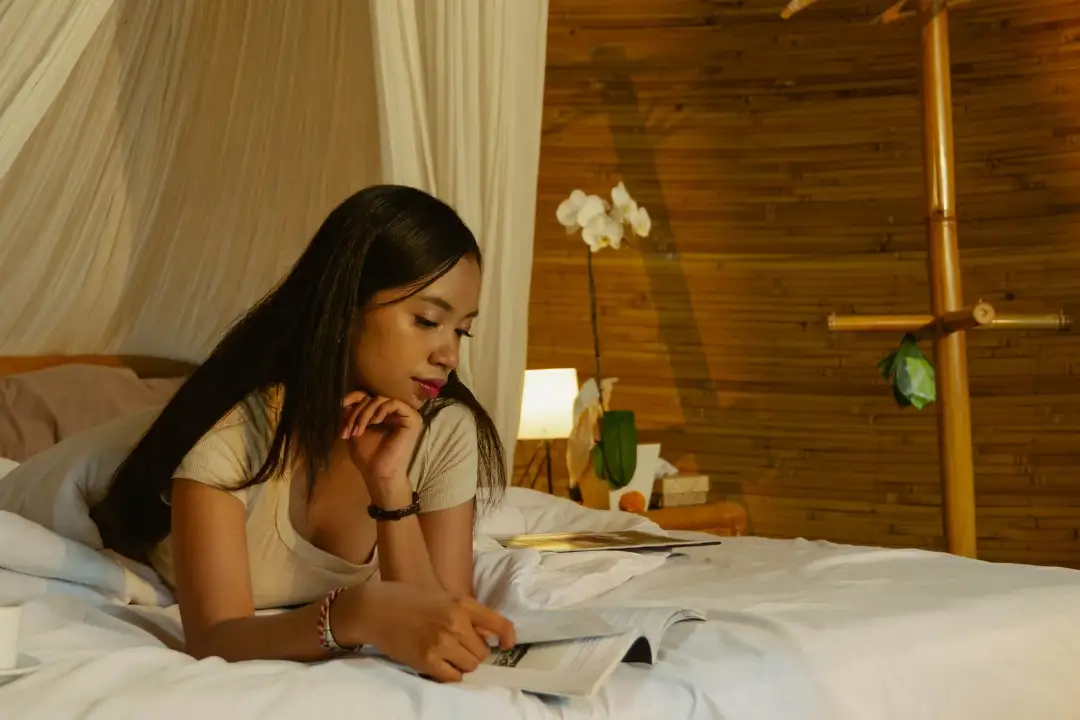
Guests can choose from Wantilan Rooms, Villa Tepi Sungai, Villa Bambu Daja, Villa Bambu Delod, and Villa Kayu. Each option has a different character and relationship with the surrounding environment.
The Wantilan Rooms offer a simple and warm atmosphere close to shared spaces and community life. Villa Tepi Sungai brings guests closer to the natural sound and setting of the river. Villa Bambu Daja is connected to an elevated position, rice-field views, and Mount Agung. Villa Bambu Delod offers a more grounded atmosphere surrounded by nature, while Villa Kayu brings together wooden materials and traditional character.
These accommodations are not designed around constant in-room entertainment. The focus is on rest, natural surroundings, local architecture, and a slower rhythm.
Guests may spend more time listening to the environment, walking through the property, joining an activity, or speaking with people connected to Jero Tumbuk.
This makes the stay feel different from accommodation that exists separately from its surroundings. At Jero Tumbuk, the room is part of a wider cultural and community environment.
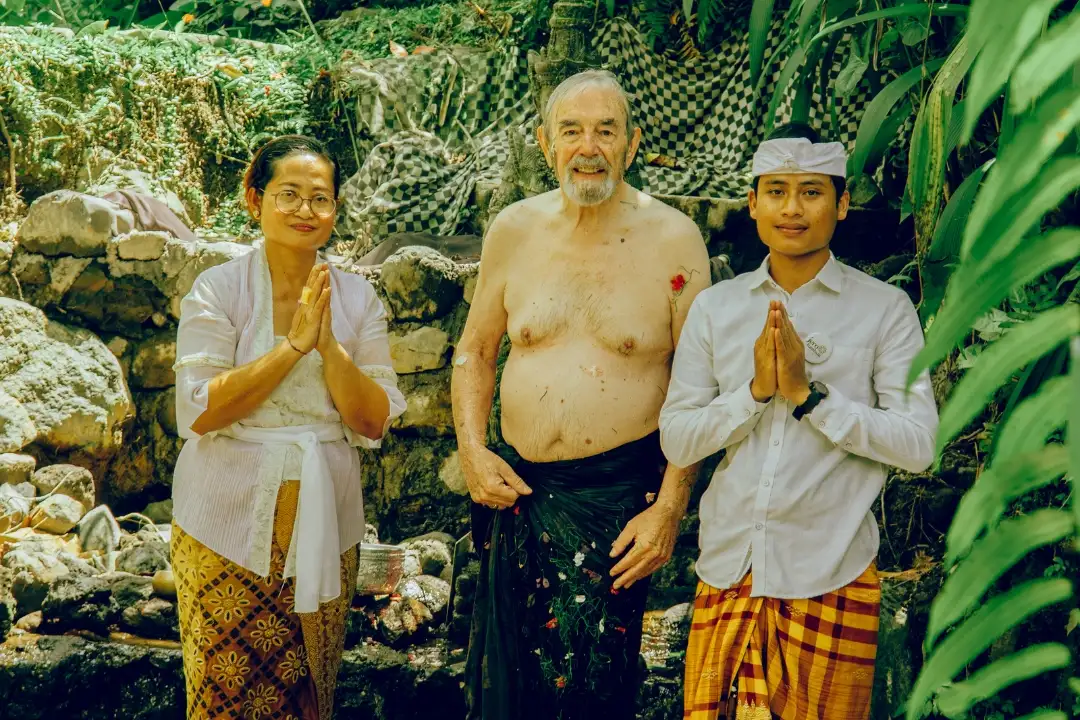
Melukat is one of the spiritual experiences that may be introduced to guests at Jero Tumbuk.
It is important to understand that melukat is not presented as a quick wellness trend or a promise of instant healing. It is a Balinese purification tradition connected to prayer, sacred water, respect, and spiritual preparation.
Guests who join the experience need to follow local guidance carefully. This may include appropriate clothing, preparation before the ritual, prayer, and respectful behavior in a sacred space.
Photography and documentation should never become more important than the meaning of the ritual. Guests should ask for permission and follow the direction of the local host, facilitator, or religious leader.
The value of melukat comes from learning how spirituality is practiced within Balinese life. It introduces guests to the relationship between people, sacred spaces, water, gratitude, and the divine.
This reflects Parahyangan, one of the three relationships within Tri Hita Karana. Parahyangan describes harmony between human beings, God, and the spiritual world.
For travelers seeking a spiritual retreat Karangasem experience, melukat offers an opportunity to approach Balinese spirituality with humility and respect.
A Traditional Balinese Cooking Class at Jero Tumbuk is not only about learning how to prepare a meal.
It is an introduction to Balinese culture through ingredients, spices, food preparation, local agriculture, family traditions, and everyday community life.
During the activity, guests may learn about the ingredients used in Balinese cooking and the role of different spices. They can take part in preparing the food, follow traditional methods, and enjoy the final dishes together.
The deeper value comes from understanding where the food begins.
Many ingredients are connected to farmers, local suppliers, gardens, and the surrounding landscape. Food is also closely connected to family life, religious ceremonies, hospitality, and community gatherings.
A cooking class can therefore become a conversation about more than recipes. It can introduce guests to the relationship between food and local livelihoods.
This supports the economic and educational pillars of Jero Tumbuk. Local ingredients, knowledge, teachers, farmers, and food suppliers all become part of the experience.
For guests looking for cultural activities Bali, cooking offers a practical and accessible way to learn. It allows people to participate, ask questions, and understand Balinese life through something shared by every culture: food.
Rice fields are often treated as scenic stops during a Bali holiday. At Jero Tumbuk, a rice field tour is intended to offer a deeper understanding of the people and processes behind the landscape.
The experience may take guests through agricultural areas around Selat, where they can observe rice fields, local plants, farming activity, and village life.
Depending on the season and program, guests may learn about planting, harvesting, local food sources, or the daily work of farmers.
This changes the meaning of the landscape.
A rice field is no longer only a place to take photographs. It becomes part of a food system, a family livelihood, and a relationship between people and the land.
This experience reflects Palemahan, the Tri Hita Karana principle of harmony between people and nature.
At Jero Tumbuk, nature is not separated from culture or community life. Rivers, rice fields, trees, food, architecture, and agriculture all influence how people live.
A rice field tour can help guests understand why protecting the natural environment also means respecting the people who depend on it.
For travelers seeking a nature retreat Bali, this creates a more meaningful connection with the landscape. Guests are not only looking at nature. They are learning how it supports daily life.
Jero Tumbuk provides space for Balinese cultural learning, including dance, tabuh or gamelan, gender, rindik, mekidung, and Balinese script.
These programs should not be understood as performances created only for visitors.
They are part of an ongoing effort to keep Balinese knowledge active and accessible, especially for younger generations in the surrounding community.
Balinese dance requires discipline, expression, movement, and an understanding of character. Traditional music requires coordination and cooperation between players. Mekidung connects music, language, literature, and spirituality. Learning Balinese script helps preserve a written tradition that remains important to Balinese identity.
Guests may have opportunities to observe or participate in cultural activities depending on the schedule and availability of mentors.
The most important part is the learning process.
Culture at Jero Tumbuk is not displayed as a decorative background. It is practiced by teachers, students, children, and community members.
This is the meaning behind one of Jero Tumbuk’s strongest ideas: culture lives here.
A cultural retreat Bali experience becomes more meaningful when guests understand that traditions require time, teachers, practice, and younger generations who are willing to continue them.
By spending time around these programs, visitors can begin to appreciate the people responsible for keeping Balinese culture alive.
A retreat does not always need to be filled with complicated programs.
Sometimes, the most useful experience is having enough time and space to become more aware of your breathing, body, thoughts, and surroundings.
Meditation and yoga at Jero Tumbuk support this quieter side of the retreat experience.
Meditation may take place in a bale, garden, open stage, or another calm area within the property. The activity can help guests reduce distractions, focus on breathing, and become more present.
Yoga supports body awareness, movement, breathing, and relaxation. Practicing in a natural setting may also help guests pay more attention to the environment around them.
These activities are not presented as guaranteed solutions to personal or medical problems. They are opportunities to slow down and create room for reflection.
Guests may also be introduced to Mandala Healing, which is approached as a reflective creative activity rather than therapy. Working with patterns, lines, shapes, and colors can provide a calm process that does not require previous artistic experience.
Together, meditation, yoga, and reflective activities support the spiritual pillar of Jero Tumbuk.
They remind guests that spirituality does not need to be dramatic. It can be part of how a person breathes, moves, pays attention, and approaches daily life.
One of the most important parts of the Jero Tumbuk experience is its relationship with the surrounding community.
Jero Tumbuk supports activities connected to education, cultural preservation, social programs, and the local economy.
Educational initiatives may include English classes, academic support, workshops, teacher programs, and collaboration with educational institutions. Cultural mentors help children and younger generations learn dance, music, Balinese script, and other local traditions.
Social activities may include blood donation, food assistance, health programs, and support for local families.
The wider operation is also connected to local staff, farmers, food suppliers, craftspeople, small businesses, and locally produced goods.
Guests should not approach these programs as opportunities to observe or photograph the community. The people involved are not part of a tourism display.
They are teachers, students, families, workers, mentors, farmers, and community members whose lives and work shape Jero Tumbuk.
This is where Pawongan becomes visible. Pawongan is the Tri Hita Karana principle of harmony between people.
A stay at Jero Tumbuk is designed to connect hospitality with local participation. The purpose is not only to create a good guest experience, but also to support an environment where education, culture, and community life can continue.
This is what gives meaning to community tourism Bali. The experience is not separated from the people who live there.
The seven experiences at Jero Tumbuk are not separate activities placed together for visitors.
They are connected through Tri Hita Karana.
Parahyangan can be experienced through melukat, canang sari, Merajan, meditation, and other spiritual practices.
Palemahan is present through rivers, rice fields, trees, local materials, food sources, and the natural landscape of Karangasem.
Pawongan is reflected in education, cultural mentoring, social programs, local employment, and the relationship between guests and the surrounding community.
Together, these three relationships help explain why Jero Tumbuk is more than accommodation.
The stay provides a place to rest. Culture provides something to learn. Nature provides a setting that supports life. Spirituality creates room for awareness. Community programs connect the experience to people beyond the guest.
Some activities at Jero Tumbuk may require advance booking.
Availability can depend on local mentors, facilitators, religious schedules, weather, community programs, and the number of participants.
Guests who want to join melukat, a cooking class, a rice field tour, meditation, yoga, cultural learning, or other activities should confirm availability before arriving.
This helps Jero Tumbuk coordinate responsibly with the people involved and ensures guests understand any preparation, clothing, fees, transportation, or participation requirements.
A meaningful holiday Bali experience does not need to include every available activity.
Choose the experiences that genuinely interest you. Give each one enough time. Ask questions respectfully and remain open to learning.
Jero Tumbuk is not simply a place to sleep between destinations.
It is a place to stay closer to living culture, local knowledge, nature, spirituality, and community life.
Your accommodation may be where the visit begins, but the deeper experience comes from everything you are invited to understand along the way.