7 Lessons You Can Get from a Rice Field Tour in Selat Bali
Home - Our Journal

Home - Our Journal
Many travelers see Bali’s rice fields as one of the island’s most beautiful landscapes.
The green terraces.
The mountain background.
The quiet paths between fields.
The farmers working among the crops.
But a rice field is much more than a beautiful view.
Behind every landscape is a story about food, agriculture, water management, family knowledge, and the people who care for the land every day.
This is why a rice field tour Bali experience can become much more meaningful than a simple countryside walk.
Located in Selat, Karangasem, Jero Tumbuk offers guests an opportunity to experience Bali beyond common sightseeing. Through nature-based activities and cultural learning, visitors can understand how local communities connect with the environment around them.
A village tour Karangasem experience allows travelers to slow down and learn from the people, landscapes, and traditions that shape daily life.
Here are seven lessons you can discover during a rice field tour in Selat.
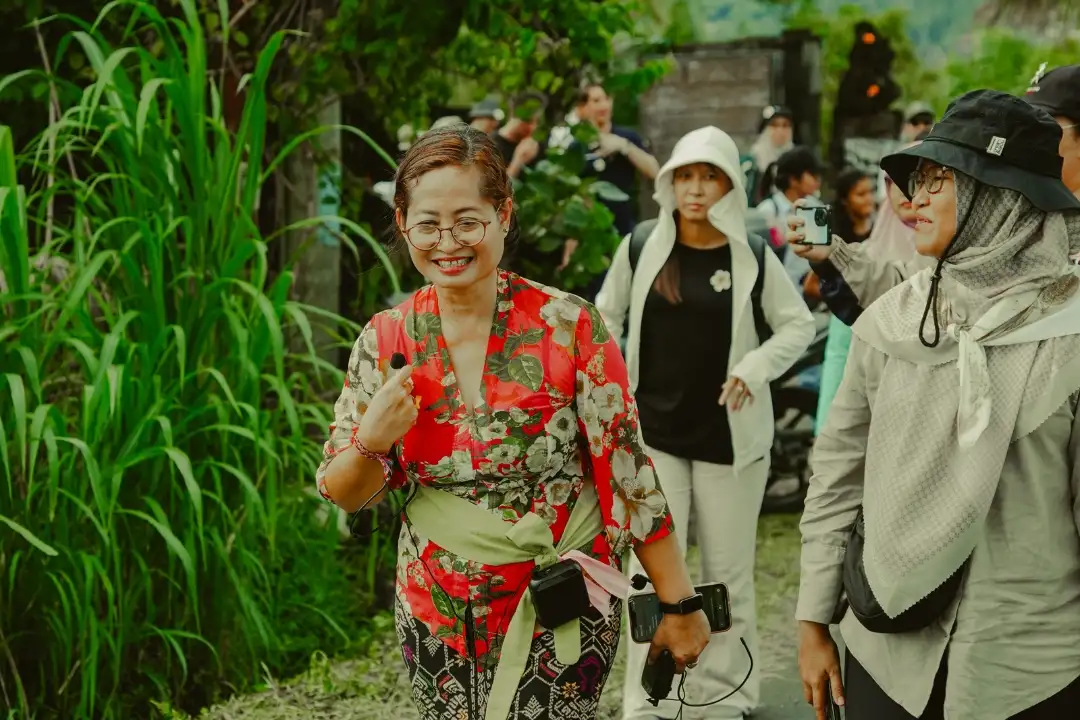
Rice is more than a food source in Bali.
It is connected to agriculture, family traditions, community life, and cultural practices.
During a rice field walk, guests can learn how rice cultivation requires patience and attention throughout different stages of growth.
The process involves preparing the land, planting, maintaining the crops, managing water, protecting plants, and eventually harvesting.
Each stage requires knowledge that farmers develop through experience.
A rice field may appear calm and simple when viewed from a distance.
But daily farming involves many decisions.
When should seeds be planted?
How should water be managed?
How do changing weather conditions affect the crops?
What care is needed throughout the growing process?
These questions show that agriculture is not only physical work.
It is also knowledge passed through generations.
A Bali agriculture tour helps visitors understand that the landscapes they admire are created through continuous effort from local farmers.
The beauty of Bali’s countryside exists because people continue caring for the land.
Farming does not follow the same schedule every day.
It follows nature.
Rainfall, sunlight, water availability, and planting cycles influence agricultural activities throughout the year.
A rice field can look different depending on the season.
Some periods may show fresh green plants.
Other times may reveal preparation, maintenance, or harvesting activities.
Understanding these changes helps visitors see that farmers work with natural cycles rather than simply controlling the environment.
This reflects Palemahan within Tri Hita Karana, the relationship between people and nature.
Agriculture requires awareness of natural conditions.
Farmers observe the land, understand patterns, and make decisions based on what nature provides.
For travelers, this creates a different way of seeing the landscape.
A rice field is not a permanent decoration.
It is a living environment that changes over time.
Guests joining a nature activity Karangasem experience should remember that the best time to visit may depend on weather, farming activities, and local conditions.
The landscape will not always look identical to photographs online.
That is part of experiencing real nature.

Many travelers enjoy Balinese food during their holiday.
But fewer people think about the journey behind the ingredients.
A rice field tour helps connect the final meal with the people and processes behind it.
Rice requires farmers.
Vegetables require growers.
Spices require cultivation and preparation.
Food exists because many people contribute their knowledge and effort.
A local farmer experience can help guests understand this relationship.
Farmers do not simply produce ingredients.
They maintain knowledge about soil, water, planting methods, and seasonal conditions.
Their work supports families, communities, and food systems.
This perspective changes the way visitors think about meals.
A plate of rice is no longer just something served at a restaurant.
It represents land, water, farmers, preparation, and cultural habits.
This is one reason food and agriculture are closely connected in Balinese life.
Understanding where food comes from creates greater appreciation.
It also encourages more conscious choices about consumption.
A rice field does not exist separately from the village around it.
It is connected to homes, roads, water systems, temples, community activities, and daily routines.
During a Selat Bali experience, visitors can observe how village life and natural landscapes exist together.
The environment shapes the way people live.
Agriculture influences food traditions.
Natural materials influence architecture.
Water systems support farming.
Community cooperation helps maintain shared spaces.
This connection is another example of Tri Hita Karana.
Palemahan describes the relationship between people and nature.
Pawongan describes the relationship between people.
A village environment reflects both.
Farmers depend on nature.
Communities depend on cooperation.
Traditions continue because people maintain relationships with each other and their surroundings.
A rice field walk encourages visitors to look beyond the scenery.
Instead of only asking, “How beautiful is this place?”
They begin asking:
Who takes care of this land?
How does this landscape support people?
What knowledge exists here?
These questions create a deeper form of cultural immersion Bali.
The landscape around Selat is shaped by the natural environment of Karangasem, including the presence of Mount Agung.
For many visitors, mountain views create memorable moments.
However, the landscape is not only important because of its appearance.
Mountains, water sources, forests, and agricultural areas influence how communities live.
The surrounding environment affects farming conditions, local traditions, and the relationship between people and nature.
A rice field tour around Selat can help guests understand this connection.
The fields are part of a larger landscape where natural elements and human activities exist together.
Visitors should keep realistic expectations when exploring natural areas.
Weather, clouds, and seasonal conditions can change visibility.
A clear view of Mount Agung cannot be guaranteed every day.
The value of the experience does not depend only on the view.
It comes from understanding the relationship between the land and the people who live there.
A cloudy day can still offer valuable lessons about farming, nature, and village life.
A village and farming area is not a theme park.
It is a working environment.
Farmers are carrying out daily responsibilities. Paths may be used for transportation. Fields may contain active crops. Local residents may be continuing their normal routines.
Visitors should approach a rice field tour with respect.
Simple actions make a difference:
Respectful travel means understanding that the landscape exists because people care for it every day.
A village tour Karangasem experience is valuable because it allows visitors to learn from real communities.
That requires curiosity and awareness.
The goal is not to interrupt village life.
The goal is to understand it.
Modern travel often focuses on moving quickly.
Visit the attraction.
Take the photo.
Continue to the next location.
A rice field walk encourages a different pace.
Walking slowly allows guests to notice details:
The sound of water.
The changing colors of plants.
The movement of farmers.
The shape of traditional landscapes.
The connection between people and nature.
This slower rhythm is one of the reasons many travelers enjoy countryside experiences.
You are not only collecting places.
You are paying attention.
For guests staying at Jero Tumbuk, this reflects the wider retreat philosophy.
Meaningful experiences often come from spending more time understanding fewer things.
A short walk can become a lesson about agriculture.
A conversation can become a lesson about community.
A landscape can become a lesson about balance.
Because rice fields are natural working environments, preparation helps create a more comfortable experience.
Before joining a rice field walk, guests should consider:
Outdoor activities depend on natural conditions.
Rain may affect walking routes, field conditions, and comfort.
Guests should check the expected weather and remain flexible.
Rice field paths may be uneven, wet, muddy, or slippery depending on conditions.
Comfortable walking shoes or suitable outdoor footwear are recommended.
Guests should avoid footwear that is difficult to use on natural paths.
Bring necessary personal items such as:
The exact recommendations may depend on the route and duration of the activity.
Guests should confirm details before joining.
A rice field tour is not only a walk through nature.
It is an introduction to the relationships behind Bali’s countryside.
You learn how rice is cultivated.
You understand seasonal farming.
You recognize the daily work of farmers.
You see how food connects with the land.
You discover how villages and nature exist together.
You learn why respectful travel matters.
Most importantly, you begin to understand that landscapes are created by people and preserved through generations of knowledge.
At Jero Tumbuk, experiences like a rice field walk are part of a wider approach to connecting guests with culture, nature, spirituality, and community.
If you are looking for a rice field tour Bali experience that goes beyond taking photos, Selat offers a chance to slow down, learn, and see another side of Bali.
The most memorable part may not be the view.
It may be the story behind it.