7 Photos You Will Want to Take Around Jero Tumbuk

Some places are easy to photograph because they are designed to be photographed.
Jero Tumbuk is different.
Here, the visual appeal comes from things that already exist. Rice fields continue to surround the property. Mount Agung rises in the landscape. Bamboo and wooden buildings sit within gardens and village spaces. The river moves through the natural surroundings. Traditional architecture remains part of the place, while cultural activities continue as part of everyday life.
That distinction matters.
Jero Tumbuk is a community-based cultural retreat in Selat, Karangasem, where accommodation, nature, culture, education, spirituality, and community are connected. The culture is not presented as a performance created only for visitors. It is part of the life of the place.
So if you are interested in Jero Tumbuk photos, the best approach is not to turn every beautiful corner into a backdrop.
Look carefully.
Wait for the right light.
Notice the details.
And, most importantly, understand when a photograph is appropriate.
Here are seven visual stories worth looking for during your stay.
1. The Rice Fields Around Selat
Start with the landscape.
The rice fields around Jero Tumbuk are not simply green scenery behind the accommodation. They are part of the agricultural environment that gives Selat its character.
The brand assessment describes Jero Tumbuk as being surrounded by persawahan, gardens, rivers, trees, and views toward Mount Agung. It also connects the property to the local agricultural environment and the Balinese relationship between land, water, and community.
This makes rice field photography one of the simplest ways to document the place without disturbing anyone.
Try photographing the landscape at different distances.
A wide photograph can show the relationship between the rice fields, trees, traditional buildings, and mountains.
A closer frame can focus on textures, paths, plants, irrigation, or the changing colours of the fields.
The strongest photograph may not need anyone in it.
Let the landscape explain itself.
If you are walking through agricultural areas outside the immediate retreat space, remember that these are working environments and community spaces. Stay on appropriate paths and avoid stepping into planted areas simply to get a better angle.
A photograph is not worth damaging the landscape it is supposed to celebrate.
2. Mount Agung in the Distance
If there is one landscape element that gives your Bali nature photography a strong sense of place, it is Mount Agung.
Jero Tumbuk is located in Selat, Karangasem, with Mount Agung forming an important part of its geographical and visual identity. The brand strategy positions the retreat beneath Mount Agung and repeatedly uses the mountain, rice terraces, and natural surroundings as part of the story of the place.
The mountain does not need to dominate every frame.
Sometimes it works better in the background.
Try photographing it behind rice fields, above a traditional building, between trees, or beyond a garden.
Morning light can create a softer landscape, while changing weather can give the mountain a completely different appearance.
The important thing is not to manufacture a dramatic photograph.
You do not need a staged pose in front of Mount Agung.
The landscape already carries enough character.
If you are photographing from a shared area, be mindful of other guests and residents. Give people space and avoid interrupting activities simply because the mountain has appeared clearly in your frame.
The best Mount Agung photograph may be the one you take quietly from where you are already standing.
3. The Bamboo Buildings
Bamboo is one of the natural materials that contributes to the visual identity of Jero Tumbuk.
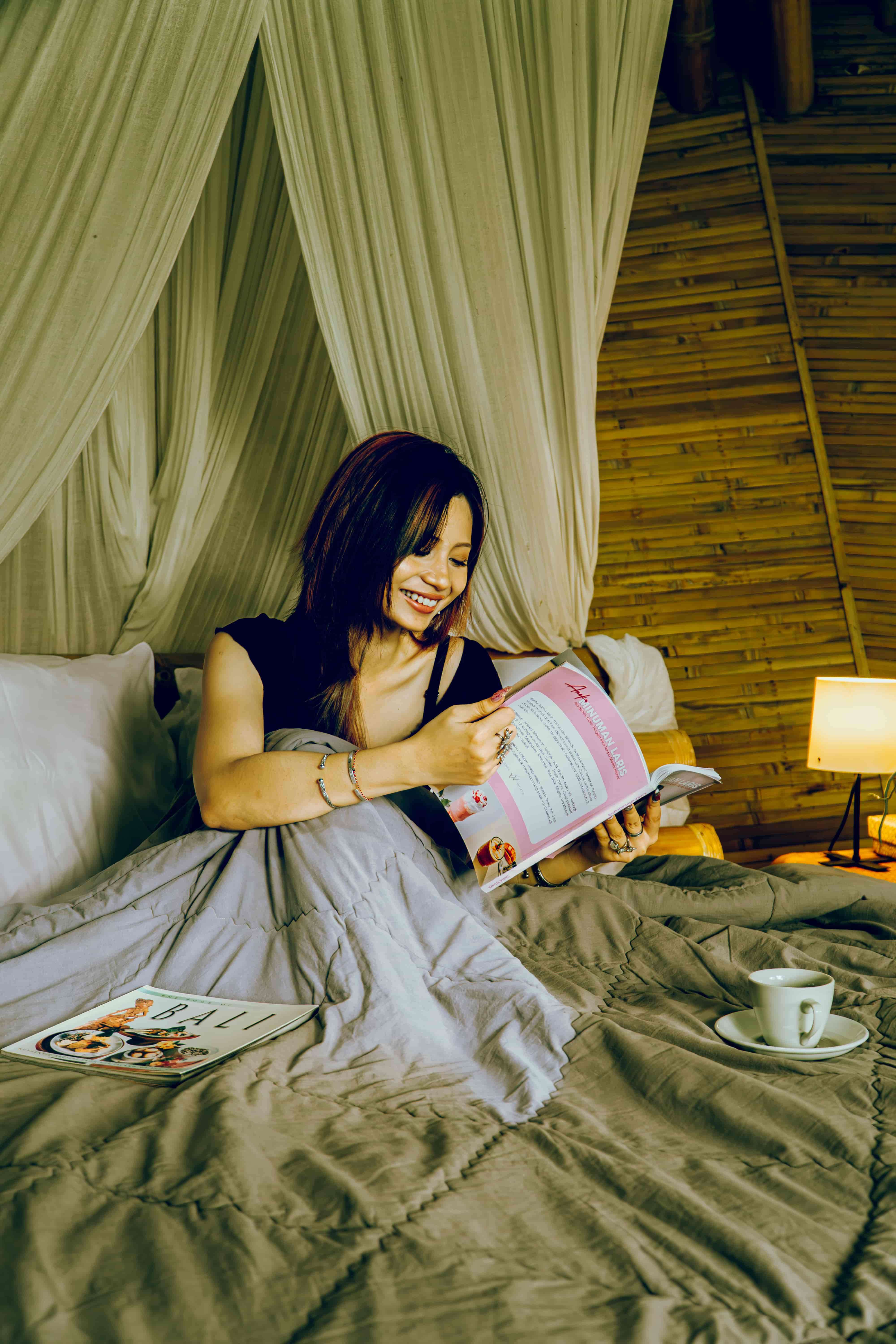
The property includes Villa Bambu Daja and Villa Bambu Delod, while the wider accommodation collection uses natural materials, open-air elements, gardens, and connections to the surrounding environment.
This creates plenty of opportunities for architectural photography.
But instead of photographing a bamboo villa like a commercial showroom, look at how the building sits within its surroundings.
Photograph:
- The relationship between bamboo structure and greenery.
- Natural light passing through the architecture.
- Roof details.
- Textures of bamboo.
- Open spaces between the building and garden.
- Architectural details framed by leaves or trees.
The idea is to show the building as part of the landscape.
That approach also fits the character of Jero Tumbuk better than overly polished architectural photography.
The brand is intentionally positioned away from the typical Instagram-optimized bamboo aesthetic. Its strategy emphasizes that the place should feel lived in, culturally rooted, and connected to everyday life rather than designed purely as a photo set.
So let the photograph document the architecture.
Do not make the architecture pretend to be something it is not.
4. The Wooden Villas
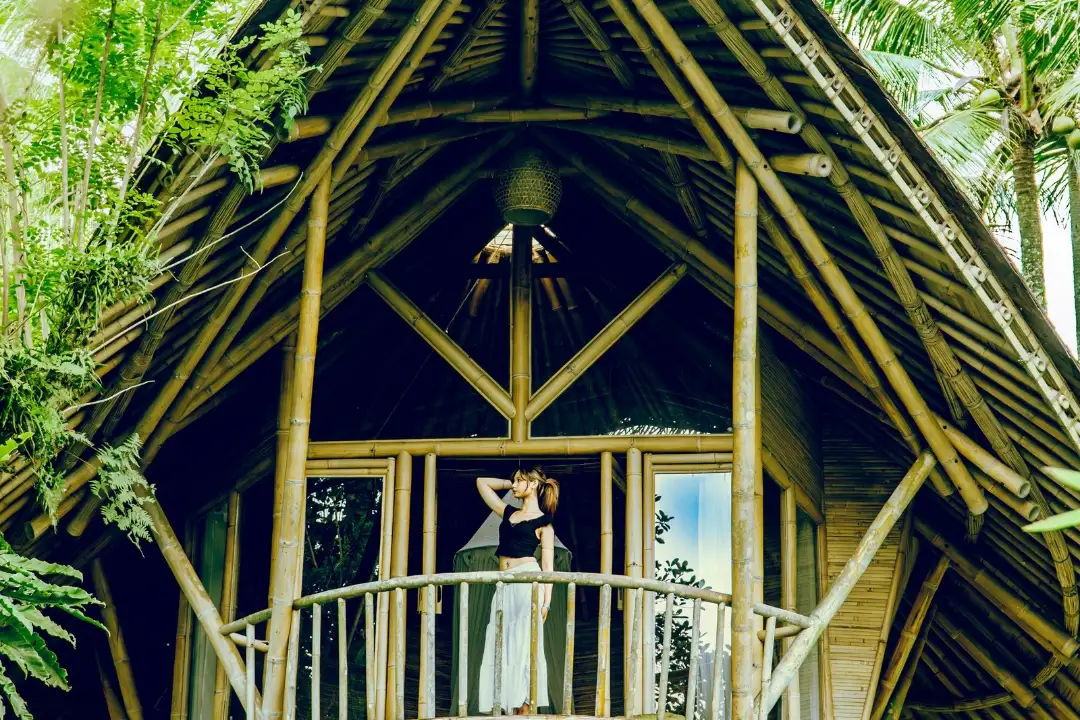
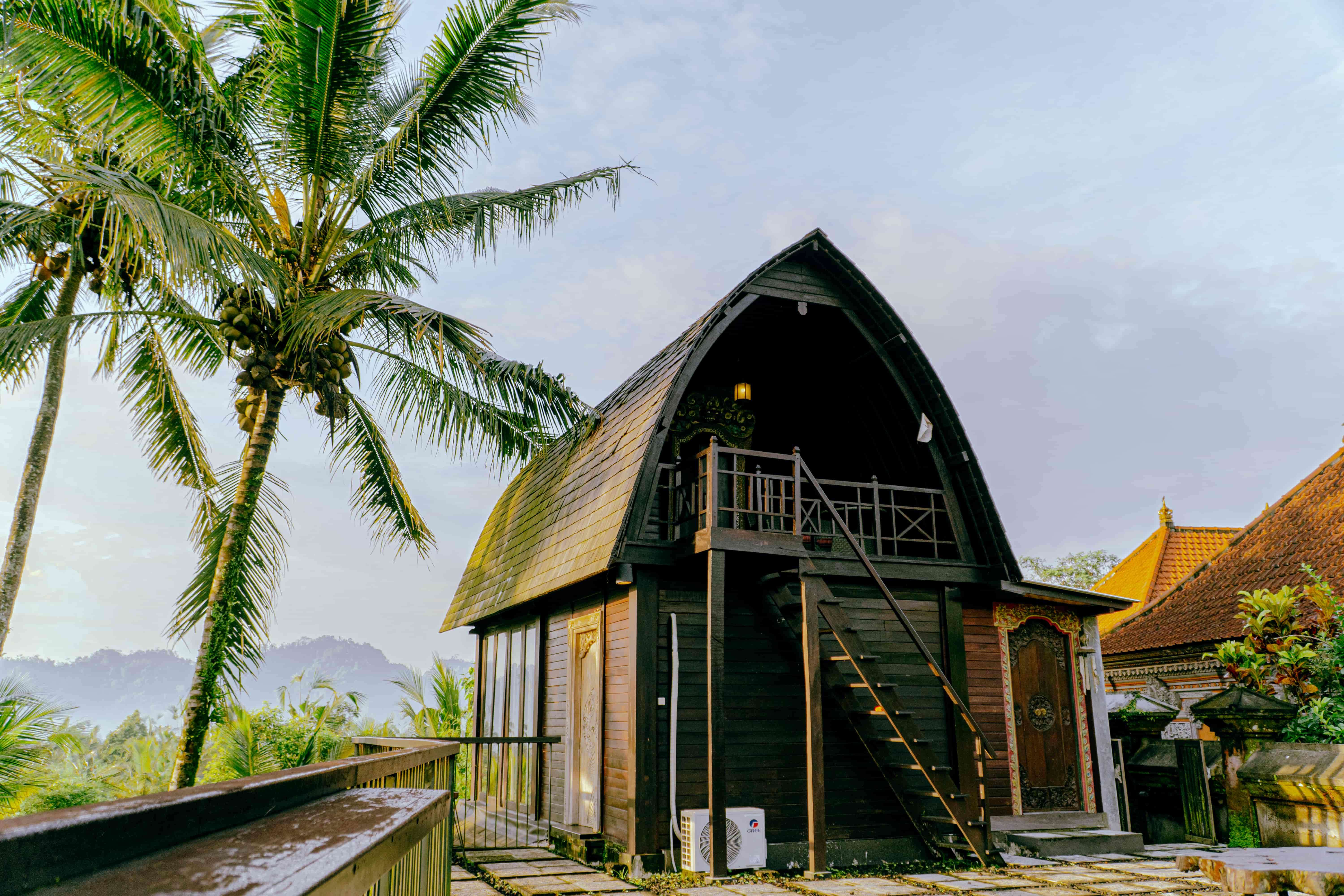
The wooden villas offer another opportunity to photograph how traditional materials and natural surroundings come together.
Jero Tumbuk has three wooden villas, Villa Kayu 1, Villa Kayu 2, and Villa Kayu 3. The accommodation information describes natural materials, greenery, and different relationships with gardens, rice fields, and Mount Agung.
For Jero Tumbuk photos, the most interesting frame may not be a straight photograph of the entire villa.
Try looking for smaller stories.
A wooden doorway surrounded by plants.
Morning light entering an open space.
A balcony looking toward the landscape.
Wood grain against tropical greenery.
A quiet sitting area with the landscape beyond it.
If you are photographing another guest's accommodation, avoid taking photographs that reveal private moments or personal belongings.
If the villa is your own accommodation, you have much more freedom to document the space.
The aim is to capture what it feels like to stay close to nature rather than simply proving that a wooden building exists.
5. The Angkul-Angkul
Some photographs tell you where you are before you even see the landscape.
The Angkul-Angkul is one of them.
In Balinese architecture, the Angkul-Angkul functions as a traditional entrance or gateway between the outside area and the inner space. Jero Tumbuk's brand assessment identifies it as part of the site's traditional architecture and describes its values around welcome, protection, transition, and Balinese identity.
That makes it a meaningful architectural subject.
Instead of treating the Angkul-Angkul as simply an Instagram entrance, photograph it as a threshold.
Consider a straight architectural composition.
Or photograph it from a slight distance so that the surrounding greenery and path become part of the frame.
You can also look for details in its materials, decoration, structure, and relationship with the spaces beyond it.
But remember that architecture can carry cultural meaning.
Do not climb on it, lean against decorative elements, move offerings, or rearrange anything around the entrance to improve your photograph.
Leave the space as you found it.
The photograph should document the Angkul-Angkul, not interfere with it.
6. The River and Its Surroundings
The river provides a completely different visual language.
Instead of architecture and distant landscapes, you have movement, sound, water, rocks, trees, and changing light.
Jero Tumbuk includes Villa Tepi Sungai, an accommodation located near the river, where the sound of flowing water, vegetation, and the natural surroundings form part of the experience. The brand assessment also identifies rivers as an important element of the site's natural environment.
For river retreat photography, do not only point your camera directly at the water.
Look around it.
Photograph the way plants grow beside the river.
Capture reflections when the light allows.
Use rocks or branches to create depth.
Frame the water through surrounding vegetation.
Photograph the relationship between the villa and the river rather than treating the river as an isolated attraction.
And remember that natural areas are not always predictable.
Be careful around wet rocks and uneven paths. Do not enter the water simply to create a more dramatic angle unless the area is appropriate and safe for doing so.
The river is already doing what it needs to do.
Your job is simply to notice it.
7. Cultural Activities as They Really Happen
This may become the most meaningful photograph in your collection, but it is also the one that requires the most care.
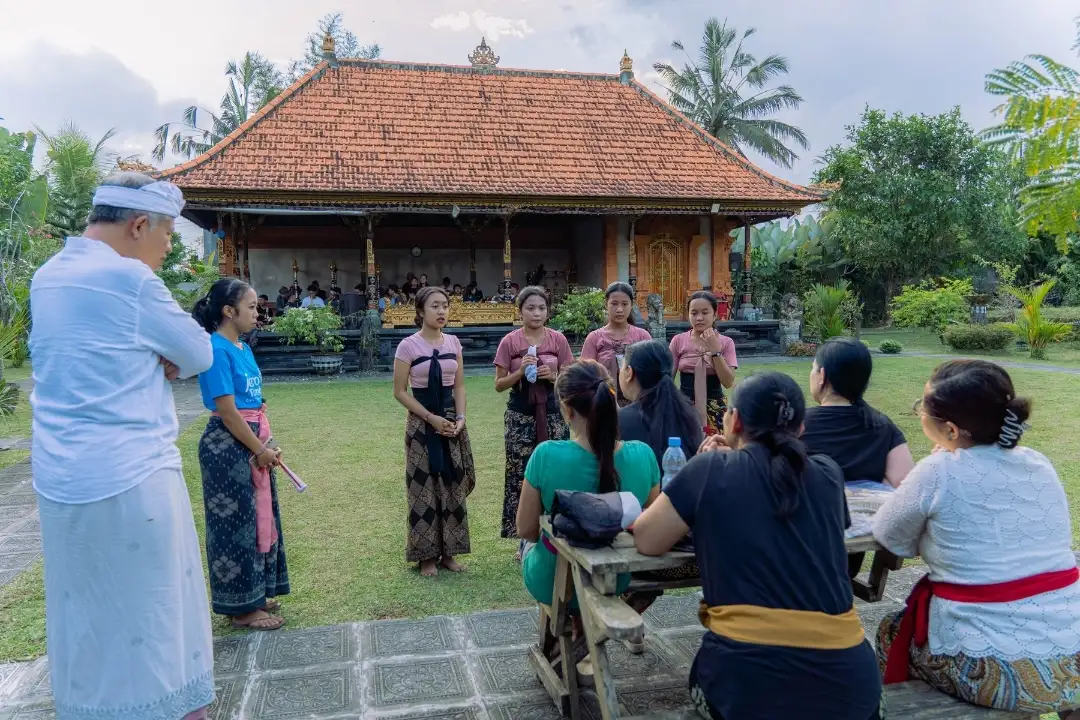
Jero Tumbuk supports cultural activities including Balinese dance, gamelan or tabuh, mekidung, gender, rindik, and Balinese script learning. It also operates education and community programs, including support for village children.
These activities are central to the identity of the place.
They should also never be treated as photo props.
The brand strategy makes this distinction particularly clear. Jero Tumbuk's cultural experience is built around traditions that continue whether guests are present or not. The culture is not supposed to be staged simply to create content.
So when photographing cultural activities, observe first.
If children are learning gamelan, let the lesson remain a lesson.
If someone is practicing dance, do not interrupt to create a better pose.
If a community activity is taking place, ask before photographing people.
A candid photograph may be beautiful, but permission matters more than the perfect frame.
The same applies even more strongly to spiritual activities.
Jero Tumbuk has a Merajan, a sacred space used for worship and connection with God and ancestors. Guests may be introduced to its function, but the brand assessment specifically notes that visitors must respect the boundaries and ethics of sacred spaces.
Not every meaningful place needs to become a photograph.
Sometimes respecting a space means putting the camera away.
Photography Permission Comes Before the Perfect Shot
This is perhaps the most important rule when taking photographs at Jero Tumbuk.
Ask before you photograph people, cultural activities, ceremonies, or spaces where photography may not be appropriate.
The brand's philosophy is based on a living relationship between nature, culture, spirituality, education, and community.
That means responsible photography is part of experiencing the place properly.
Before taking a photograph, consider:
Is this my space to photograph?
If you are inside your own villa or photographing the surrounding landscape from an appropriate area, the answer may be straightforward.
Are there people in the frame?
Ask for permission, particularly when they are identifiable or when the photograph focuses on them.
Is an activity taking place?
Ask whether photography is welcome before stepping closer.
Is the space connected to worship or spirituality?
Follow the guidance of the hosts and community. Some spaces should be experienced rather than photographed.
Am I changing something for the photograph?
Do not move offerings, cultural objects, decorations, furniture, or natural elements simply to improve composition.
The difference between respectful photography and turning culture into a backdrop is often very small.
It begins with whether you are observing or interfering.
Photograph the Place. Don't Perform It.
There is a reason Jero Tumbuk's brand strategy rejects the idea of culture being performed purely for visitors.
The strongest photographs here are likely to be the ones that show what already exists.
Rice fields growing around the village.
Mount Agung appearing behind the landscape.
Bamboo and wooden structures surrounded by greenery.
An Angkul-Angkul marking a transition into another space.
The river moving quietly through the environment.
Children learning music.
People continuing cultural practices.
These images tell a much stronger story than a collection of staged poses.
Jero Tumbuk is positioned as a community-based cultural retreat where guests become closer to the life, nature, traditions, and values already present in Selat.
That is what makes the photography interesting in the first place.
You are not arriving at a collection of photo spots.
You are arriving at a place with its own rhythm.
Walk slowly.
Look carefully.
Ask when you are unsure.
And when the moment belongs to someone else, let it remain theirs.
Because the best Bali nature photography from Jero Tumbuk should not only show what the place looks like.
It should show that you understood what the place is.
If you would like to experience the landscape, accommodation, cultural activities, and slower rhythm of Selat for yourself, explore Jero Tumbuk Culture & Retreat and plan your stay through jerotumbuk.com.