7 Things That Make Melukat More Than a Tourist Activity

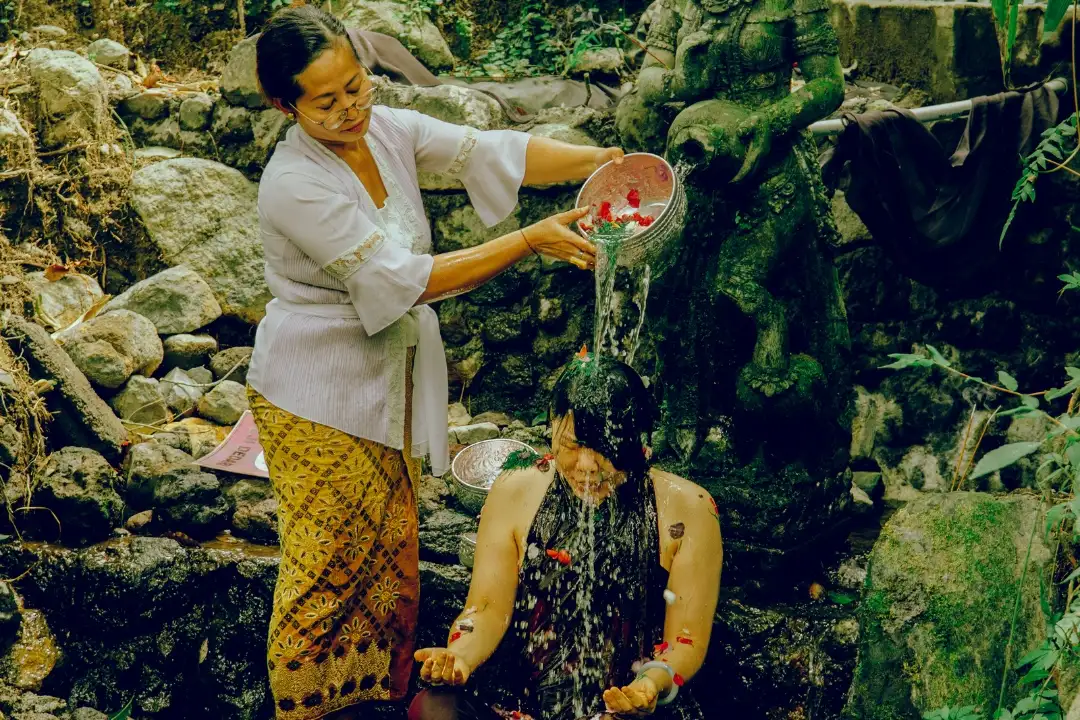
Melukat is often included in Bali travel content as a beautiful ritual involving flowing water, traditional clothing, and sacred spaces.
But Melukat is not simply an activity to add to a holiday itinerary.
It is a Balinese purification ritual connected to prayer, holy water, spiritual guidance, preparation, and respect. For Balinese Hindus, the ritual carries religious and cultural meaning that exists far beyond tourism.
Travelers interested in a Melukat Bali experience should therefore approach it differently from an ordinary attraction. The goal should not be to collect another photograph or expect an immediate personal transformation. It should be to learn about Balinese spirituality and participate with humility.
At Jero Tumbuk in Selat, Karangasem, Melukat is introduced as part of a wider cultural and spiritual experience. It is not sold as instant healing. Guests are expected to follow local guidance, understand the meaning of the ritual, and respect the sacred process.
Here are seven things that make Melukat more than a tourist activity.
1. Melukat Is a Sacred Purification Ritual

The first thing to understand is that Melukat is not simply bathing in natural water.
It is a Balinese purification ritual intended to support cleansing in a spiritual and personal sense. The ritual is traditionally connected to prayer, sacred water, preparation, and guidance from someone who understands the correct process.
For visitors, joining Melukat can become an introduction to how spirituality is practiced within Balinese life.
It should not be treated as a performance created for travelers. The meaning of the ritual does not begin when a tourist arrives, and it does not end when the photographs are finished.
Melukat is part of a wider relationship between people, the divine, ancestors, water, and sacred space.
This connection reflects Parahyangan, one of the three relationships within the Balinese philosophy of Tri Hita Karana. Parahyangan describes harmony between human beings, God, ancestors, and the spiritual world.
At Jero Tumbuk, spiritual activities are connected to this philosophy. Melukat is therefore approached as cultural and spiritual learning, not entertainment.
Guests do not need to understand every part of the ritual before joining. However, they should arrive with the willingness to listen, follow instructions, and recognize that the ritual carries meaning beyond their personal experience.
2. Holy Water Has Spiritual Meaning
Water is central to the Melukat process.
However, the importance of sacred water Bali traditions is not limited to the physical act of washing or standing beneath flowing water.
Holy water is connected to purification, prayer, gratitude, and spiritual balance. During Melukat, water may be received as part of a guided ritual rather than used casually.
The experience can help guests understand how water is respected as a source of life and a sacred element within Balinese Hindu practice.
This is why the location and the way the water is approached matter.
Guests should not enter a purification area in the same way they would enter a swimming pool or waterfall attraction. Behavior, clothing, movement, and photography should follow the guidance of the people responsible for the sacred space.
The water should also not be described as having guaranteed supernatural or medical effects.
Its importance comes from the religious and spiritual context of the ritual.
For travelers seeking a spiritual experience Bali, this distinction is essential. The experience is not about what the water can instantly “fix.” It is about approaching purification through prayer, respect, and awareness.
3. Spiritual Guidance Is Part of the Process

Melukat should not be completed without understanding the proper process.
A local religious leader, host, or knowledgeable facilitator may guide participants through the stages of the ritual. This guidance helps guests understand what to do, when to pray, how to approach the water, and how to behave in the sacred space.
The role of spiritual guidance is important because Melukat is not simply a sequence of physical movements.
The process may involve preparation, offerings, prayer, receiving sacred water, and a closing prayer. The exact stages can differ depending on the location, tradition, and person leading the ritual.
Guests should avoid assuming that every Melukat experience follows exactly the same format.
During a Melukat Karangasem experience, local guidance should always be followed over information collected from social media or travel videos.
A facilitator may also explain the cultural context and answer questions before the ritual begins. This gives guests an opportunity to understand why each stage matters rather than copying what other participants are doing.
Listening is part of respectful participation.
Even when a guest has joined Melukat before, every sacred place may have its own expectations, boundaries, and procedures.
The experience becomes more meaningful when participants allow themselves to be guided rather than trying to control the process.
4. Preparation Begins Before Entering the Water
Melukat does not begin at the moment the water touches the body.
Preparation is part of the ritual.
Depending on the location and guidance provided, participants may need to prepare appropriate clothing, offerings, personal items, and a change of clothes. They may also be asked to follow certain steps before entering the purification area.
A general process may include:
- Preparing yourself and the required items
- Wearing appropriate traditional clothing or cloth
- Presenting an offering
- Praying before purification
- Receiving or entering the sacred water
- Following the religious leader’s or facilitator’s instructions
- Completing a closing prayer
- Changing clothes and maintaining respectful behavior afterward
These stages should not be treated as a rigid tourist checklist. They are presented to help visitors understand that Melukat involves more than entering the water.
Mental preparation also matters.
Guests should arrive calmly, avoid rushing, and give enough time for the full process. Joining between tightly scheduled attractions may create the wrong attitude toward the ritual.
It is better to approach a Bali ritual experience with patience.
Participants should ask in advance what they need to bring, how long the process may take, and whether any physical or religious restrictions apply.
This preparation helps prevent confusion and allows the ritual to be approached with greater respect.
5. Respectful Clothing Shows Respect for the Sacred Space

Clothing is not only a practical requirement during Melukat.
It communicates respect.
Guests may be required to wear traditional cloth, a sarong, or another form of appropriate clothing based on the guidance of the host or religious leader.
Travelers should not assume that ordinary swimwear is suitable simply because the ritual involves water.
Sacred places have different expectations from recreational water attractions.
Before joining, guests should confirm:
- What clothing is required
- Whether a sarong or traditional cloth is provided
- Whether shoulders or other parts of the body need to be covered
- What to wear beneath wet clothing
- Whether a change of clothes is needed
- Where personal belongings can be placed
Respectful clothing is part of cultural etiquette Bali visitors should understand before entering temples, family sacred spaces, or purification areas.
Guests should also avoid choosing clothing only because it looks attractive in photographs.
The priority is suitability, modesty, and respect for local guidance.
After the ritual, participants should change clothes in the designated area and continue behaving respectfully. The spiritual process does not become unimportant the moment the water portion is finished.
6. Prayer Gives the Ritual Its Spiritual Context
Without prayer and intention, visitors may misunderstand Melukat as simply a physical water experience.
Prayer is an important part of the process.
Participants may pray before purification, follow guidance while receiving sacred water, and join a closing prayer afterward. The exact form will depend on the place and the person leading the ritual.
Guests from different religious or personal backgrounds should ask how they are expected to participate.
Respect does not require pretending to understand beliefs that are unfamiliar. It requires listening carefully and following the guidance given.
The prayer process helps show that Melukat is connected to spiritual awareness, gratitude, purification, and the relationship between people and the divine.
This is what separates the ritual from an ordinary waterfall visit.
A spiritual retreat Indonesia experience should make room for this cultural context rather than removing the religious meaning to make the activity easier to sell.
At Jero Tumbuk, spirituality is not presented as a dramatic promise of transformation. It is introduced as part of daily life, cultural understanding, and the practice of balance.
Guests should therefore avoid approaching prayer as an uncomfortable delay before the “main activity.”
Prayer is part of the main activity.
7. Photography Must Never Become More Important Than the Ritual

Melukat can take place in visually beautiful surroundings.
Sacred water, traditional clothing, stone structures, nature, and ceremonial elements may make guests want to photograph or record the experience.
But not every moment should be documented.
Guests should always ask permission before taking photographs or videos. The religious leader, host, facilitator, and other participants may have different preferences.
Photography may be inappropriate during certain prayers, stages of purification, or private moments.
Even when documentation is allowed, guests should avoid turning the ritual into a long content session. Repeating movements for the camera, interrupting the process, or positioning equipment in sacred areas can shift attention away from the meaning of the experience.
Good cultural etiquette Bali means recognizing that the ritual is more important than the content created from it.
Participants should also be thoughtful when sharing images online.
Captions should not make exaggerated claims, present Melukat as a trendy treatment, or suggest that one ritual guarantees healing from personal, emotional, or medical problems.
A more responsible approach is to explain that Melukat is a Balinese purification tradition and that the experience was joined under local guidance.
Documentation should support understanding, not replace it.
Melukat Should Never Be Sold as Instant Healing
One of the most common misunderstandings around Melukat is the idea that it provides immediate healing or guarantees a complete emotional transformation.
This is not how the ritual should be communicated.
Melukat may offer participants a meaningful opportunity for reflection, prayer, cultural learning, and spiritual awareness. Some guests may leave feeling calmer or more thoughtful.
However, these personal responses should not become universal marketing promises.
Melukat is not a substitute for medical care, mental health support, or professional treatment. It should not be advertised as a guaranteed way to remove trauma, anxiety, illness, or personal problems.
Selling it through exaggerated healing claims reduces a sacred practice to a commercial wellness product.
At Jero Tumbuk, Melukat should always be introduced as an opportunity to learn about Balinese culture and spirituality respectfully.
The purpose is not to promise what the participant will feel afterward.
The purpose is to protect the meaning of the ritual and provide the right guidance for participation.
How to Prepare for a Melukat Experience at Jero Tumbuk
Guests interested in joining Melukat should contact Jero Tumbuk before arriving.
The experience may require advance booking because availability can depend on religious leaders, facilitators, sacred schedules, preparation, and local considerations.
Before reserving, ask about:
- Available dates and times
- The location of the ritual
- Required clothing
- Items to bring
- Whether an offering is prepared
- The estimated duration
- Transportation arrangements
- Photography rules
- Additional fees
- Physical access to the purification area
Visitors should also communicate any mobility, health, or personal concerns before joining.
Advance preparation allows the experience to be coordinated responsibly and gives guests enough time to understand what will be expected.
Approach Melukat With Humility
A meaningful Melukat experience does not depend on taking the perfect photograph or having a dramatic emotional response.
It depends on how you approach it.
Arrive with patience. Wear appropriate clothing. Follow the guidance provided. Respect the sacred water and prayer process. Ask before documenting anything. Avoid exaggerated expectations.
Most importantly, remember that you are being introduced to a living Balinese spiritual tradition.
Melukat is not a tourist activity that happens to use holy water.
It is a sacred purification ritual that travelers may be invited to understand and join respectfully.
That difference should shape every part of the experience.