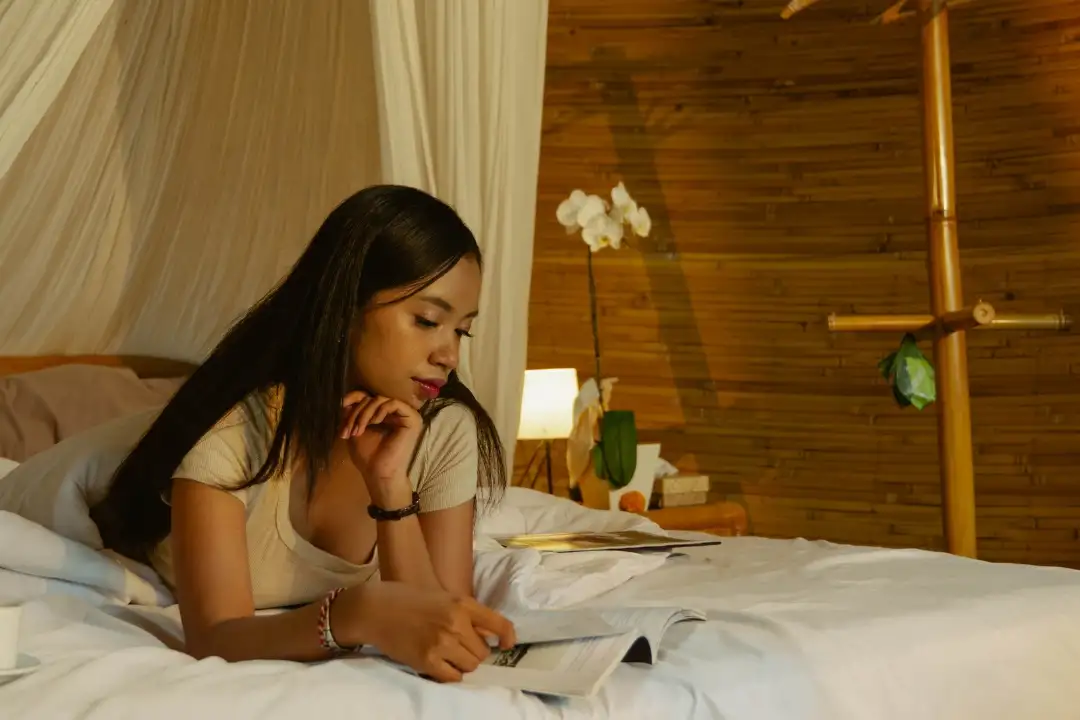
8 Small Moments That Make a Stay at Jero Tumbuk Feel Different
Home - Our Journal

Home - Our Journal
Some of the most memorable parts of a holiday are not always the biggest ones.
Sometimes, it is the sound you hear when you wake up.
A short conversation with someone from the local community.
The first walk through a rice field.
Learning how to prepare a traditional dish.
Sitting beneath a traditional structure and simply taking your time.
These moments may seem small.
But together, they can change the way you experience a place.
A Jero Tumbuk stay is designed around this kind of experience.
Located in Selat, Karangasem, Jero Tumbuk is a living cultural retreat where accommodation is only one part of a wider environment connecting Balinese culture, nature, spirituality, education, and community life.
There is no need to fill every moment with entertainment.
Instead, the surroundings and the people around you become part of the experience.
Here are eight simple moments that can make a stay at Jero Tumbuk feel different.
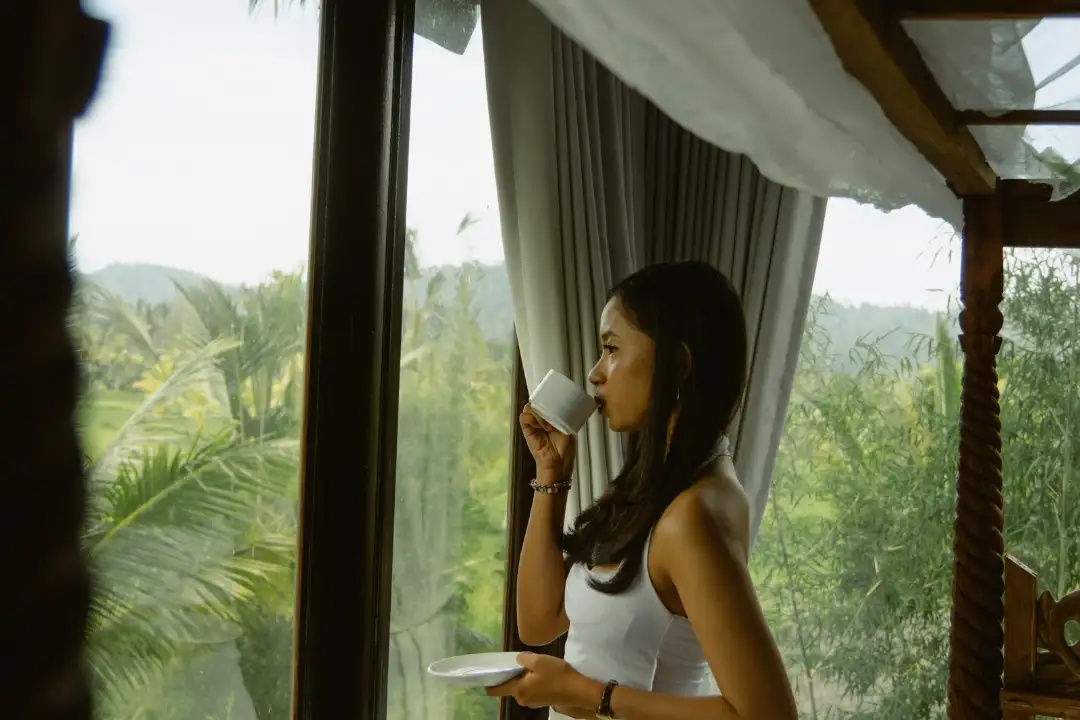
The first moment of the day can tell you a lot about where you are.
At Jero Tumbuk, the natural environment around the retreat can become part of your morning.
Instead of immediately being surrounded by television or constant entertainment, you may notice the sounds of birds, water, wind, or other activity around the natural surroundings.
It is a small detail.
But it changes the beginning of the day.
You can sit outside for a while.
Open your surroundings to the morning atmosphere.
Listen before reaching for your phone.
There is no promise that every morning will sound or feel exactly the same. Natural conditions change, and that is part of experiencing a real environment.
The value is simply having an opportunity to notice what is around you.
For travelers used to starting every morning with notifications, traffic, and screens, this can create a different rhythm.
Not necessarily a dramatic one.
Just slower.
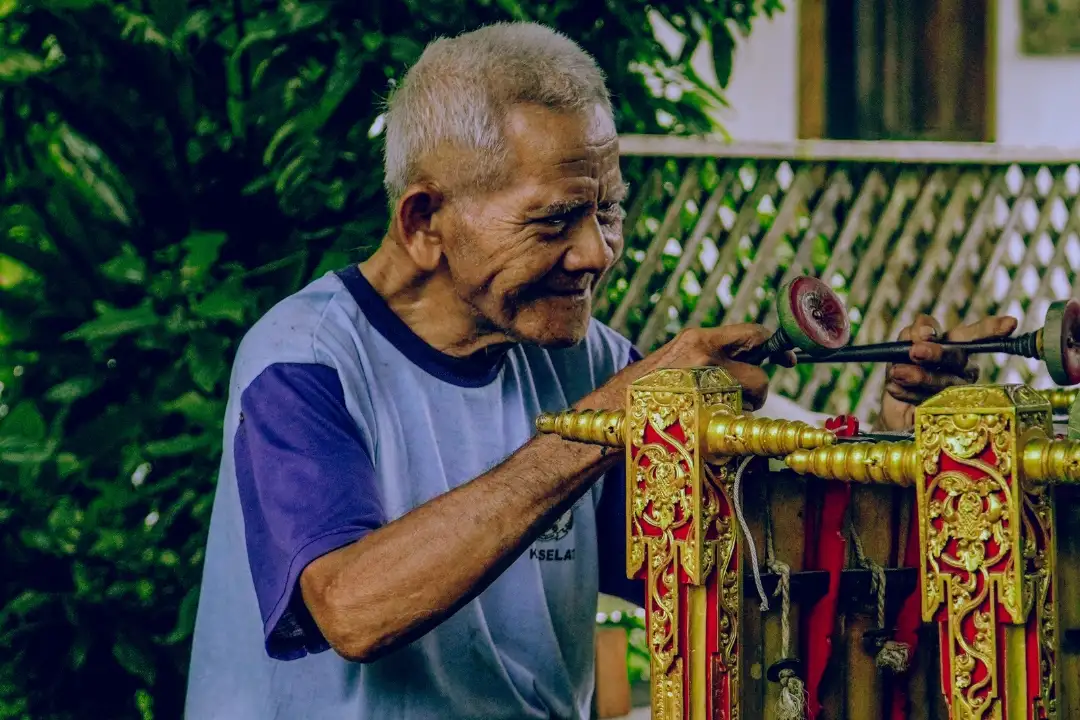
The second moment is visual.
The morning landscape around Selat can become part of the experience before you even begin an activity.
Rice fields.
Gardens.
Trees.
Traditional structures.
The wider landscape around Mount Agung.
These details create a sense of place that is difficult to experience when moving quickly between destinations.
You may see the landscape from your accommodation.
You may walk through the surrounding area.
You may simply sit somewhere and watch the morning change.
And you do not need a perfect mountain view for the experience to be meaningful.
Weather and visibility naturally change from day to day.
What remains is the landscape itself and the opportunity to spend time within it.
This is part of what makes a nature retreat Bali experience different from simply visiting a viewpoint for a few minutes.
You are not only looking at nature.
You are spending time in an environment where nature is part of everyday life.
A destination becomes more personal when you meet the people who live there.
At Jero Tumbuk, local mentors, cultural practitioners, teachers, staff, and community members can become part of the guest experience.
A simple conversation can introduce you to details about Bali that you might never discover from a standard itinerary.
You might ask a cultural mentor about a traditional practice.
You might learn something about local food.
You might hear about village life.
You might ask how a particular traditional art is taught to younger generations.
The conversation does not need to become a formal lesson.
Sometimes, one genuine exchange is enough to make a place feel more familiar.
This human connection reflects the Pawongan principle of Tri Hita Karana—the relationship between people.
It is also part of what makes local community Bali experiences meaningful.
The community is not simply scenery surrounding the retreat.
People are part of the living environment.
There is a difference between seeing culture and learning from it.
At Jero Tumbuk, guests may have opportunities to participate in cultural activities depending on the available program.
This can include learning about Balinese dance, Tabuh, Gender, Rindik, Mekidung, Balinese script, or traditional cooking.
The moment itself may be very simple.
A mentor demonstrates something.
You try it.
You make a mistake.
You try again.
Suddenly, something you previously saw as a finished cultural performance becomes a skill that requires practice and patience.
That can change your perspective.
You begin to understand that traditional culture does not appear fully formed.
It is learned.
It is practiced.
It is taught.
It is passed between generations.
This is an important part of the cultural experience Karangasem offered through Jero Tumbuk.
The goal is not to become an expert in one session.
It is to experience what it feels like to learn from someone who carries local knowledge.
Schedules and activity availability should be confirmed before your visit, especially for experiences involving local mentors.
Traditional architecture can be beautiful.
But it becomes much more interesting when you understand why the spaces exist.
At Jero Tumbuk, traditional elements such as the Angkul-Angkul, Bale Ageng, Merajan, Jineng, Beji, Wantilan, and Puwaregan form part of the cultural environment.
Each has a different function or meaning.
The Angkul-Angkul can represent the transition into a Balinese compound.
The Bale Ageng is connected with gathering.
The Merajan is a sacred space.
The Jineng is associated with rice and agricultural life.
The Beji is connected with water and purification.
The Wantilan can be associated with communal activities.
The Puwaregan is connected with food preparation.
Walking past these spaces becomes a different experience when you know that they are not simply decorations.
They tell stories about how people live.
They show relationships between spirituality, food, community, agriculture, and daily activities.
This is part of the value of Jero Tumbuk heritage.
The architecture is not presented only as something old to photograph.
It remains connected to a living cultural environment.
Food creates another small but meaningful moment.
A meal can be more than something you eat between activities.
It can become a chance to slow down and talk.
At Jero Tumbuk, food can also become part of the cultural learning experience.
A traditional cooking class, for example, can introduce guests to local ingredients, spices, preparation methods, and the cultural meaning behind food.
But the experience does not necessarily end when the cooking is finished.
Sitting down to share the meal creates another opportunity for connection.
You can talk about what you prepared.
Ask questions about the ingredients.
Discuss the cooking process.
Simply enjoy the food with the people around you.
This reflects the social dimension of food.
It connects people with knowledge, ingredients, and one another.
For visitors, it can also provide a simple introduction to village life Bali.
Food is one of the easiest ways to understand that culture often exists in everyday activities, not only formal ceremonies.
At some point during your stay, you may notice something surprisingly simple.
You have not watched television.
And you have not really missed it.
Jero Tumbuk's rooms do not include television as the centre of the guest experience.
The idea is not to force guests into a strict digital detox.
You can still use your phone for communication, travel information, photographs, and other practical needs.
But without a television automatically filling your free time, you have other choices.
You can read.
Talk.
Write.
Sit outside.
Take a walk.
Join a cultural activity.
Rest.
Or simply do nothing.
This fits naturally with slow travel Indonesia.
The goal is not to remove every form of technology.
It is to create more space for the place itself.
When there is less pressure to fill every quiet moment with content, small details become easier to notice.
The sound outside.
The people around you.
The landscape.
The food.
The architecture.
The conversation you are having.
Sometimes, a quiet evening is memorable precisely because nothing dramatic happened.
Perhaps the most meaningful moment is realizing that Jero Tumbuk is connected to a community beyond its guests.
The retreat's wider environment includes education, cultural learning, local employment, community activities, and opportunities for younger generations.
Children can have access to educational support and cultural learning.
Local mentors can continue teaching traditional knowledge.
Community members can contribute their skills.
Local staff and suppliers can participate in the guest experience.
For a visitor, this may not always be something you directly see.
But when you join a cultural class, learn from a local mentor, participate in a cooking experience, or spend time learning about village life, you become connected—however briefly—to a wider environment.
This is not about claiming that one booking transforms a community.
Community impact develops through consistent programs, relationships, and participation over time.
The important idea is that tourism and community life do not have to exist completely separately.
A guest can learn.
A local practitioner can teach.
A child can continue learning.
A community space can continue being used.
That is part of the wider purpose behind Jero Tumbuk.
None of these moments needs to be extraordinary on its own.
Listening to nature.
Looking at the morning landscape.
Talking with a local person.
Learning a traditional skill.
Walking past an old building.
Sharing a meal.
Spending an evening without television.
Seeing how community programs fit into everyday life.
Together, however, they create a different kind of stay.
They connect the guest with three important parts of the Jero Tumbuk experience:
Nature.
Culture.
People.
This is closely connected to Tri Hita Karana.
Palemahan describes the relationship between people and nature.
Pawongan describes the relationship between people.
Parahyangan describes the relationship between people and the divine.
These relationships can appear in ordinary moments.
A rice field walk connects you with the landscape.
A conversation connects you with another person.
A cultural activity connects you with knowledge passed between generations.
A spiritual activity connects you with Balinese traditions and sacred practices.
The experience does not need to be complicated to be meaningful.
Travel often encourages us to look for big moments.
The famous viewpoint.
The impressive attraction.
The perfect photograph.
But an authentic Bali retreat can offer another kind of experience.
It can make you notice the small things.
The sound outside your room in the morning.
The person explaining a traditional technique.
The taste of a dish you helped prepare.
The meaning behind a traditional building.
The rice fields you walked through.
The conversation you did not plan to have.
The quiet evening when you realized you had not turned on the TV.
These moments are not luxury features.
They are experiences.
And they are often what makes a place feel real.
At Jero Tumbuk, accommodation provides the base.
The wider experience comes from the culture, nature, spirituality, education, and community that surround it.
That is why a meaningful stay Bali experience does not have to be measured by how many facilities you use.
It can be measured by what you notice.
What you learn.
Who you meet.
And how much time you give yourself to experience the place rather than simply passing through it.
If you are planning a stay in Selat, Karangasem, Jero Tumbuk offers an opportunity to experience Bali through these smaller moments—one conversation, one activity, one meal, one walk, and one quiet evening at a time.
Sometimes, you do not need a bigger holiday.
You simply need enough time to notice the one you are already having.