8 Things to Do at Jero Tumbuk When You Want More Than a Pool Day

A quiet day by the pool can be exactly what you need during a Bali holiday.
But sometimes, you want to return home with more than rest and photographs. You want to learn something, meet people, understand local traditions, and experience the natural environment beyond the usual holiday routine.
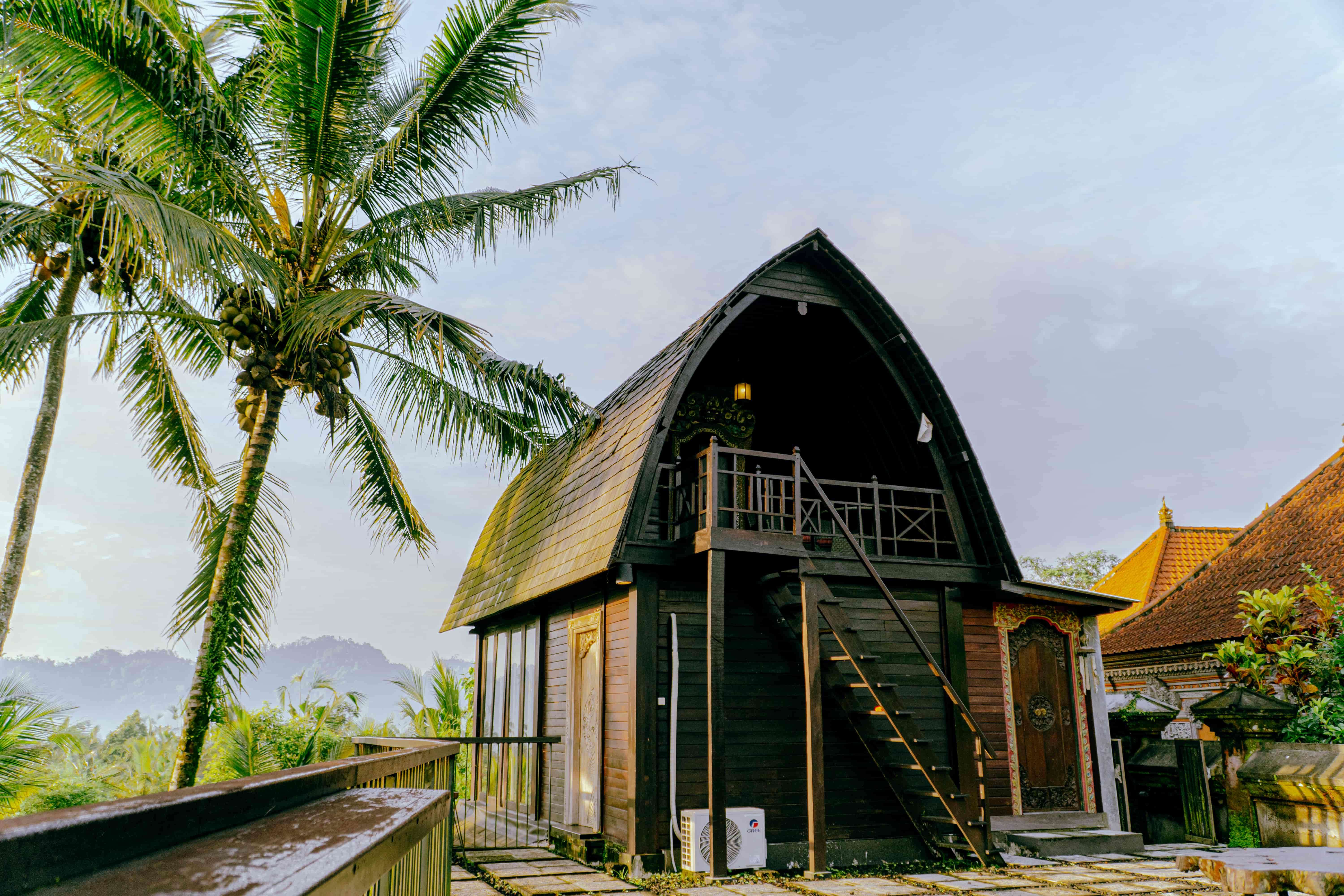
Located in Selat, Karangasem, Jero Tumbuk is a living cultural retreat where accommodation is only one part of the experience. Guests can spend time closer to Balinese culture, spirituality, nature, education, and community life.
The activities are not designed simply to keep visitors entertained. Each one offers a different way to understand the relationship between people, traditions, the land, and the surrounding community.
For travelers searching for meaningful things to do Karangasem, here are eight Jero Tumbuk activities to consider when you want more than another relaxing day.
1. Learn About Balinese Spirituality Through Melukat

Melukat is a Balinese purification tradition involving sacred water, prayer, preparation, and spiritual guidance.
At Jero Tumbuk, the experience should not be understood as a quick wellness treatment or a promise of instant healing. It is an opportunity to learn how purification, water, gratitude, and prayer are connected within Balinese spiritual life.
Guests joining a Melukat Bali experience may need to follow specific preparation and clothing requirements. The process can include wearing appropriate traditional clothing, preparing an offering, praying, receiving sacred water, and following the guidance of a local religious leader or facilitator.
Respect is essential throughout the experience.
Sacred spaces should not be treated as photo locations. Guests should ask before taking pictures and understand that the meaning of the ritual is more important than documenting it.
Melukat reflects Parahyangan, one of the relationships within Tri Hita Karana. Parahyangan describes harmony between people, God, ancestors, and the spiritual world.
For visitors who are curious about Balinese spirituality, melukat offers a chance to learn through respectful participation rather than observation alone.
2. Discover Balinese Life Through a Cooking Class
A Balinese cooking class can teach you much more than how to prepare a meal.
Food is connected to agriculture, family life, religious ceremonies, local ingredients, and the people who grow and prepare them.
During a cooking class Karangasem experience at Jero Tumbuk, guests may be introduced to traditional ingredients, spices, preparation techniques, and the cultural meaning behind Balinese food.
The activity may include preparing spices, cooking dishes together, arranging the food, and sharing the final meal. It also creates opportunities to ask about the ingredients and understand how local food reaches the kitchen.
The value of the experience is not only found in the completed recipe.
A cooking class can help guests recognize the farmers, suppliers, cooks, and local knowledge behind each meal. It connects the educational and economic pillars of Jero Tumbuk by turning food preparation into a form of cultural learning.
Menu options, class duration, participant capacity, and dietary requirements should be confirmed in advance. Guests with vegetarian preferences, allergies, or other dietary needs should communicate them when making a reservation.
3. Walk Through the Rice Fields and Learn About Local Agriculture
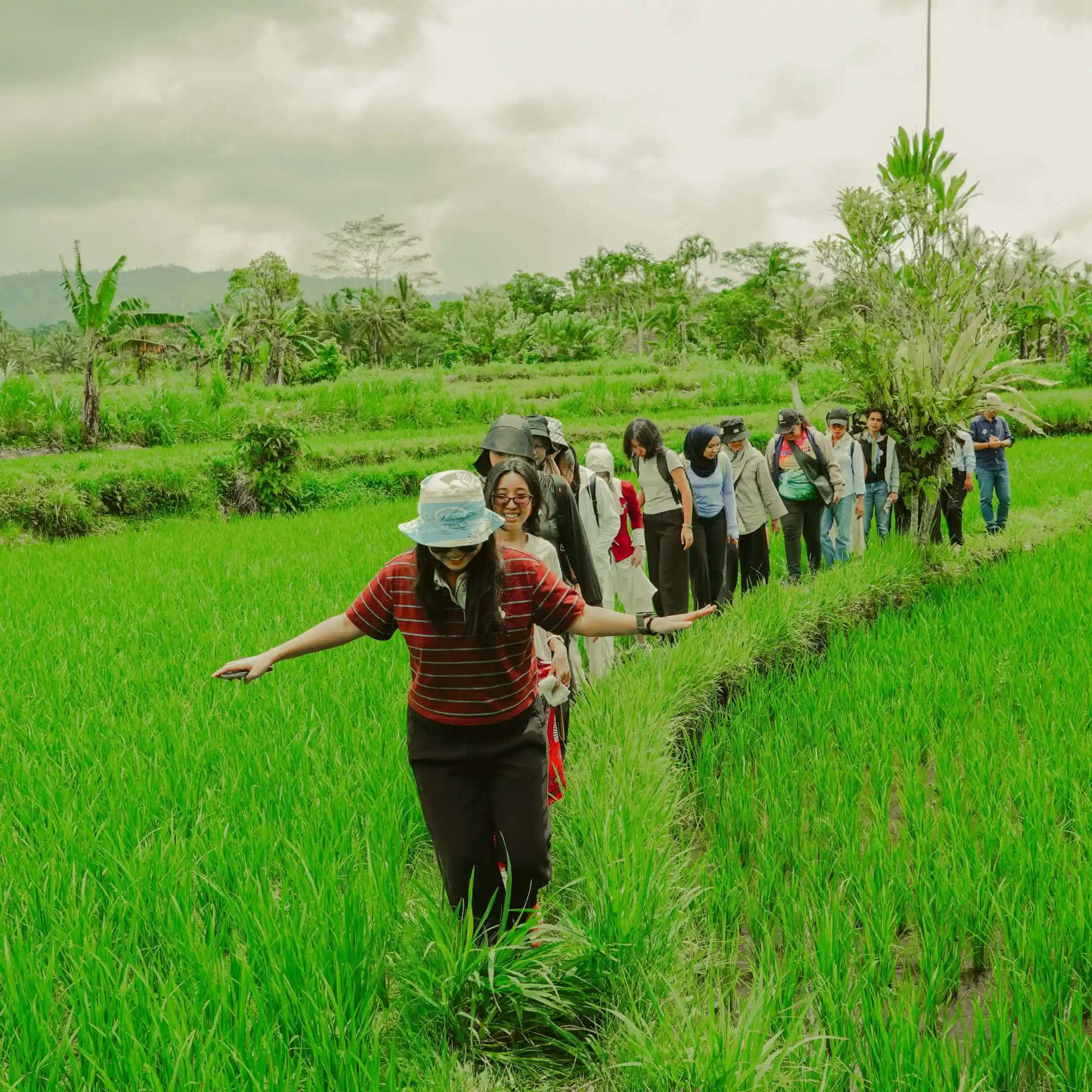
Rice fields are among Bali’s most recognizable landscapes, but their value goes far beyond appearance.
They are places of work, food production, traditional knowledge, and family livelihood.
A rice field tour around Jero Tumbuk and Selat can introduce guests to the agricultural life behind the scenery. Depending on the season and route, participants may observe planting, maintenance, harvesting, irrigation, or other farming activities.
The tour can also help guests understand where local food comes from and how farmers remain connected to the land.
This is not simply a walk through a photogenic landscape.
It is an opportunity to learn why rice fields matter to the surrounding community and how agriculture influences everyday life in Bali.
The experience reflects Palemahan within Tri Hita Karana: harmony between people and nature.
Guests should wear comfortable footwear and prepare for changing weather, uneven paths, mud, and direct sunlight. The route, duration, difficulty level, and best departure time should be confirmed before joining.
Photography should also be approached respectfully. Rice fields are working environments, and farmers should not be treated as part of a staged tourism experience.
4. Explore the Natural Side of Karangasem Through Rafting
Travelers who want a more active experience can explore the natural environment through rafting Telaga Waja.
The Telaga Waja River is located in Karangasem and offers a different way to experience the region’s landscape. Instead of observing the area from the road, participants travel through the river environment with a professional rafting team.
Rafting adds an adventurous element to a stay at Jero Tumbuk, but the activity is not presented only as a sport.
It offers guests another perspective on the forests, riverbanks, water systems, and natural character of East Bali.
Safety must remain the priority.
Participants need to follow the operator’s briefing, wear the required equipment, and comply with age and health restrictions. Weather, rainfall, and river conditions may affect availability.
Before booking, guests should confirm:
- The rafting operator
- Activity duration
- Transport arrangements
- Minimum and maximum age
- Health requirements
- Insurance
- Meal inclusions
- Equipment
- Additional fees
Rafting should always be arranged through a professional operator and reserved in advance.
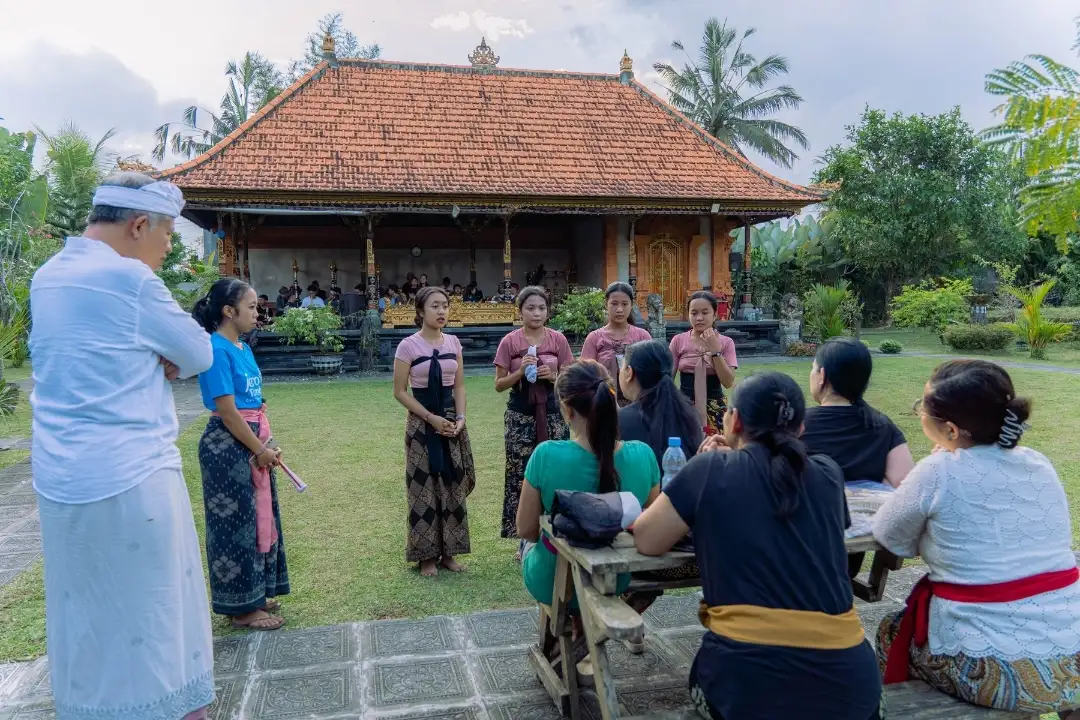
5. Learn the Discipline Behind Balinese Dance
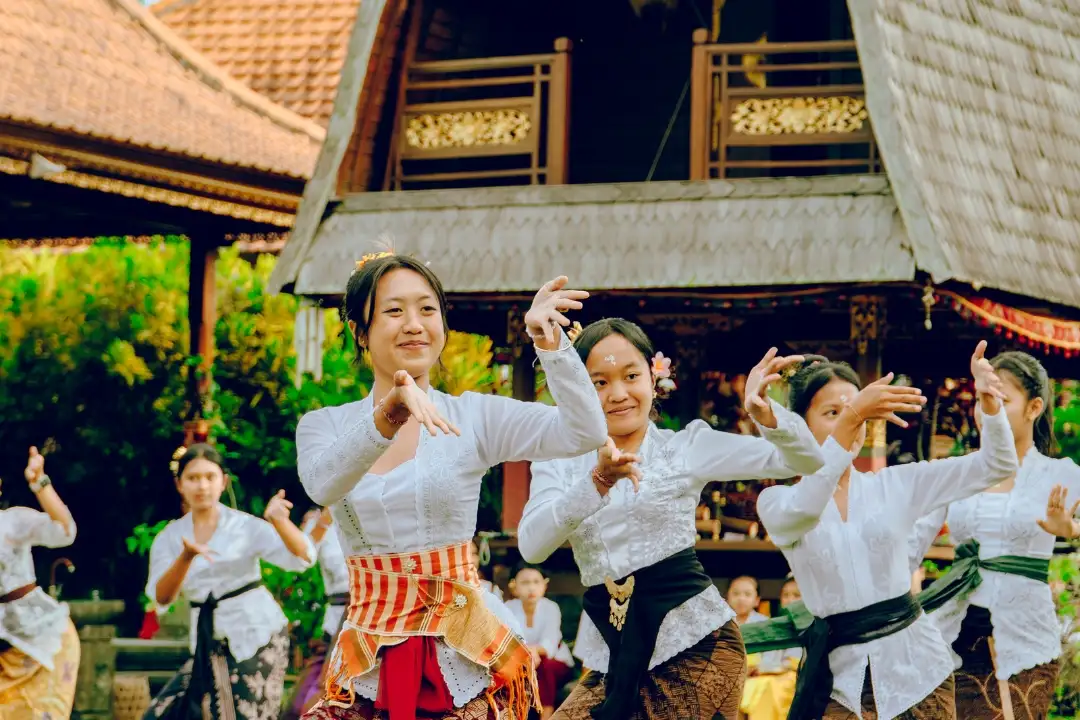
Balinese dance is often experienced through a finished performance.
At Jero Tumbuk, guests may have the opportunity to understand what happens before a dancer reaches the stage.
A Balinese dance class can introduce participants to basic hand positions, posture, eye movements, expressions, rhythm, and character. Even a simple movement can require concentration, balance, and careful guidance.
The purpose is not to turn guests into performers in one session.
It is to help them appreciate the discipline and cultural knowledge carried by dancers and mentors.
Balinese dance programs at Jero Tumbuk are also connected to cultural education for younger generations. Children can learn regularly from local mentors, building skills while developing a stronger relationship with their cultural identity.
Guests should remember that these programs are not created only for tourism.
Children attending a class are students, not attractions. Visitors should avoid interrupting lessons or photographing participants without permission.
Learning even a small part of the dance process can change how you view a performance. You begin to recognize the patience, repetition, and mentorship behind each movement.
6. Experience Traditional Balinese Music
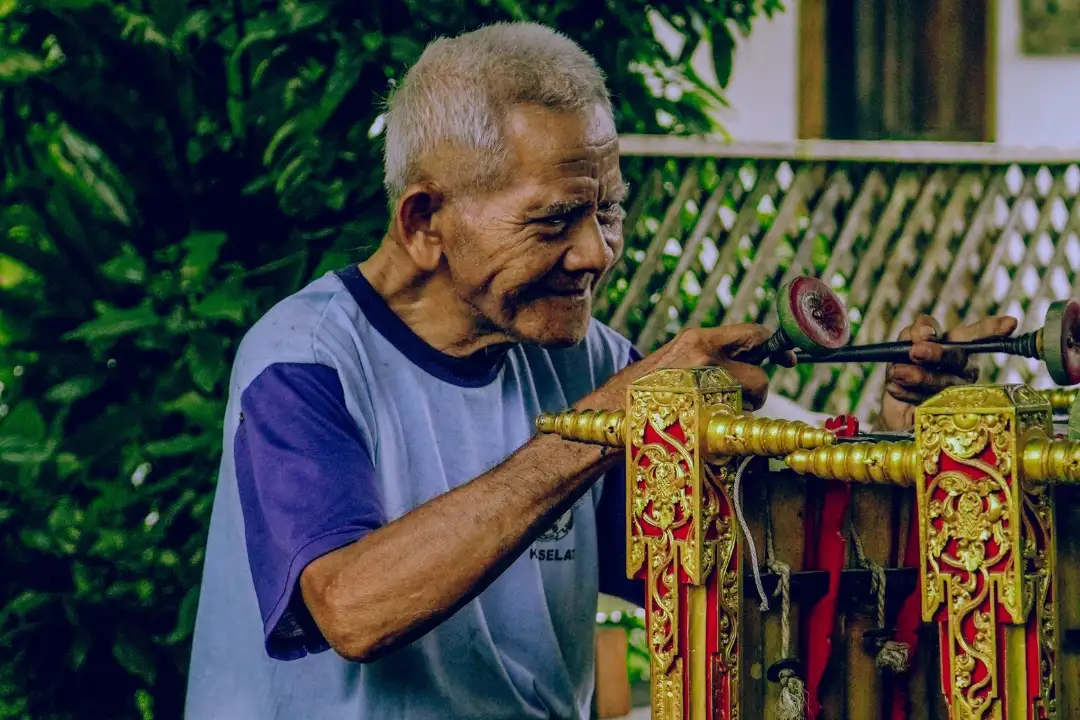
Traditional Balinese music is created through listening, timing, cooperation, and shared rhythm.
Jero Tumbuk supports cultural learning related to tabuh or gamelan, gender, rindik, and mekidung. Each tradition introduces a different part of Bali’s musical and cultural heritage.
Tabuh and gamelan teach participants how individual sounds work together within a group. Gender requires focus, precision, and coordination. Rindik introduces the softer sound of a traditional bamboo instrument. Mekidung connects vocal tradition with language, literature, and spirituality.
Guests may have opportunities to observe or participate in basic musical learning depending on mentor availability and program schedules.
A short introduction can help visitors understand that traditional music is not created by one person working alone. Each participant needs to listen to the others and recognize how their part contributes to the full composition.
This reflects Pawongan, the Tri Hita Karana principle of harmony between people.
Traditional music becomes an example of community cooperation. The result depends on patience, attention, and the ability to move together.
Cultural sessions should be booked or confirmed in advance, particularly when they involve local mentors and community learning schedules.
7. Create a Calmer Rhythm Through Yoga and Meditation
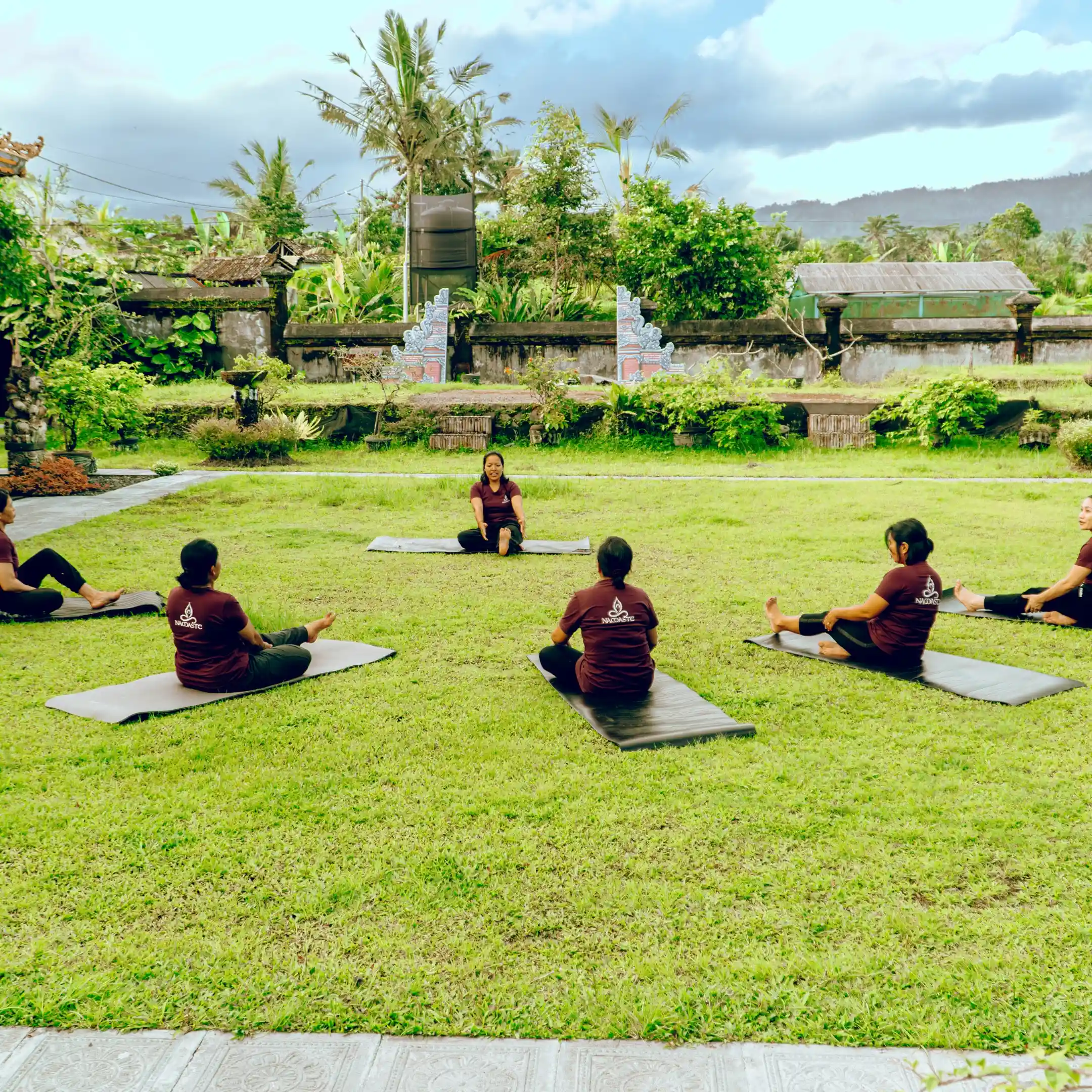
Not every meaningful activity needs to involve constant movement or new information.
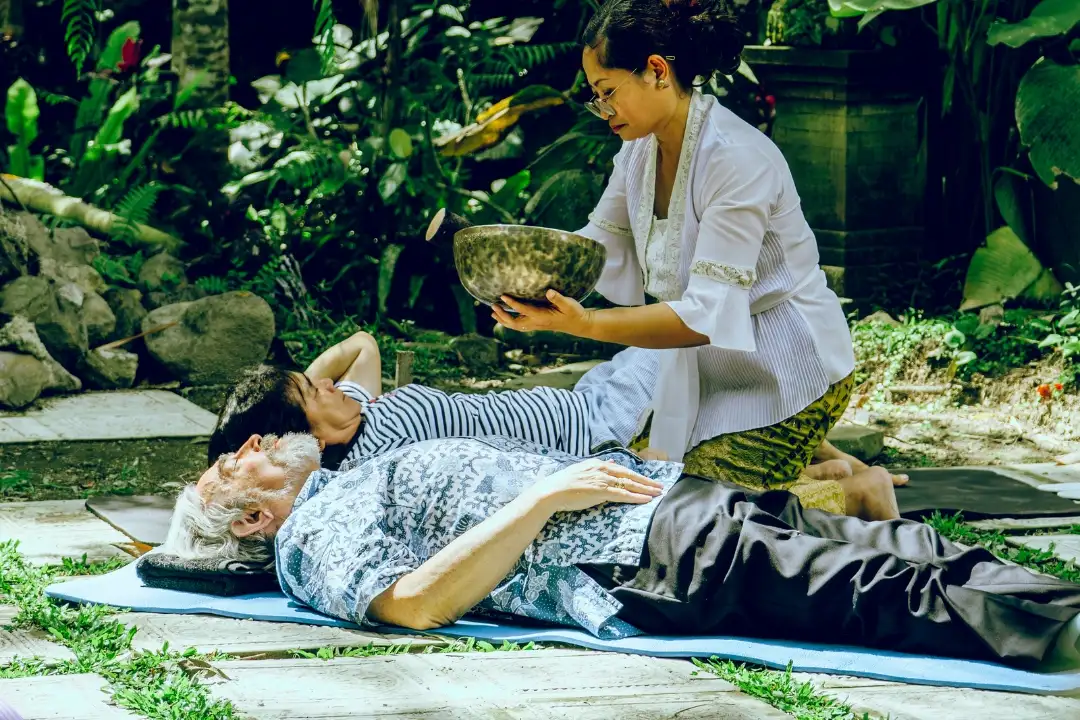
Yoga and meditation create space for guests to slow down and pay attention to their breathing, body, thoughts, and surroundings.
A yoga session at Jero Tumbuk may include gentle movement, stretching, balance, and breathing. Practicing within a natural setting can help guests become more aware of the sounds, air, and landscape around them.
Meditation can be practiced in a garden, bale, open stage, or another quiet part of the retreat. The activity may focus on breathing, stillness, concentration, or simply becoming more present.
These practices should not be presented as guaranteed treatments for stress, illness, or personal problems.
They are opportunities for reflection.
Jero Tumbuk’s spiritual pillar is based on the idea that spirituality is part of daily life. It can be expressed through movement, prayer, gratitude, attention, and a respectful relationship with the surrounding environment.
Yoga and meditation schedules may depend on instructor availability and advance arrangements. Guests should ask about the session format, duration, experience level, and any items they need to bring.
8. Slow Down With a Reflective Mandala Activity
Mandala activity offers a quieter and more creative form of participation.
Guests work with patterns, shapes, lines, and colors to create a mandala gradually. The activity may begin with a short introduction, breathing exercise, or moment of concentration before participants start drawing or coloring.
No previous artistic experience is required.
The purpose is not to produce a perfect piece of art. It is to become more present during the process.
Choosing colors, repeating patterns, and focusing on small details can create a calmer rhythm. The activity can be completed individually or within a small group, making it suitable for retreat guests looking for something reflective without intensive physical movement.
At Jero Tumbuk, Mandala Healing should be understood as a reflective creative activity, not as clinical therapy or a guaranteed healing method.
Guests should confirm the facilitator, duration, materials, participant capacity, and availability before booking.
Why These Activities Matter
The activities at Jero Tumbuk are connected by more than their location.
Together, they reflect Tri Hita Karana.
Parahyangan appears through melukat, meditation, spiritual learning, sacred spaces, and offerings.
Palemahan can be experienced through rice fields, rivers, local ingredients, agriculture, bamboo, wood, and the natural environment of Karangasem.
Pawongan is visible through cultural mentors, children’s programs, local guides, farmers, cooks, musicians, staff, and community relationships.
This connection is what makes Jero Tumbuk a meaningful Bali cultural experience.
Guests do not only move from one attraction to another. They begin to understand how culture, spirituality, food, education, nature, and community life support one another.
Reserve Your Preferred Activities Before Arriving
Activities at Jero Tumbuk may not be automatically included with accommodation.
Availability can depend on:
- Local mentor schedules
- Religious activities
- Facilitator availability
- Community programs
- Weather conditions
- River conditions
- Participant numbers
- Advance preparation
Guests interested in melukat, a cooking class, rice-field tour, rafting, dance, traditional music, yoga, meditation, or Mandala activity should contact Jero Tumbuk before arriving.
Ask about availability, prices, inclusions, clothing, transport, duration, age requirements, and preparation.
You do not need to join every activity during one stay.
Choose the experiences that genuinely interest you and give each one enough time. A slower schedule allows more room to listen, ask questions, and understand what you are doing.
A day at Jero Tumbuk can still include rest.
But when you want more than a pool day, it can also become an opportunity to learn from culture, move through nature, reflect quietly, and connect with the people behind the experience.