
5 Ways Your Stay at Jero Tumbuk Supports the Local Community
Home - Our Journal
Home - Our Journal
Choosing where to stay can be about more than finding a comfortable room in a convenient location. For travelers who want a more meaningful connection with Bali, the place they stay can also become a way to understand the people, culture, and community around them.
At Jero Tumbuk in Selat, Karangasem, the guest experience is connected to a wider community ecosystem. Accommodation is only one part of the experience. Local staff, food suppliers, cultural mentors, farmers, teachers, children, and community members all have a place within the broader environment that Jero Tumbuk is building.
This is an important part of the idea behind community tourism Bali. Tourism does not have to exist separately from local life. When it is developed responsibly, a guest's stay can create opportunities for local people to contribute their skills, knowledge, products, and services while visitors gain a deeper understanding of the place they are visiting.
The impact of one stay should not be exaggerated. A single booking does not transform an entire community, and it would be misleading to claim that every part of a guest's payment directly funds a particular program. The more realistic way to understand Jero Tumbuk is as an environment where tourism, local participation, cultural preservation, education, and community initiatives are connected. Here are five ways your stay can become part of that wider community experience.

Every accommodation needs people to make the guest experience possible. At Jero Tumbuk, local staff are part of the daily environment that guests encounter during their stay.
From welcoming visitors to supporting the accommodation and helping with activities, their work contributes to the experience guests receive. But the relationship goes beyond a simple service transaction. When visitors interact with local staff, they also have opportunities to learn about the area, ask questions, and experience a more personal side of Selat.
This is one of the practical ways tourism can connect with local employment Bali. Rather than viewing the destination only as a place where visitors spend money, it becomes a place where local people can participate in the tourism experience through their skills and work.
The same principle applies to the wider community. Tourism can create different forms of participation, from hospitality and food preparation to cultural teaching and other services connected with the guest experience.
It is important to keep this perspective realistic. Jero Tumbuk does not need to claim that every aspect of its operation is exclusively local for the relationship to have value. What matters is creating genuine opportunities for local people to be involved where appropriate.
For guests, this means that the person welcoming you, helping with your stay, or guiding part of your experience can be more than someone providing a service. They can also become part of your understanding of the place.
Food provides another connection between guests and the surrounding community. A meal can look simple once it reaches the table, but behind it can be a network of ingredients, farmers, suppliers, cooks, and local knowledge.
At Jero Tumbuk, food is part of the wider cultural experience. Guests can learn about traditional ingredients and cooking methods through activities such as a traditional cooking class. This provides an opportunity to understand not only what is being prepared, but also the relationship between food, agriculture, and everyday Balinese life.
This is where the idea of support local farmers Bali becomes relevant, but it should be understood carefully. Not every ingredient used at every meal should automatically be described as locally sourced. The more accurate point is that local food systems and suppliers can become part of the guest experience, creating opportunities for local participation where sourcing arrangements allow.
For travelers, this can change the way they think about food during their holiday. A rice field is no longer simply a beautiful landscape. It can be connected to the food people eat. A traditional ingredient is no longer simply something on a plate. It can lead to questions about where it comes from and how it is prepared.
A cooking class can make this connection even clearer because guests participate in the process. They can learn about spices, preparation techniques, and traditional food knowledge before sitting down to enjoy the result. In this way, food becomes a bridge between the guest, the landscape, and local knowledge.
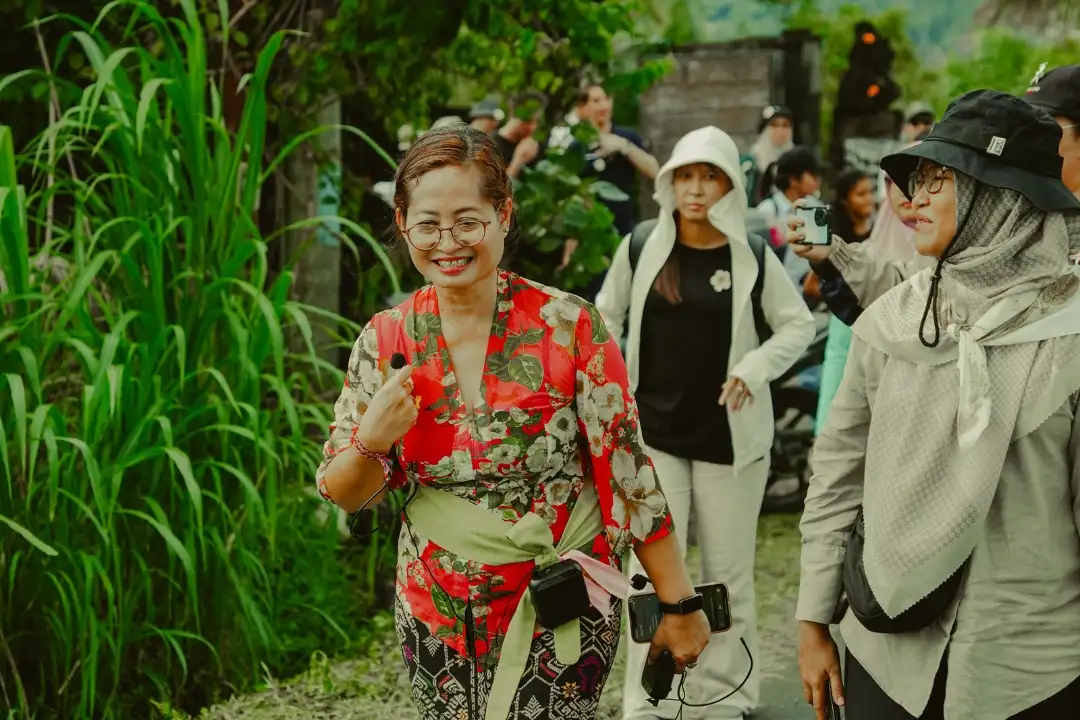
A retreat does not operate in isolation. It requires products, ingredients, services, and people to keep the experience running. This creates another potential connection with the surrounding community through local suppliers. Where appropriate, products and services can come from people and businesses in the wider area, allowing the guest experience to connect with the local economy.
This is one reason responsible travel Karangasem should be understood as more than simply visiting a less crowded destination. Responsible travel also involves thinking about how visitors interact with the places they visit and whether their travel choices recognize the people who live there.
For Jero Tumbuk, local suppliers can be part of that wider ecosystem. Food ingredients, local products, cultural materials, and other supplies can create relationships beyond the boundaries of the retreat itself.
Again, the impact should not be overstated. It would be inaccurate to suggest that every purchase made by Jero Tumbuk automatically creates a measurable community benefit or that every supplier is local. The meaningful point is that a locally connected tourism model creates opportunities for community participation rather than treating the retreat as an isolated operation.
Guests may not always see these connections directly. They may simply enjoy a meal, use a local product, or participate in an activity. But understanding that there can be people behind those experiences adds another layer to the stay. Tourism becomes less about consuming a destination and more about recognizing the network of people who help make the experience possible.
One of the most important forms of community contribution at Jero Tumbuk is knowledge. Balinese culture is not preserved simply by maintaining traditional buildings or displaying cultural objects. It remains alive when people continue to practice, teach, and pass knowledge to others. This is why local cultural mentors are so important.
Through cultural programs, guests may have opportunities to learn about Balinese dance, traditional music, Mekidung, Balinese script, cooking, and other aspects of local culture. A mentor can demonstrate a practice, explain its meaning, correct a technique, and provide the cultural context that makes the activity more than a simple performance.
This creates value in two directions. Visitors gain the opportunity to learn from someone with local knowledge, while cultural practitioners have a space to continue sharing and teaching their skills.
This is closely connected with cultural preservation tourism. Preservation is stronger when culture remains part of people's lives rather than becoming something that exists only for display.
A traditional dance class, for example, is not simply an activity for guests. It can also demonstrate how knowledge is transmitted through teaching and practice. Learning Balinese script can introduce visitors to a form of cultural heritage while reinforcing the importance of continuing to teach it.
The guest does not need to become an expert. The purpose is to participate respectfully and understand that the knowledge being shared has value beyond the duration of the activity.
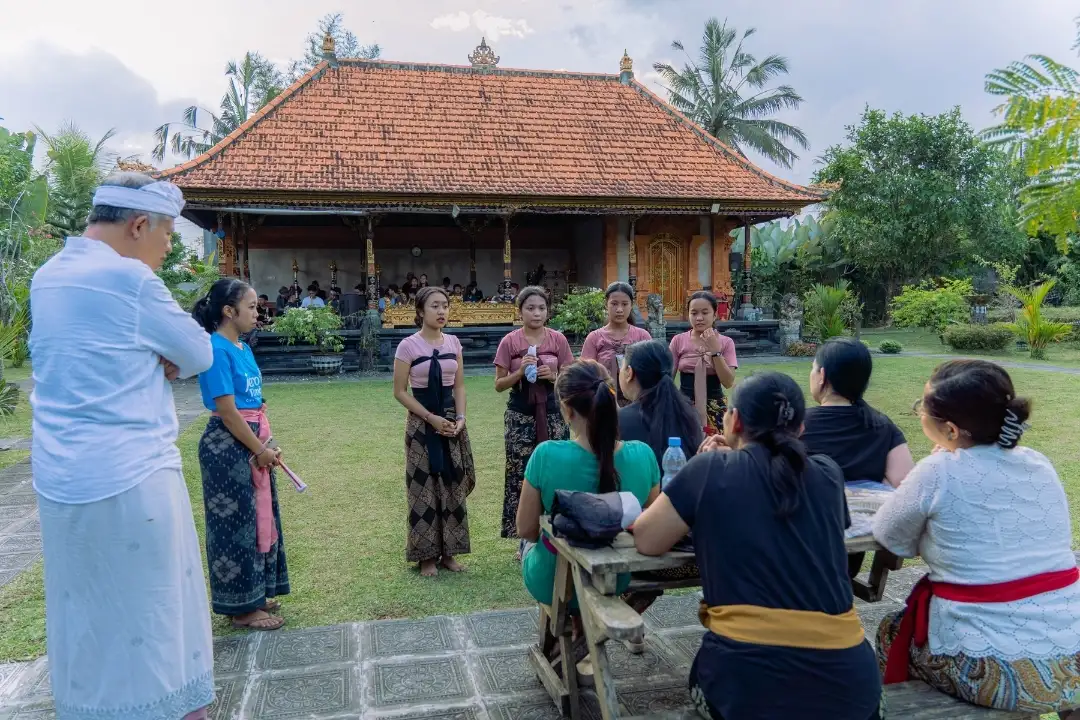
Perhaps the most important part of the Jero Tumbuk community approach is education. The retreat's community programs include opportunities such as free English classes, tutoring, cultural learning, and other educational activities for local children. These programs reflect the idea that education is an investment in the future of the community.
English classes can help children develop communication skills and confidence. Academic support can give students additional opportunities to practice what they are learning at school. Cultural education can help younger generations maintain a connection with Balinese traditions.
These programs do not need to be described as a solution to every challenge facing local children. Their value comes from providing consistent learning opportunities and access to mentors, teachers, and community support.
This is an important distinction when discussing community education Bali. Responsible communication should focus on what the programs actually provide rather than making broad promises about long-term outcomes that cannot be guaranteed.
The same principle applies to wider social initiatives. Community work becomes meaningful through continued participation, relationships, and practical opportunities rather than through large claims about impact.
For guests, simply knowing that these programs exist can change the way they understand their stay. They are not staying at a place that exists completely apart from the surrounding community. They are staying within an environment where education, cultural preservation, local employment, and social activities are part of the wider purpose.
It is tempting to think about a hotel or retreat booking as a simple exchange. You pay for accommodation, and in return you receive a room and a set of services. Jero Tumbuk approaches the idea differently.
The accommodation is one part of a much larger cultural retreat environment. Guests can stay, eat, learn, participate in activities, meet local people, and spend time in the surrounding landscape. At the same time, the retreat creates a setting where local staff, cultural mentors, suppliers, farmers, teachers, and community members can contribute.
This is the foundation of Jero Tumbuk social impact. It should not be understood as a claim that every guest directly funds a specific social program. Instead, the guest experience exists within an ecosystem where community involvement is built into the identity of the retreat. That distinction makes the idea more credible.
Responsible tourism does not have to promise dramatic transformation. Sometimes, it is about creating a model where tourism and local life can exist alongside each other in a more thoughtful way.
There is also a role for the guest. Choosing to stay at a community-connected retreat is one part of the experience, but how you behave during the stay matters as well. Taking time to listen to local mentors, joining cultural activities respectfully, learning about local food, following guidance around sacred spaces, and showing interest in the surrounding community can make the experience more meaningful.
You do not need to participate in every community program. You do not need to volunteer during your holiday. You do not need to turn your trip into a social project. Sometimes, simply being a respectful guest is enough.
When you join a cultural class, listen to the person teaching you. When you walk through the rice fields, respect the agricultural environment. When you learn about a local tradition, understand that it belongs to a living community. When you meet local staff or mentors, remember that they are people with their own knowledge and experiences, not simply part of the scenery of your holiday.
This is the human side of meaningful travel Indonesia.
A meaningful stay does not necessarily come from having more facilities or a longer list of activities. It can come from understanding the relationships behind the place you are visiting.
At Jero Tumbuk, those relationships can be found through local staff who contribute to the guest experience, food and suppliers connected with the surrounding economy, cultural mentors who continue teaching traditional knowledge, and education programs that create learning opportunities for local children.
These connections do not need to be exaggerated to be valuable. A single stay will not change an entire community. But a guest can choose to stay somewhere that recognizes the community as part of the experience rather than treating it as something separate.
That is what makes community tourism Bali meaningful at Jero Tumbuk. You come to stay in Selat, Karangasem, but you can leave with an understanding of the people, culture, food, education, and local life that surround your stay.
And perhaps that is the more meaningful way to think about responsible travel. Not asking how much impact one trip can claim to make, but choosing to travel in a way that respects the place, recognizes its people, and gives you an opportunity to become part of the experience without pretending to own it.


