7 Ways Community Programs Make Jero Tumbuk More Than a Retreat
Home - Our Journal

Home - Our Journal
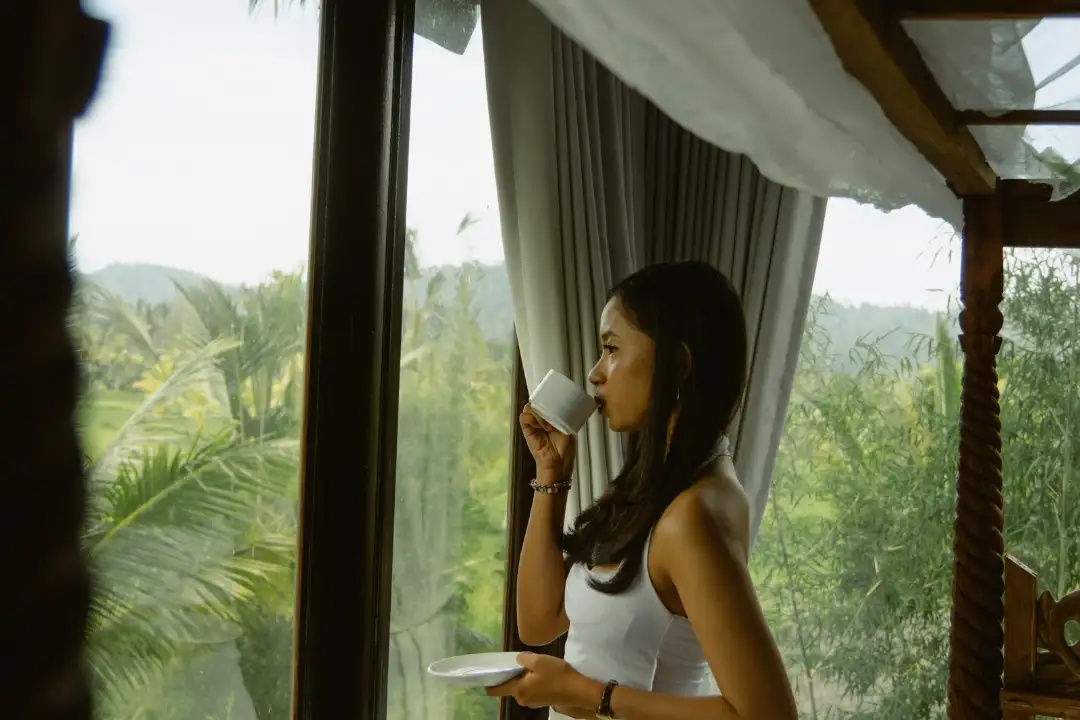
A retreat can be a place to rest, slow down, and spend time away from a busy routine. But at Jero Tumbuk, the experience is built around something broader. The retreat exists within a community where culture, education, local livelihoods, spirituality, and relationships between people are part of everyday life.
This is why community programs are not an additional feature placed beside the guest experience. They are part of what makes Jero Tumbuk what it is. The accommodation gives guests a place to stay, while the wider environment creates opportunities to learn from local people, understand Balinese culture, and see how tourism can exist alongside community life.
Located in Selat, Karangasem, Jero Tumbuk brings together cultural learning, education programs, local employment, agricultural connections, and community activities. Guests can encounter this through cultural classes, conversations with local mentors, and experiences connected with food and nature. At the same time, the wider community programs support opportunities for children, teachers, cultural practitioners, staff, farmers, and other local participants.
For travelers interested in a Jero Tumbuk community experience, this creates a different way of understanding what a retreat can be. Here are seven ways community programs become part of that experience.

Culture is easier to understand when you have the opportunity to learn directly from people who practice it. At Jero Tumbuk, cultural education can include activities connected with Balinese dance, traditional music, Mekidung, Balinese script, and other forms of local knowledge.
The important point is that these activities are not presented only as entertainment for visitors. Cultural knowledge becomes something that can be taught, practiced, and shared between generations. A local mentor can explain a technique, provide guidance, and give learners the context behind what they are doing.
This approach matters because traditions remain meaningful when people continue to practice them. A cultural class can therefore become more than an activity during a guest's stay. It can be part of a wider effort to keep knowledge accessible to younger generations and to create spaces where traditional skills can continue to be learned.
For guests, participation offers another benefit. Instead of only watching a Balinese cultural performance, they can begin to understand the work and knowledge behind it. They may discover that a particular movement, instrument, or form of writing requires patience and practice. That understanding can lead to greater respect for the people who continue to carry these traditions.
Education at Jero Tumbuk is not limited to traditional culture. English classes are also part of the community-focused approach, particularly for children in the surrounding area.
An English class village program can provide children with opportunities to develop communication skills that may be useful in their education and future interactions. For communities in a region connected with tourism, English can also become a practical skill for communicating with visitors and understanding a wider world beyond the village.
The value of consistent learning is important here. One class alone cannot create a long-term educational outcome. What matters is having access to learning opportunities that can continue over time and give students a chance to practice what they have learned.
This is why community education needs teachers, mentors, volunteers, and spaces where students feel comfortable learning. The role of Jero Tumbuk is not to promise that one program will solve every educational challenge. Instead, its education activities contribute to an environment where local children can access additional support and opportunities to learn.
For guests, knowing that education is part of the wider retreat ecosystem can also change the way they understand their stay. Their experience is connected to a place where learning is not reserved only for travelers.

Children can need different kinds of educational support depending on their circumstances. Alongside English classes, tutoring and academic assistance can provide another opportunity for students to strengthen what they are already learning at school.
A tutoring program may seem simple, but regular access to additional learning can give children more time to ask questions, practice difficult subjects, and build confidence. It can also create relationships between students and the people supporting their education.
This is where education becomes connected with community. A learning program is not only about the lesson being taught that day. It is also about creating a consistent environment in which children know that there are people willing to support their development.
The wider purpose of Jero Tumbuk's education programs is therefore connected with the future of the community. Supporting children today can contribute to their ability to develop skills and confidence for the years ahead, without needing to make exaggerated promises about the results.
For visitors, this is another reminder that a community retreat can involve much more than what happens during their own stay.
A community program becomes much more meaningful when local people are directly involved in teaching and guiding it. At Jero Tumbuk, local mentors can contribute knowledge in areas such as traditional arts, culture, food, and other aspects of Balinese life. Their role is important because cultural learning is not only about information. It is also about understanding how a practice is performed, why it matters, and how it fits into the community.
A visitor reading about Balinese dance online may learn the basic history of the tradition. But learning directly from someone who practices or teaches it creates a different relationship with the subject.
The same applies to cooking, traditional music, Mekidung, or Balinese script. A mentor can correct a technique, explain a detail, answer questions, and provide context that would be difficult to gain from a general travel guide.
This direct human connection is one of the foundations of a community retreat Bali experience. The community is not simply the setting around the retreat. Local people are part of the knowledge and experience that guests encounter.
At the same time, creating opportunities for local mentors to teach allows cultural knowledge to remain connected to the people who carry it.

Community involvement is not limited to formal education programs. It can also be found in the people who contribute to the everyday operation and experience of Jero Tumbuk.
Local staff are part of the guest experience from the moment visitors arrive. Their work contributes to the environment in which guests stay, eat, participate in activities, and interact with the retreat.
Farmers and local suppliers are also part of the wider economic relationship. Food and other supplies can connect the retreat with people working in the surrounding community. This creates a practical link between the guest experience and the local economy.
It is important not to overstate this relationship. One guest booking does not transform an entire local economy, and not every product or ingredient should automatically be described as locally sourced. The value lies in creating continued opportunities for local participation where appropriate.
This is one part of what local empowerment Bali can mean in practice. Rather than treating the community as a backdrop to tourism, local people can have roles within the ecosystem that supports the experience.
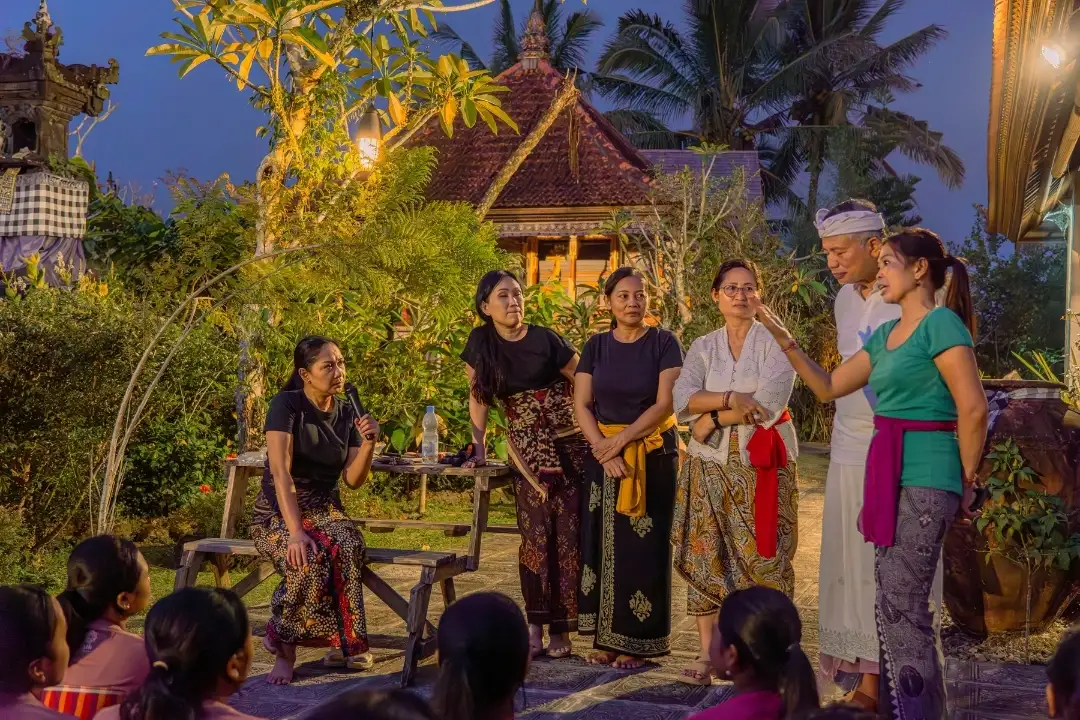
Community life is also built through activities that bring people together. Education programs, cultural learning, social initiatives, and other community activities can create spaces where people interact across different generations and backgrounds. Children can learn from teachers and mentors. Cultural practitioners can share their knowledge. Local staff can contribute to the guest experience. Community members can participate in initiatives that respond to local needs.
These activities do not need to be presented as dramatic social campaigns to have value. A regular class can matter. A mentor continuing to teach can matter. A community gathering can matter. A space where children can learn can matter. The strength of community work often comes from consistency rather than publicity.
This is particularly relevant when discussing social impact Karangasem. Responsible community involvement should be understood through the relationships and opportunities created over time rather than through exaggerated claims about changing an entire village.
At Jero Tumbuk, the goal is to keep community activities connected with real people and practical participation.
The final connection is perhaps the simplest. Guests contribute by choosing to stay within an environment where community programs are part of the brand's purpose.
A guest's stay creates demand for accommodation and the services surrounding it. It also provides an opportunity for local staff, mentors, suppliers, cultural practitioners, and other community participants to be part of the wider experience.
This does not mean that every rupiah spent by a guest automatically goes directly to a community program. The relationship is more practical and should be understood realistically. A guest contributes to an ecosystem in which accommodation, local employment, cultural learning, education, and community initiatives can exist alongside one another.
That distinction matters because responsible tourism should be honest about impact. The value of staying at Jero Tumbuk is not that one booking can solve a community's challenges. It is that tourism can be connected with a place in a way that recognizes the people who live there and the programs that matter to them.
Guests can also participate more directly when appropriate. They may join a cultural class, learn from a local mentor, take part in an educational or community-related activity, or simply spend time understanding the environment rather than treating the retreat as an isolated accommodation.
When people hear the word “retreat,” they may imagine quiet rooms, nature, yoga, meditation, and time away from everyday responsibilities. Jero Tumbuk includes elements of that experience, but its identity goes further.
The retreat exists within a living community. Culture is practiced and taught. Children have opportunities to learn. Local mentors share knowledge. Staff contribute to the daily guest experience. Farmers and suppliers can be part of the local economic connection. Social programs create opportunities for people to come together.
These elements are not separate from the Jero Tumbuk experience. They help define it. This is also where the four pillars of Jero Tumbuk come together. Economy connects the retreat with local staff, farmers, suppliers, and products. Culture and Social support the continuation of Balinese traditions. Education creates learning opportunities for local children and the wider community. Spirituality connects the retreat with practices and spaces that remain part of Balinese life.
Together, these pillars create a retreat that is connected to its surroundings rather than separated from them.
Choosing a retreat can be about finding somewhere peaceful to stay. But it can also be about understanding the place you have chosen to visit.
At Jero Tumbuk, that understanding can begin through a simple cultural class, a conversation with a local mentor, a traditional cooking experience, or learning about the education programs taking place within the community.
You do not need to participate in everything. You do not need to become involved in every program. Simply being curious and respectful can change the way you experience the destination.
This is what makes Jero Tumbuk community programs an important part of the retreat rather than an additional feature added for guests. The accommodation gives you a place to stay. The community gives the experience its human context.
For travelers looking for responsible tourism in Karangasem, this creates an opportunity to experience Bali through more than landscapes and attractions. You can spend time with local people, learn from their knowledge, understand the role of education, and see how culture continues through practice.
A stay at Jero Tumbuk is therefore not simply about stepping away from a busy routine. It is also an opportunity to step closer to the people, culture, nature, and community that make this part of Bali what it is.