6 Ways Balinese Culture Is Kept Alive at Jero Tumbuk
Home - Our Journal

Home - Our Journal
Culture stays alive when people continue to practice it. A traditional dance does not remain meaningful simply because people remember its name. Music does not continue because an instrument is displayed. A traditional writing system does not survive simply because it can still be found in old texts. Cultural knowledge needs people who are willing to learn it, practice it, teach it, and pass it to the next generation.
This idea is central to the experience at Jero Tumbuk in Selat, Karangasem. The cultural programs at Jero Tumbuk are not intended only to give visitors something interesting to watch. They create opportunities for cultural knowledge to be learned and practiced within the community.
This makes Balinese culture preservation a living process rather than something limited to heritage displays or occasional performances. Through traditional arts, cultural education, local mentors, and participation from younger members of the community, Jero Tumbuk creates a space where culture can remain connected to everyday learning.
For travelers interested in authentic Bali culture, this provides an important perspective. Authenticity does not come from making culture look old or exotic. It comes from understanding that traditions continue because people continue to practice them. Here are six ways Balinese culture is kept alive through the wider Jero Tumbuk community.

Balinese dance is one of the most recognizable forms of traditional art, but watching a performance is very different from learning the practice behind it. Dance involves movements, gestures, expressions, posture, and techniques that have to be taught and practiced over time.
At Jero Tumbuk, Balinese dance can become part of a cultural learning experience where guests and community members have the opportunity to learn from local mentors. The important part is not simply learning a sequence of movements. It is understanding that traditional dance requires patience, repetition, and guidance.
For younger members of the community, continued access to cultural learning can help keep traditional practices connected to the next generation. Children who learn from mentors are not only receiving an activity. They are being introduced to knowledge that has been passed down and can potentially be practiced and shared again in the future.
Visitors can also become learners within this environment. Joining a dance activity allows guests to experience the practice from a different perspective. Instead of only watching a finished performance, they begin to understand the work and knowledge behind it.
This is an important part of cultural education Karangasem. Culture becomes something people do and learn rather than something that exists only for visitors to observe.
Traditional music also depends on regular practice. An instrument can be carefully preserved, but the knowledge connected with it only remains alive when people continue to play, teach, and learn.
Tabuh is part of the traditional musical practices that can be introduced through Jero Tumbuk's cultural programs. For someone unfamiliar with Balinese music, learning about Tabuh provides an opportunity to understand the discipline and coordination involved in traditional musical practice.
The learning process can be simple. A mentor demonstrates a technique, explains how it works, and allows the learner to try. The process may involve mistakes and repetition, but that is exactly how knowledge is developed.
For children and younger learners, regular exposure to traditional music creates an opportunity to become familiar with practices that are part of their cultural environment. The objective is not necessarily for every child to become a professional musician. It is about keeping access to traditional knowledge open.
For visitors, participating in or observing a learning session can also change the way they understand Balinese music. Instead of hearing the sound as simply part of a performance, they can begin to appreciate the practice and patience behind it. That connection between teaching and practice is what gives cultural preservation its living character.
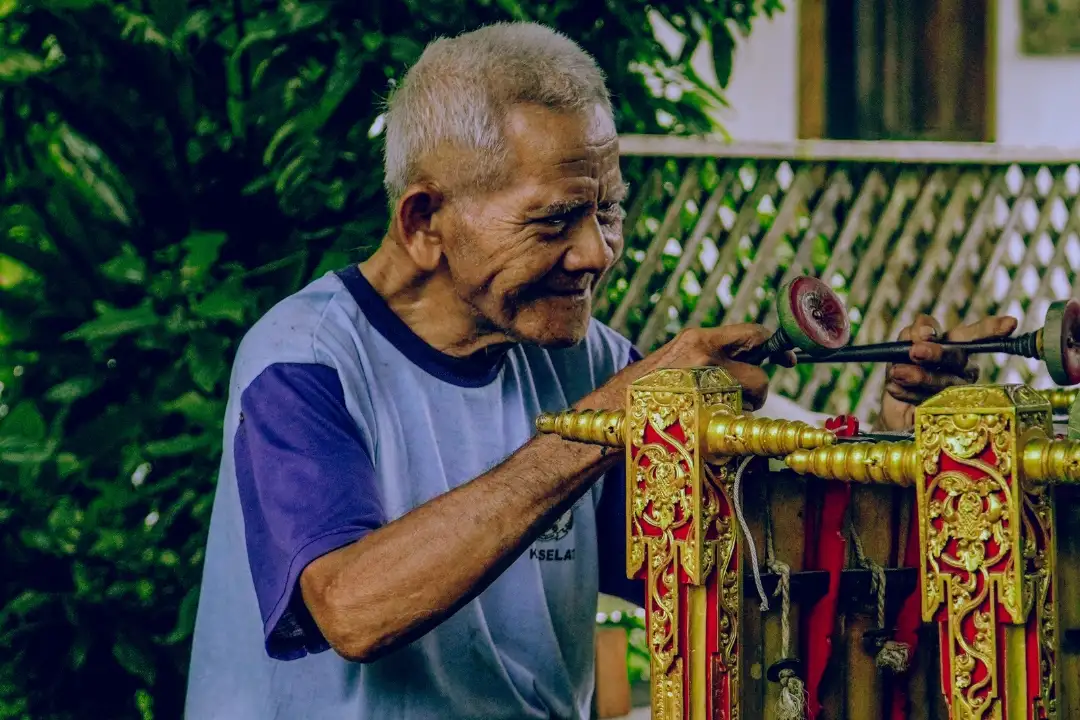
Other traditional musical practices, including Gender and Rindik, can provide additional opportunities to experience Balinese culture through direct participation. Learning an instrument is different from simply hearing it. A visitor or student may initially notice only the sound, but once they begin learning, they start to understand the technique, coordination, and practice required to produce it.
This is where the role of a local mentor Bali becomes important. A mentor can demonstrate the correct technique, provide guidance, and help learners understand what they are doing. Cultural knowledge becomes something that can be experienced directly rather than something explained only through written information.
The same principle applies to younger members of the community. Children need opportunities to encounter traditional practices in ways that are accessible to them. Regular learning gives them the chance to become familiar with traditional arts while they are still developing their own skills and interests.
For Jero Tumbuk, this creates a connection between cultural preservation and education. The two are not separate. Teaching traditional music is also a way of creating opportunities for the next generation to know and practice it.
For guests, the experience offers a more grounded understanding of Balinese heritage. You are not simply being shown a traditional instrument. You are seeing how knowledge surrounding that instrument can continue through teaching and practice.
Mekidung is another cultural practice that can be introduced through the learning environment at Jero Tumbuk. For visitors, it may be unfamiliar, which makes local guidance particularly important.
Cultural practices cannot always be fully understood by watching them from the outside. Their meaning and proper approach are connected to the people and communities that continue to practice them. Through guidance from local mentors, learners can be introduced to Mekidung in a way that provides cultural context rather than treating it simply as an interesting activity.
This approach is important for community culture Bali because preservation depends on understanding as well as repetition. When younger people learn a tradition, they need opportunities to understand what they are learning and why it matters within their cultural environment.
Visitors can also benefit from this approach. Instead of trying to imitate something without context, they can listen, ask questions, and follow the guidance of the person teaching them. That creates a more respectful form of cultural participation.
Mekidung therefore becomes part of a wider idea at Jero Tumbuk: culture is not simply presented to guests. It can be taught through relationships between people who have knowledge and people who are willing to learn.

A writing system can be one of the clearest examples of why cultural preservation requires education. Balinese script is part of the cultural heritage that can continue only when people have opportunities to learn and practice it.
At Jero Tumbuk, learning about Balinese script can introduce both visitors and younger community members to an aspect of Balinese heritage that might otherwise remain unfamiliar.
For international guests, even a basic introduction can change the way they see the script when they encounter it elsewhere in Bali. What may have previously looked like an unfamiliar set of characters becomes something connected to a cultural tradition with its own knowledge and history.
For children, learning provides another kind of value. It creates an opportunity to become familiar with cultural knowledge while they are still growing and developing their understanding of their own community.
This is why Balinese culture preservation cannot depend only on maintaining physical heritage. Traditional buildings and cultural objects matter, but the knowledge behind them also needs people who can continue to understand and use it. Teaching Balinese script is therefore part of keeping that knowledge accessible. It is another example of how education can become a practical form of cultural preservation.
Perhaps the most important factor behind cultural preservation is consistency. A single workshop can introduce someone to a tradition, but regular learning creates a stronger opportunity for knowledge to continue. Children need repeated opportunities to practice. Mentors need spaces where they can teach. Communities need environments where cultural activities can remain accessible.
This is why the role of community learning is so important at Jero Tumbuk. The combination of cultural classes, local mentors, and participation from children creates an environment where traditions can continue to be encountered and practiced. Dance, Tabuh, Gender, Rindik, Mekidung, and Balinese script are not treated as isolated subjects. They become part of a broader educational approach to culture.
The long-term value comes from creating opportunities for people to keep learning. This does not mean that every child who participates will continue with the same cultural practice throughout their life. Cultural preservation cannot be measured that simply. The important point is that knowledge remains available, and younger generations have the opportunity to encounter it.
That is how a tradition has a chance to continue moving forward rather than becoming disconnected from everyday community life.
Traditional buildings and cultural spaces can tell important stories, but buildings alone cannot keep culture alive. Culture needs people. It needs teachers who are willing to explain. It needs mentors who can demonstrate. It needs children who have opportunities to learn. It needs community spaces where practice can happen. And it needs regular opportunities for knowledge to move from one generation to another.
This is what makes the Jero Tumbuk community important to the wider cultural retreat experience. The retreat is not simply surrounded by Balinese culture. Cultural learning is part of the environment itself.
For guests, this creates a different way to experience authentic Bali culture. Instead of treating culture as a performance that begins when visitors arrive and ends when they leave, they can see how cultural practices are connected with education and community life.
A guest may join a dance class, learn about traditional music, discover Balinese script, or listen to a local mentor explain a cultural practice. These experiences can offer a glimpse into the larger process through which knowledge continues.
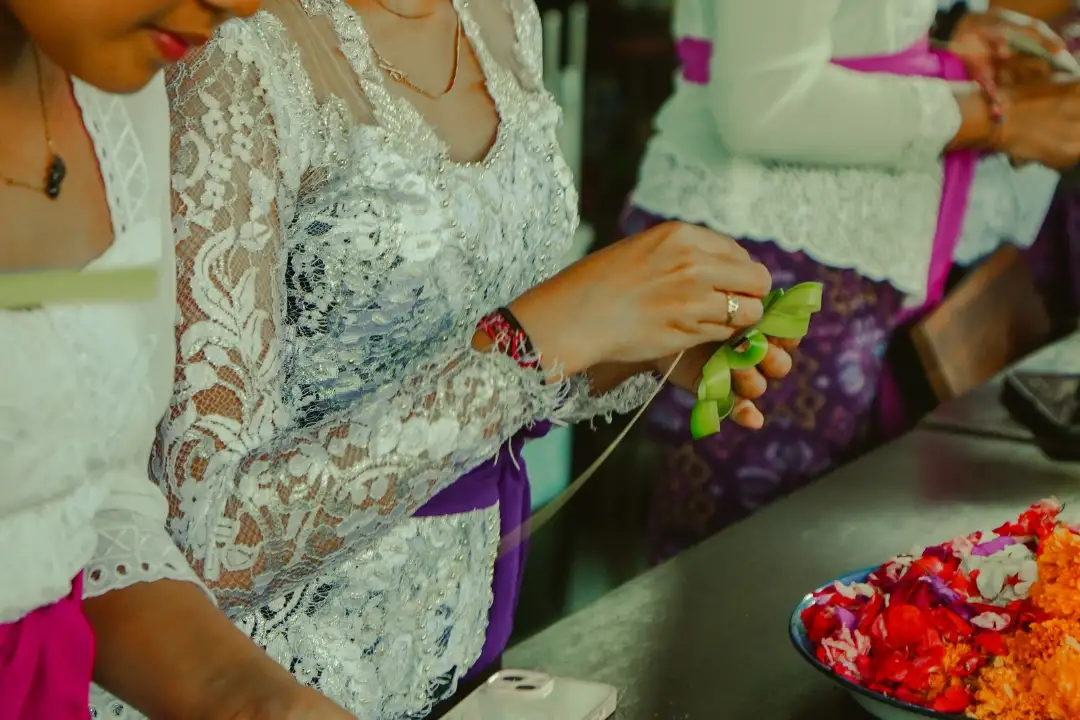
Cultural preservation is not something visitors need to manage or solve. Their role can be much simpler. They can come with curiosity. They can listen to local mentors. They can participate respectfully. They can ask questions. They can understand that the practices they encounter have meaning beyond their holiday.
This attitude matters because cultural participation should not become another form of entertainment where visitors expect everything to be performed for them.
At Jero Tumbuk, guests can instead approach cultural programs as opportunities to learn. They can experience what it feels like to be a beginner and understand that traditional skills require practice. That can create a more meaningful connection between traveler and community.
The visitor leaves with more than a photograph. They leave with a small piece of understanding about how culture is learned and why continued practice matters.
The preservation of Balinese culture does not always happen through major ceremonies or large cultural events. It can happen through a child learning a traditional dance movement, a student practicing Balinese script, a mentor teaching an instrument, or a community member continuing to share knowledge. These moments may seem small, but they are part of a much larger process.
At Jero Tumbuk, cultural education brings together traditional arts, local mentors, younger learners, and community participation. Dance, Tabuh, Gender, Rindik, Mekidung, and Balinese script become opportunities for learning rather than simply subjects to display.
This is what makes Jero Tumbuk community an important part of the cultural retreat concept. The experience is not built around presenting a version of Bali that exists only for tourists. It is connected with a community where cultural knowledge can be taught, practiced, and shared.
For travelers, this offers a different way to understand cultural tourism in Karangasem. You are not simply visiting a place where traditions can be seen. You are entering an environment where traditions are part of learning.
And perhaps that is one of the most meaningful ways culture can remain alive: not by keeping it frozen in the past, but by giving people the opportunity to continue learning it, practicing it, and carrying it forward.